
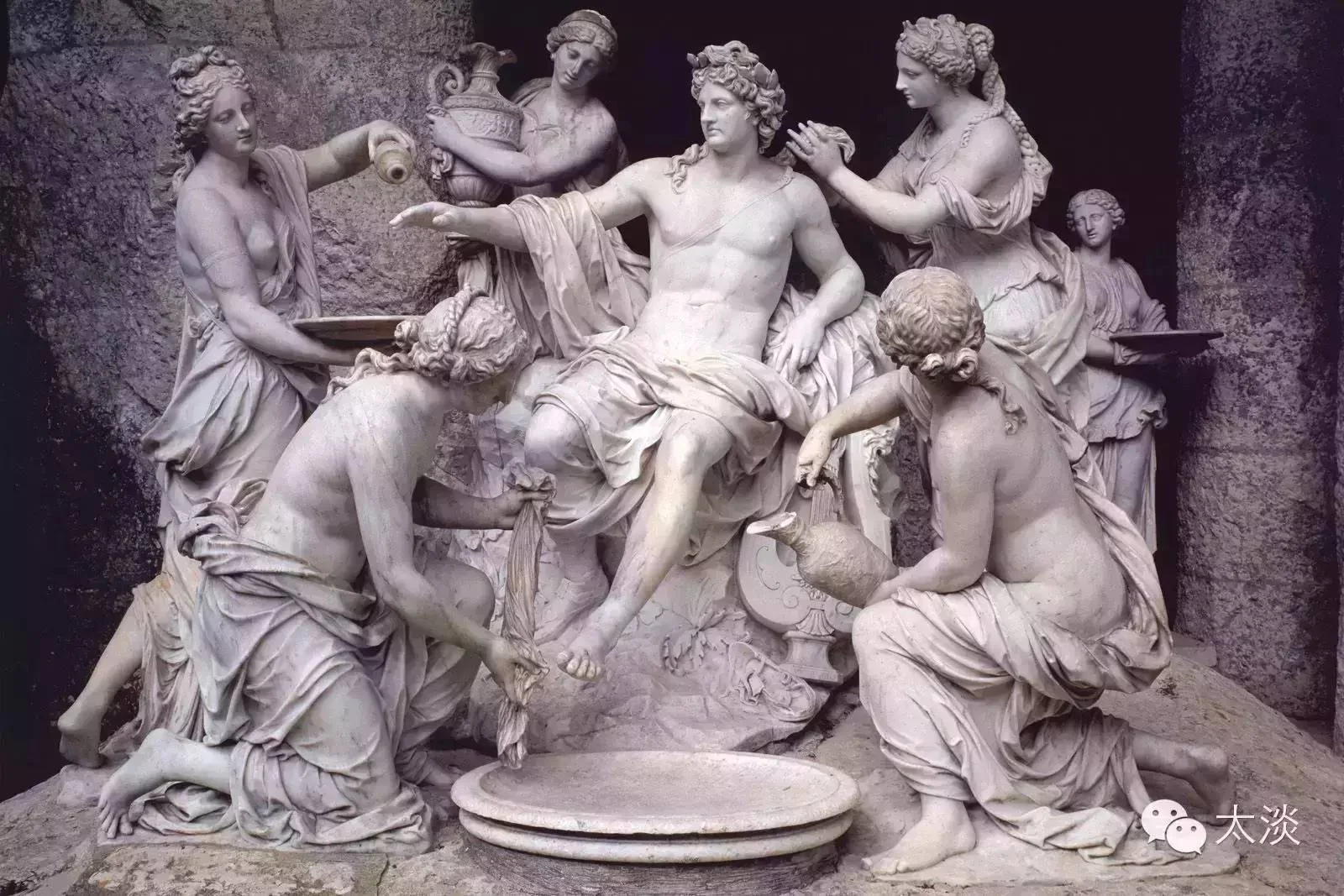
Apollo is the eternal golden-haired divine “ephebos” (adolescent), master of the oracles, god of light and music. He is the “paeeon” (healer) who would heal gods and goddesses with his magic touch and powerful light. His cult was divided into his two main aspects: the oracular-therapeutic and the solar-illuminated, different but complementary, as well. On one hand, in his more “Ionic” aspect, he is worshipped as “Phoebus” (he who has Clarity and Light) and “Delios” (he who sees all) centered on Delos and, on the other hand, in his more “Doric” aspect, he is worshipped as the oracle-god, instructor, protector of human beings and, occasionally, punisher, healer and deadly. His two aspects derive from the two major events of his existence: his birth on Delos and his fight with Python for the possession of the oracle of Delphi.
Delos, a sacred land, with a predetermined position in the Greek Mythology, where the two deities of Light were born: Apollo, god of the day-light and Artemis, goddess of the night-light. This sacred island, before becoming “Delos” (visible), was a floating, wandering rock, called “Ortygia” or “Adelos” (invisible). When pregnant Leto was in search of a land in order to give birth, away from Hera’s wrath, Zeus asked his brother Poseidon to help in finding a place somewhere in the sea, for the birth. Poseidon then, took the invisible, floating rock “Adelos”, anchored it with four huge diamond chains and named it “Delos”. Leto, after promising Delos eternal light and prosperity, comes to the sacred lake, not far from the foot of Kythnos Mountain, on the island. She gives birth to Artemis first, all alone, since Hera had forbidden midwife-goddess Eileithyia to be present. Nine days later, with the help of the divine new-born Artemis, she gave birth to Apollo. Leto kept her promise: since that moment, Delos has been bathed by Apollo’s Light. When Apollo was born, Themis, the primordial seer, dripped two drops of nectar, in his mouth and a bit of ambrosia and thus the miracle happened: the divine baby grew immediately, out of the cradle and all the Olympian goddesses, dazzled from his beauty watched him strolling on the island. Apollo rushed on Olympus to take his father’s blessing. Together with the blessings, Zeus’ presents were many: a golden crown -symbol of power- adorned with rubies and emeralds, a lyre which enchanted gods and mortals and a chariot with seven snow-white swans for his travels through the Universe.
The second major event of his life was his fight with dragon Python. Python was the son of Gaea, the “Earth’s gigantic monster”, which spread disaster and death at Delphi. Leto and the Nymphs encouraged Apollo in his struggle with the monster and afterwards, they celebrated his victory by singing hymns and paeans. The etymology of the Apollonian festival “Pythia” and the priestess’s name “Pythia” derives from the dragon’s name “Python”. Apollo was the first Greek god who introduces “Atonement” to the human beings in the form of purification and catharsis -having been purified from the killing of Python, himself- granting, this way, the opportunity of “Forgiveness” and teaching them that even the gods obey the Laws of the Universe.
Apollo delivered “Eunomia” (Rules of Law) to the human race, which he received from Zeus’ hands and made her one with “Armonia” (Pythagorean Harmony) and “Kallos” (beauty). All that is illuminated, is vibrated, as part of the Universe’s Music and Apollo served it with passion, like any other fine art, being the ”Kitharodos” and “Mousagetes” god.
His constant companions were the Nine Muses and his sacred symbols were the laurel, the tripod, the lyre (kithara) and the bow. His sacred animals were the wolf, the swan and the crow (prophetic bird).
Featured







