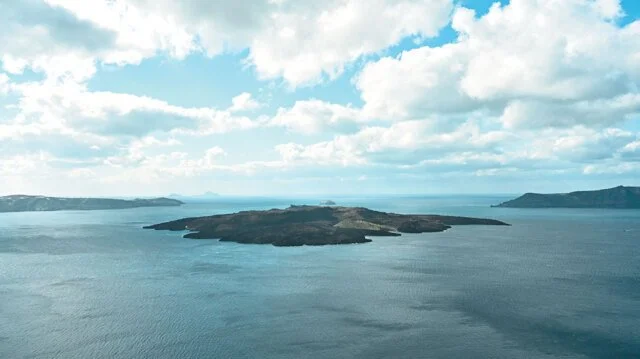
The mystery of the recent seismic activity in Santorini took a dramatic turn on Friday night as the Euro-Mediterranean Seismological Center confirmed an increase in harmonic tremors and a deep rumbling noise on the island. These signs typically indicate magma movement, pointing to potential volcanic unrest.
For three tense hours, magmatic fluids surged beneath the surface, raising concerns among scientists about whether Santorini’s volcano is reawakening—and what the consequences could be.
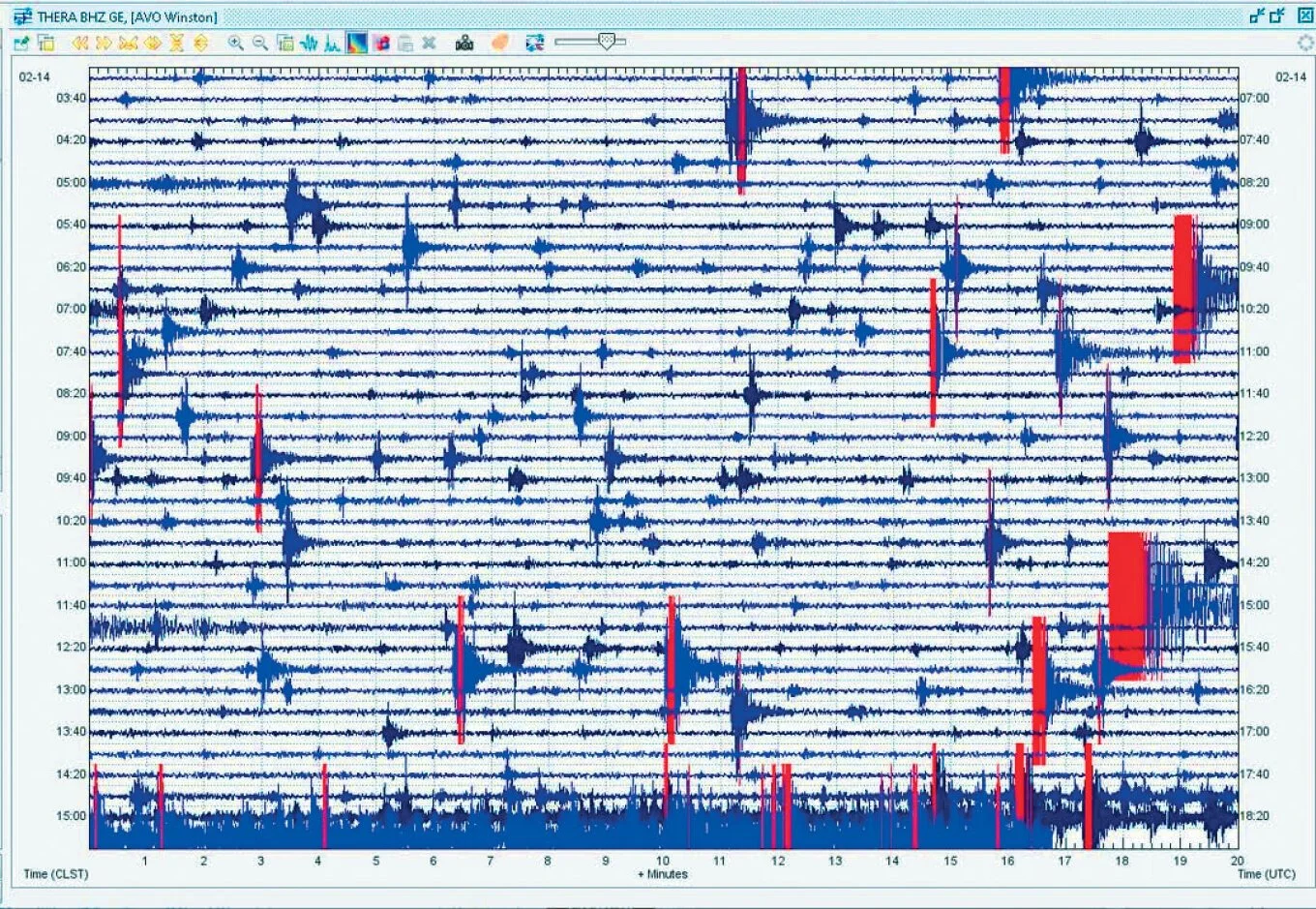
The seismic recordings from the “Thira” station at Santorini’s volcano set scientists on high alert on Friday night.
Analyzing Seismic Signals
Chilean geophysics expert Luis Donoso examined data from the “Thira” seismic station monitored by the EMSC. He explained that the vibrations detected weren’t caused by tectonic shifts but by fluid movement through a fault system. After three hours, the activity calmed down, but Donoso cautioned that this doesn’t mean the volcano is dormant again—it could signify a new phase of activity.
Uncertainty Surrounding Santorini’s Volcano
“What’s really happening in Santorini?” wondered Proto Thema during an interview with volcanologist Mike Burton from the University of Manchester. Burton noted that volcanic signals can be misleading—sometimes leading to nothing, other times preceding a major eruption after prolonged unrest. He emphasized the uncertainty, explaining that while the deformation and seismic signals suggest magmatic movement, a submarine eruption isn’t guaranteed.
Could an Eruption Be on the Horizon?
Scientists are considering different scenarios, from minor volcanic activity to a repeat of the 2011 phenomenon when the volcano showed signs of unrest but eventually quieted down. Since July of last year, increased activity has been observed at Kameni. By November, scientists confirmed the trend, and an official warning was issued in January. The northern caldera area has risen by 4.5 cm at a rate of about 1 cm per month.
Giorgos Vougioukalakis, a member of Greece’s National Committee for Monitoring Active Volcanoes, noted similarities to the 2011 events, when the area saw a 13 cm uplift over 14 months before the volcano settled down again. However, he pointed out that the current volume of magma is only about 10% of what accumulated in 2011, suggesting that if an eruption occurs, it might be “spectacular but harmless,” similar to the 1925 eruption.
The Ongoing Investigation
Authorities are closely monitoring the situation at both Kameni and Kolumbo volcanoes, using data from seismographs, ground deformation sensors, gas measurements, and other monitoring tools. On-site investigations are also planned.
Seismic Shifts and Potential Earthquake Risks
Interestingly, the recent surge in magmatic movement followed about 12 hours of relative seismic calm. Some experts suggest this could indicate a release of built-up energy. Seismic activity has shifted northeast toward the Amorgos Fault, known for causing the massive 1956 earthquake, raising concerns about a potential major earthquake or tsunami.
Over 15,300 tremors were recorded between January 26 and last Monday, with the strongest occurring northeast of Santorini. Scientists are watching closely, particularly due to the proximity of active fault lines, including those near the Kolumbo submarine volcano.
How Long Will This Last?
Experts are divided on how long the seismic activity will continue. Professor Dimitris Papanikolaou expects the quakes to persist until Easter, possibly longer. Seismologist Akis Tselentis believes the phenomenon could last several months, affecting tourism on the island. However, Professor Evi Nomikou cautions that predicting the duration of seismic activity is challenging, noting that similar events elsewhere have lasted up to 1.5 years.
With the situation still developing, scientists remain on high alert as they attempt to unravel the mysteries beneath Santorini’s surface.