Unraveling the “Homeric Question”: The Search for the Existence of Homer
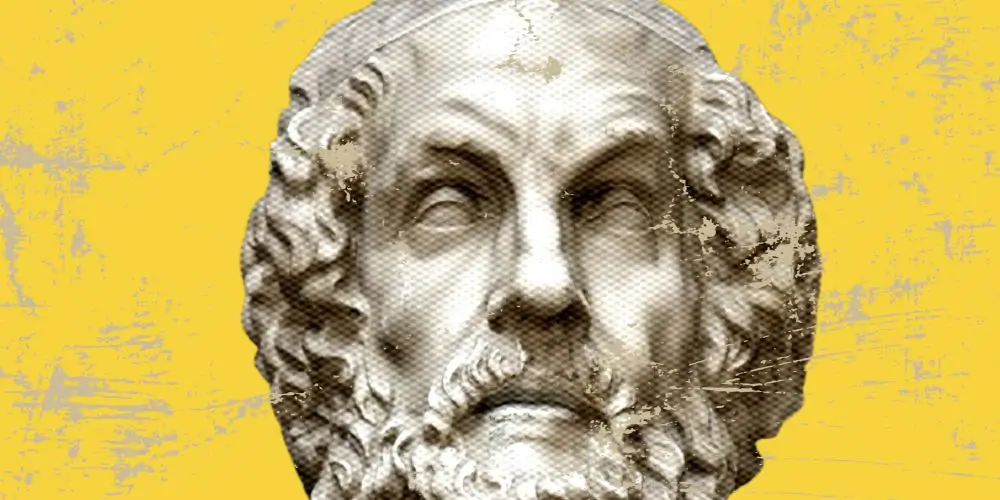
The enigmatic figure of Homer, traditionally credited with composing the epic poems The Iliad and The Odyssey, has been the subject of scholarly debate for centuries.
This ongoing discussion, known as the “Homeric Question,” explores the authorship, composition, and historical authenticity of these monumental works. The central question remains: Was Homer a singular poet, or are the epics the culmination of a collective oral tradition?
Historical Perspectives and Scholarly Debates
In antiquity, Homer was worshipped as the sole genius behind The Iliad and The Odyssey. However, during the 18th and 19th centuries, scholars began to challenge this view. The seminal work of Friedrich August Wolf, Prolegomena ad Homerum (1795), argued that the epics were not the product of a single author but rather evolved from a series of smaller, independent songs passed down orally for centuries before being compiled into the texts we recognize today.
(Read the full article below)
This perspective gave rise to two major schools of thought: the "Analysts," who argued that multiple authors contributed to the epics, and the "Unitarians," who believed that a single poet was responsible for the cohesive structure and artistic unity of the works.
Oral Tradition and Milman Parry’s Contribution
In the early 20th century, a shift in the scholarly paradigm occurred thanks to the groundbreaking research of Milman Parry on oral composition. Parry identified recurring phrases and epithets within the Homeric texts, suggesting that these elements were characteristic of oral storytelling techniques.
His work demonstrated that the epics were the products of a long-standing oral tradition, where bards used standardized expressions to aid in memorizing and reciting lengthy narratives.
Linguistic and Archaeological Insights
Linguistic analyses further framed the debate. Studies using diachronic models of language have dated the composition of the Homeric epics to the 8th century BCE, aligning with traditional estimates. Archaeological efforts, particularly Heinrich Schliemann’s excavations at Hisarlik (ancient Troy), have uncovered evidence suggesting that events similar to those described in The Iliad may have historical foundations. However, these findings do not definitively confirm the existence of Homer as a historical figure.
The Issue of Homer’s Historicity
Despite his iconic place in Western literature, no concrete biographical evidence confirms Homer as a historical person. Ancient sources provide conflicting testimonies: Herodotus dates Homer around 850 BCE, while others place him in different centuries or even deny his existence altogether.
The so-called Lives of Homer, written centuries after the supposed time of Homer, mix legends and conjectures. Every Greek city vied to claim Homer as their own. Modern scholars generally consider these accounts to be mythological rather than factual.
As classical scholar Mary R. Lefkowitz argues in The Lives of the Greek Poets (1981), these biographies reflect more the values and imagination of later generations than the true Homer. Furthermore, there are no inscriptions, contemporary records, or archaeological findings that confirm his existence. In this light, many scholars regard Homer not as a historical figure, but as a symbolic name, perhaps representing a guild of bards or the pinnacle of poetic tradition.
Modern Scientific Consensus
Modern scholarship largely agrees that The Iliad and The Odyssey represent the apex of a rich oral tradition, which was refined over generations before being transcribed into written form. While the idea of a singular poet named Homer remains a topic of research, there is no definitive evidence to confirm his existence. The epics likely represent a composite of collective storytelling that embodies the cultural and historical consciousness of Ancient Greece.
Unraveling the “Homeric Question”: The Search for the Existence of Homer
The enigmatic figure of Homer, traditionally credited with composing the epic poems The Iliad and The Odyssey, has been the subject of scholarly debate for centuries.
This ongoing discussion, known as the “Homeric Question,” explores the authorship, composition, and historical authenticity of these monumental works. The central question remains: Was Homer a singular poet, or are the epics the culmination of a collective oral tradition?
Historical Perspectives and Scholarly Debates
In antiquity, Homer was worshipped as the sole genius behind The Iliad and The Odyssey. However, during the 18th and 19th centuries, scholars began to challenge this view. The seminal work of Friedrich August Wolf, Prolegomena ad Homerum (1795), argued that the epics were not the product of a single author but rather evolved from a series of smaller, independent songs passed down orally for centuries before being compiled into the texts we recognize today.
(Read the full article below)
This perspective gave rise to two major schools of thought: the "Analysts," who argued that multiple authors contributed to the epics, and the "Unitarians," who believed that a single poet was responsible for the cohesive structure and artistic unity of the works.
Oral Tradition and Milman Parry’s Contribution
In the early 20th century, a shift in the scholarly paradigm occurred thanks to the groundbreaking research of Milman Parry on oral composition. Parry identified recurring phrases and epithets within the Homeric texts, suggesting that these elements were characteristic of oral storytelling techniques.
His work demonstrated that the epics were the products of a long-standing oral tradition, where bards used standardized expressions to aid in memorizing and reciting lengthy narratives.
Linguistic and Archaeological Insights
Linguistic analyses further framed the debate. Studies using diachronic models of language have dated the composition of the Homeric epics to the 8th century BCE, aligning with traditional estimates. Archaeological efforts, particularly Heinrich Schliemann’s excavations at Hisarlik (ancient Troy), have uncovered evidence suggesting that events similar to those described in The Iliad may have historical foundations. However, these findings do not definitively confirm the existence of Homer as a historical figure.
The Issue of Homer’s Historicity
Despite his iconic place in Western literature, no concrete biographical evidence confirms Homer as a historical person. Ancient sources provide conflicting testimonies: Herodotus dates Homer around 850 BCE, while others place him in different centuries or even deny his existence altogether.
The so-called Lives of Homer, written centuries after the supposed time of Homer, mix legends and conjectures. Every Greek city vied to claim Homer as their own. Modern scholars generally consider these accounts to be mythological rather than factual.
As classical scholar Mary R. Lefkowitz argues in The Lives of the Greek Poets (1981), these biographies reflect more the values and imagination of later generations than the true Homer. Furthermore, there are no inscriptions, contemporary records, or archaeological findings that confirm his existence. In this light, many scholars regard Homer not as a historical figure, but as a symbolic name, perhaps representing a guild of bards or the pinnacle of poetic tradition.
Modern Scientific Consensus
Modern scholarship largely agrees that The Iliad and The Odyssey represent the apex of a rich oral tradition, which was refined over generations before being transcribed into written form. While the idea of a singular poet named Homer remains a topic of research, there is no definitive evidence to confirm his existence. The epics likely represent a composite of collective storytelling that embodies the cultural and historical consciousness of Ancient Greece.
Read more literary stories below: