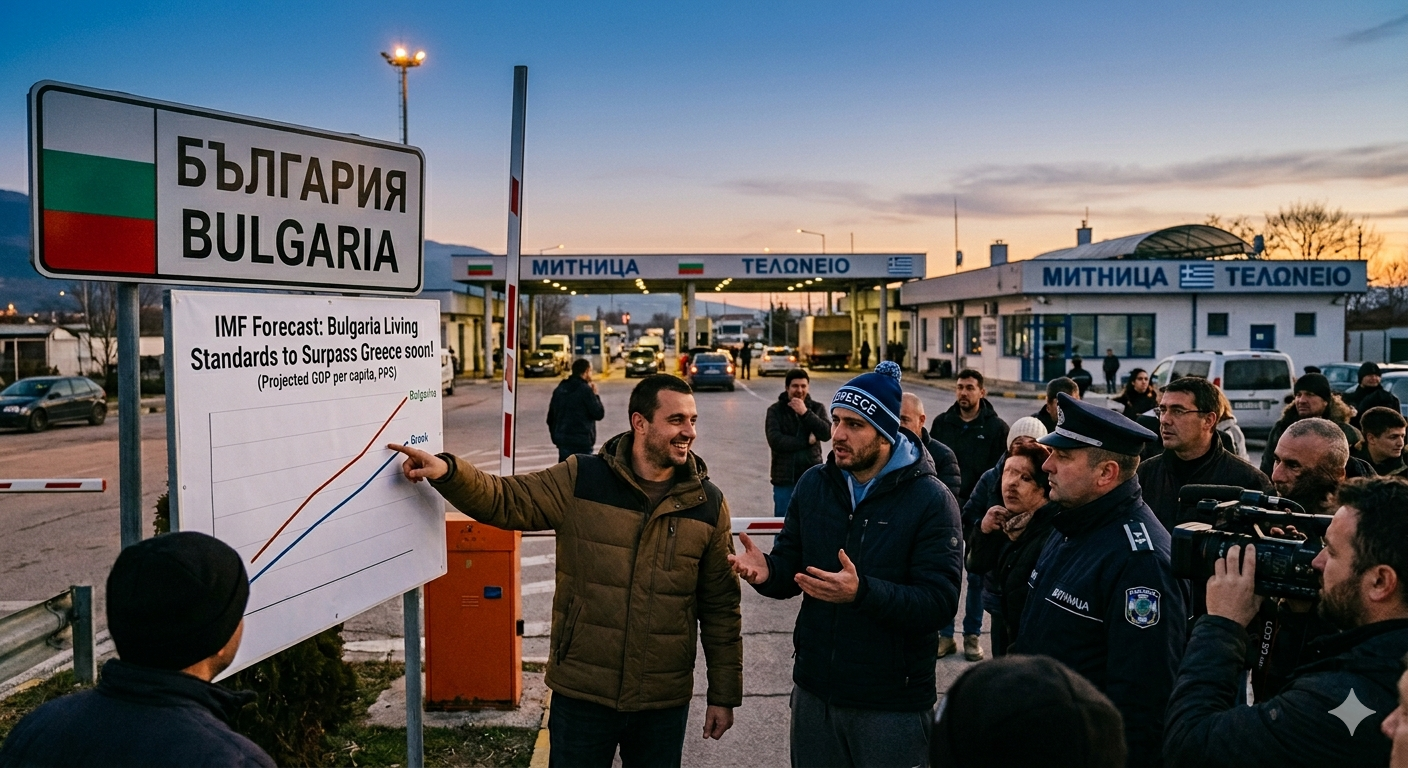
A new projection by the International Monetary Fund is raising eyebrows across Europe, as it suggests that Bulgaria could overtake Greece in GDP per capita by 2030 — a key measure of living standards.
According to the forecast, the comparison is based on purchasing power parity (PPP), meaning it reflects what people can actually afford in each country rather than just raw income figures. Under this metric, Bulgaria is expected to gradually close the gap and move ahead within the next few years.
The data shows Bulgaria climbing to around €56,000 per capita by 2030, while Greece is projected to fall slightly behind in the rankings, dropping to 32nd place compared to Bulgaria’s 30th.
This shift is striking when considering that Greece still maintains a higher GDP per capita today. IMF estimates for 2026 place Greece at roughly $47,000 (PPP), compared to Bulgaria at about $45,000 — meaning the gap still exists but is narrowing.
The trend highlights a broader issue: while Greece has experienced steady growth and recovery in recent years, including rising tourism and declining unemployment, its long-term convergence with other European economies appears slower than expected.
At the same time, Bulgaria — despite still being among the lowest-ranked economies in the EU — is projected to improve faster relative to its size, gradually catching up in real purchasing power.
The takeaway is clear: this is not about absolute wealth, but about momentum. If current trends continue, the economic gap between the two countries may reverse — a symbolic and strategic shift in the Balkans that would have been unthinkable just a decade ago.