
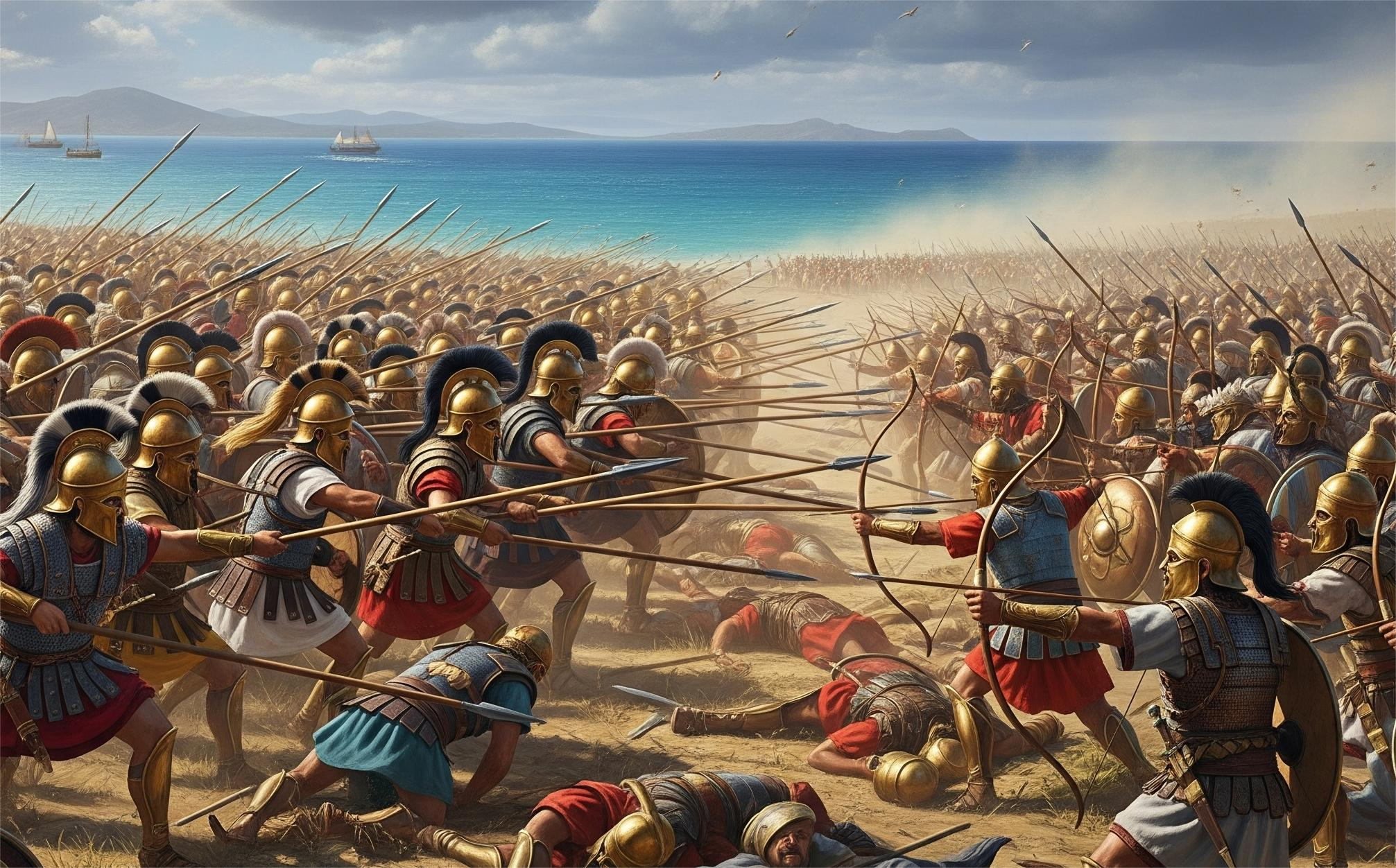
One of the defining moments of early Greek history was the Persian Wars, a series of conflicts between the vast Persian Empire and a coalition of Greek city-states. The Battle of Marathon in 490 BCE marked a critical turning point.
When King Darius I of Persia sent a military expedition to punish Athens for supporting a rebellion in Ionia, the Athenian army met the Persians at the plain of Marathon. Despite being heavily outnumbered, the Athenians, led by Miltiades, won a stunning victory. Their disciplined hoplite phalanx overwhelmed the Persian forces, and the remaining invaders fled to their ships.
The Battle of Marathon held immense symbolic importance. It demonstrated that a small, free citizen army could defeat a professional imperial force. The victory fostered pride and unity among the Greeks, especially in Athens, which would rise in power and prestige. The legendary run of a messenger from Marathon to Athens to announce the victory—said to be the origin of the modern marathon—further immortalized the battle in Western cultural memory.


