
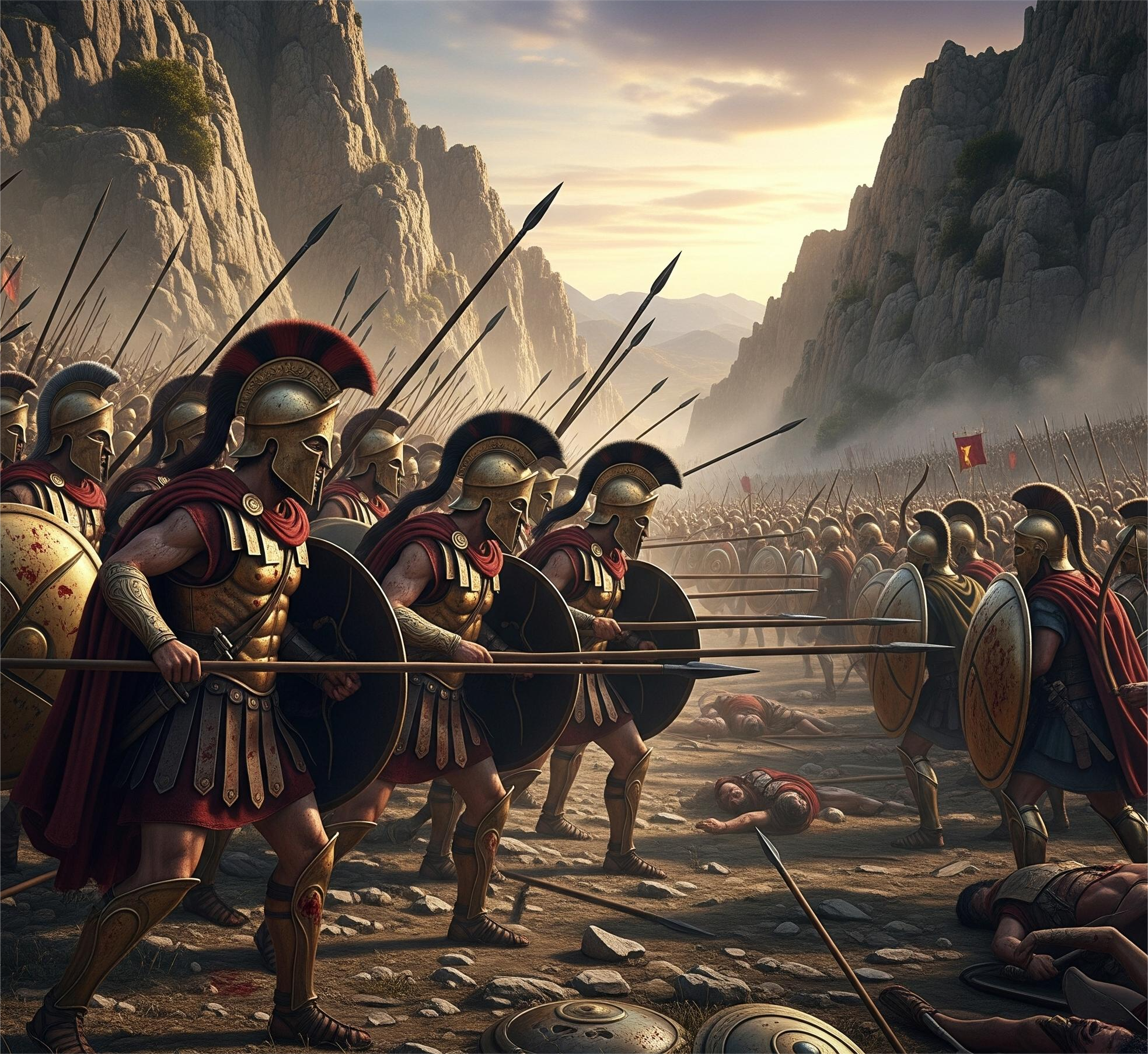
In 480 BCE, the Persian king Xerxes I launched a massive invasion of Greece, seeking to avenge his father Darius's defeat at Marathon. As his immense army marched southward, a coalition of Greek city-states chose to make a stand at the narrow pass of Thermopylae. Leading this resistance was the Spartan king Leonidas, accompanied by a small force of about 7,000 Greeks—including the now-legendary 300 Spartans.
For three days, the vastly outnumbered Greeks held off the Persian advance in a masterclass of tactical defense. The narrow geography of the pass neutralized the numerical superiority of Xerxes’s forces. However, a Greek traitor named Ephialtes revealed a mountain path to the Persians, allowing them to outflank the defenders. Realizing the end was near, Leonidas dismissed most of the allied troops and remained with his 300 Spartans and a few hundred allies to fight to the death.
Though a tactical defeat, the stand at Thermopylae became a powerful symbol of courage and sacrifice in the face of overwhelming odds. It inspired the Greek city-states to continue their resistance, culminating in future victories that preserved Greek independence.


