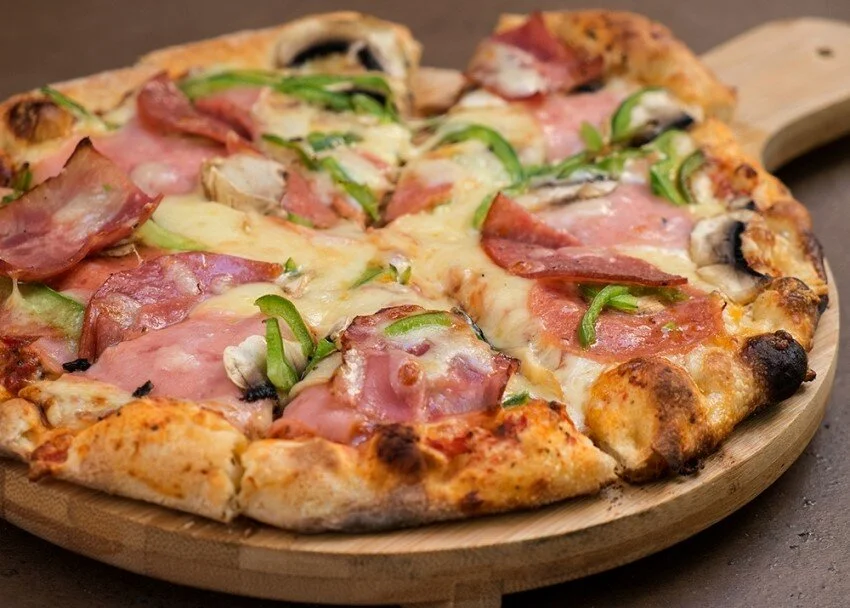
According to Carol Heltosky, a professor of history at the University of Denver and author of "Pizza: A Global History", the first time in world history that evidence of food made of dough and topped with various ingredients was found in working-class neighborhoods of Naples, Italy, in the early 17th century.
It was a food that workers usually obtained from street vendors or from small boxes at a fairly low price, food for the poor people of southern Italy that many wealthy writers of the time described as "disgusting". Pizzas of the time contained cheese, tomatoes, anchovies, oil, much like what we define as pizza today.
In 1889, Queen Margarita, who grew up in France, wanted to try a more progressive dish, away from escargot, bouillabaisse and other archetypes of French gourmet cuisine. She asked Rafaele Esposito, the owner of Pizzeria Brandi, a famous pizzeria in Naples, to prepare a series of pizzas for her to try. One of the pizzas that arrived in the Queen's dining room was topped with tomatoes, cheese and basil. This combination of fresh and fragrant ingredients drove her crazy. She made sure that the fame of this wonderful dish spread throughout the country, to which she eventually gave her name. And it became 'Pizza Margarita'.
The secret of the ancient Greek pizza
It is not so unlikely that an idea from ancient Greece reached Italy. In the 5th century BC, 'plakous' was a dough baked in an improvised oven with wood, containing goat cheese, garlic and olive oil. This pastry was sold in bakeries in the market of ancient Athens and was more of a gourmet version of what we call cheese-pie today.
In accounts from Plato's "Gorgias", as well as from the Athenian Naukratitis "Sophists", it is clear that ancient Athens was full of bakeries that made bread, cheese bread, olive bread, and many delicious pastries. Then the ancient Greek bakers taught the Romans - who until then ate a preparation of half-baked millet porridge - the secrets of bread-making and eventually, becoming eight pieces in a wood-fired oven called 'Margarita'.
It is worth noting, however, that as early as the 6th century BC, before the birth of the Athenian bakery, there is evidence that the Persian army under Darius ate a baked pastry with cheese and palm kernels before every battle to gather strength.