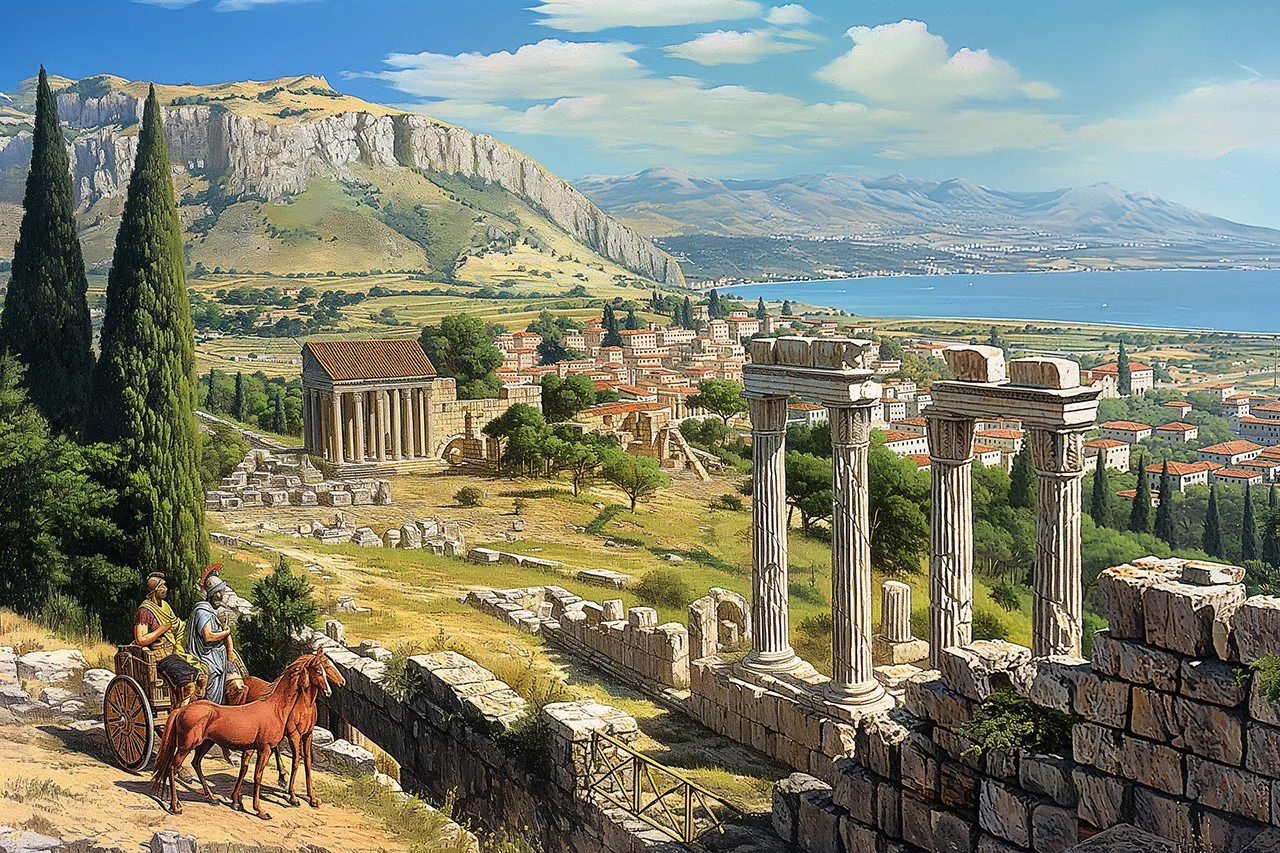
Magna Graecia, the name given by the Romans to the Greek colonies of southern Italy and Sicily, was a region of immense cultural and linguistic significance. Between the 8th and 6th centuries BC, Greek settlers from various city-states established prosperous colonies, bringing with them their distinct dialects and traditions. This interaction led to the formation of unique linguistic variations that, while rooted in mainland Greek dialects, evolved in response to local influences and inter-community exchanges. The Greek dialects of Magna Graecia—primarily Doric, Ionic, and Aeolic—were instrumental in shaping the literary, philosophical, and everyday linguistic landscape of the region.
The Founding of Magna Graecia and Linguistic Diversity
The Greek colonization of southern Italy and Sicily was driven by multiple factors, including overpopulation, economic ambitions, and political instability in mainland Greece. Different city-states founded colonies, often maintaining linguistic traditions from their places of origin. Consequently, Magna Graecia became a mosaic of Greek dialects, each reflecting the cultural heritage of the settlers who established them.
The most prevalent dialect was Doric, introduced primarily by settlers from the Peloponnesian region, such as those from Sparta and Corinth. Major Doric-speaking cities included Tarentum (modern Taranto), Croton, and Locri. The Doric dialect was distinguished by phonological features such as the retention of the long alpha (α) where other dialects used eta (η) and the presence of specific vowel shifts and consonantal differences. Doric's influence extended beyond everyday speech into inscriptions, legal texts, and poetry.
Ionic, another major dialect in Magna Graecia, was spoken in colonies established by settlers from Euboea and Ionia, particularly in coastal areas such as Neapolis (modern Naples). Ionic was characterized by its lighter phonetic features, including the shift from long alpha (α) to eta (η) and a greater use of diphthongs. This dialect played a crucial role in the development of early Greek prose, including historical and philosophical writings.
The Aeolic dialect, though less widespread, was present in select areas of Sicily and southern Italy. Aeolic, linked to settlers from Thessaly and Lesbos, had distinct phonetic and morphological traits, such as the preservation of archaic vowel sounds and unique verb formations. Despite being less prominent, Aeolic played a significant role in poetic traditions, particularly in lyric poetry.
Dialects and Their Literary and Epigraphic Contributions
The Greek dialects of Magna Graecia were not only spoken but also deeply embedded in written traditions. Epigraphic evidence from stone inscriptions, decrees, and legal codes demonstrates the diversity and formal use of these dialects in public and religious life. Each dialect contributed uniquely to literary production:
Doric and Poetic Expression: The Doric dialect had a strong presence in choral poetry and dramatic works. Notably, Pythagoras, the famed philosopher and mathematician from Croton, likely composed his teachings in Doric. The dialect was also used by poets such as Archilochus, known for his innovative use of meter and invective poetry.
Ionic and Prose Traditions: Given its association with intellectual and literary pursuits, Ionic was the preferred dialect for many early prose writers. Its use in philosophical discourse and historical narratives made it a crucial medium for the transmission of Greek knowledge to later generations.
Aeolic and Lyric Poetry: One of the most renowned poets of Magna Graecia, Stesichorus of Himera (Sicily), composed his works in Aeolic Greek. His poetry, often thematically linked to Homeric epics, demonstrated the adaptability and richness of Aeolic in literary traditions.
The Decline and Legacy of Greek Dialects in Magna Graecia
Despite their prominence, the Greek dialects of Magna Graecia gradually declined following the Roman conquest in the 3rd century BC. As Latin became the dominant language of administration, governance, and daily communication, Greek dialects were increasingly marginalized. However, elements of Greek linguistic heritage persisted in local dialects and inscriptions for centuries.
The legacy of these dialects is preserved in the study of ancient Greek linguistics and philology. The inscriptions and literary fragments from Magna Graecia offer invaluable insights into the diversity of the Greek language and its evolution over time. Scholars continue to analyze these texts to understand the interplay between Greek and indigenous Italic languages, shedding light on the broader history of linguistic exchange in the Mediterranean.
The ancient Greek dialects of Magna Graecia stand as a testament to the region’s rich history of colonization, cultural exchange, and linguistic innovation. Doric, Ionic, and Aeolic each played a vital role in shaping the intellectual and artistic achievements of the Greek settlers in southern Italy and Sicily. Though these dialects eventually gave way to Latin, their impact on Greek literature, philosophy, and epigraphy remains a cornerstone of classical studies. The study of these dialects not only deepens our understanding of ancient Greek but also highlights the enduring influence of Magna Graecia in the broader narrative of Mediterranean history.