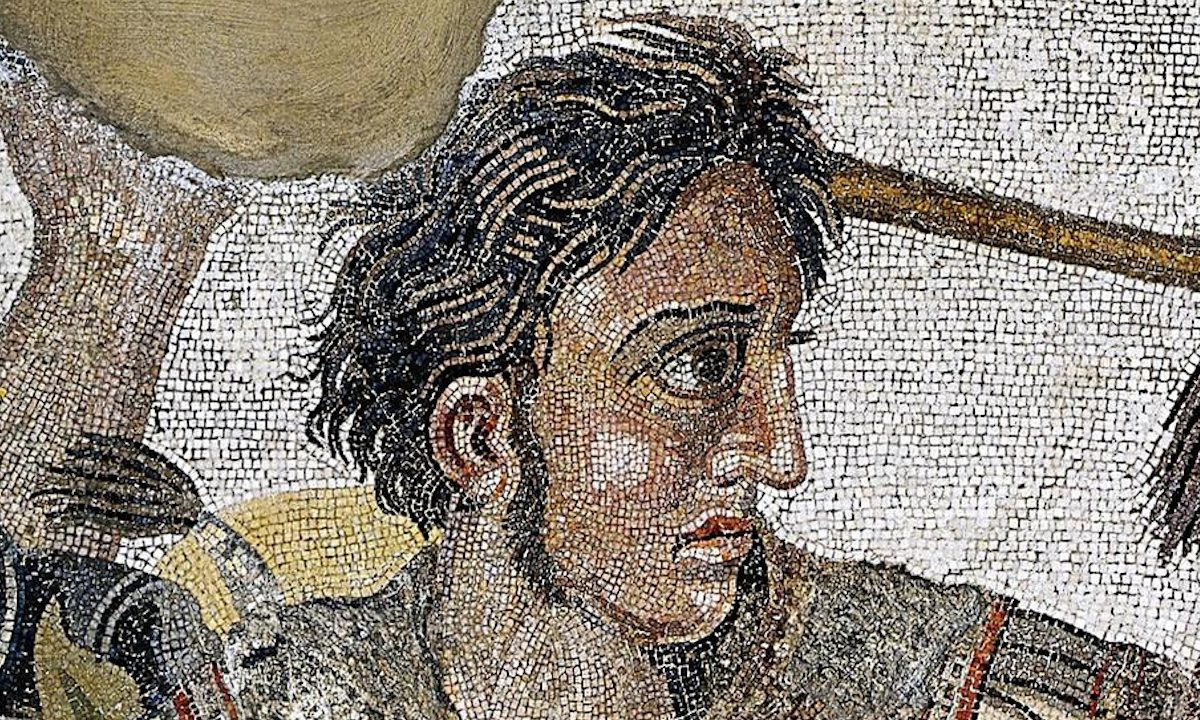
The Battle of Issus mosaic, one of the most iconic pieces of ancient art, portrays Alexander the Great in a dramatic confrontation with the Persian king, Darius III. Discovered in Pompeii and dating back to the 2nd century BCE, this masterpiece is believed to be a Roman copy of a Hellenistic painting. However, one detail has puzzled many observers—the darker-than-expected skin tone of Alexander.
Artistic Techniques and Aesthetic Choices
The depiction of Alexander follows the stylistic conventions of Hellenistic art, which often used contrasting colors to create depth and intensity in visual compositions. In many ancient Greek frescoes and sculptures, warriors and leaders were rendered with darker tones, symbolizing their endurance and exposure to the elements during military campaigns. Given that Alexander spent much of his life on the battlefield, his complexion would naturally have been affected by constant sun exposure.
The Influence of Mosaic Construction
Another factor that may explain Alexander’s darker skin tone lies in the materials used. The mosaic was crafted using natural stone, which had a limited color palette. This could have resulted in a somewhat darker shade for his complexion. Additionally, centuries of aging and material degradation may have altered the original hues, making his skin appear darker than it was when the mosaic was first created.
Symbolism in Ancient Art
There is also the possibility that Alexander’s darker complexion was a deliberate symbolic choice. In ancient Greek art, color differentiation was often used to highlight status, power, or divine qualities. Compared to Darius, who is depicted in softer tones with an expression of distress, Alexander is illustrated with strong shading and a commanding presence, emphasizing his unstoppable nature as a military leader.
A Matter of Interpretation
While no definitive explanation exists, most evidence suggests that Alexander’s darker skin tone in the Battle of Issus mosaic is not necessarily a reflection of his actual appearance. Instead, it likely results from artistic conventions, technical limitations, and the passage of time. Despite these uncertainties, the mosaic remains one of the most powerful depictions of Alexander the Great, capturing the essence of his legendary status and military prowess for centuries to come.