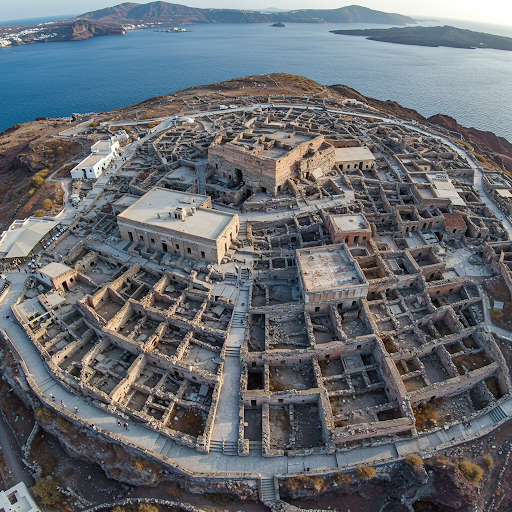
The Bronze Age settlement of Akrotiri, located on the Greek island of Santorini, is often referred to as the "Pompeii of the Aegean" due to its remarkable state of preservation following a catastrophic volcanic eruption. Just as Pompeii was buried under layers of ash from Mount Vesuvius in 79 CE, Akrotiri was similarly entombed by the massive eruption of Thera around 1600 BCE. This natural disaster paradoxically preserved much of the settlement, offering invaluable insights into Aegean civilization.
Similarities Between Akrotiri and Pompeii
Both Akrotiri and Pompeii were thriving urban centers before their sudden destruction. They featured advanced infrastructure, elaborate art, and complex social structures, all of which have been remarkably preserved under volcanic material.
Urban Planning and Architecture
Excavations at Akrotiri reveal a well-organized city with multi-story buildings, sophisticated drainage systems, and well-paved streets. Similarly, Pompeii's urban layout included roads, public squares, and residential areas with advanced engineering, indicating a high degree of planning and development in both societies.Preservation of Frescoes and Art
One of the most striking similarities is the preservation of intricate frescoes. The walls of Akrotiri's homes and public spaces feature vibrant paintings depicting nature, animals, and everyday life, much like those found in Pompeii. These artworks provide a window into the cultural and aesthetic sensibilities of both civilizations.A Glimpse into Daily Life
Just as Pompeii’s remains reveal details about Roman daily life, Akrotiri’s excavations have unearthed pottery, furniture, and tools, shedding light on the lives of its Minoan inhabitants. The presence of large storage jars and sophisticated trade goods suggests that Akrotiri was an important commercial hub in the Aegean.Absence of Human Remains
A key difference between the two sites is the absence of human remains in Akrotiri, whereas Pompeii’s excavation sites include casts of people caught in the disaster. This suggests that the residents of Akrotiri may have had sufficient warning to evacuate before the eruption, whereas Pompeii’s sudden catastrophe left many inhabitants trapped.
Conclusion
Akrotiri and Pompeii serve as extraordinary time capsules, preserving the daily life, art, and culture of their respective civilizations. While both were devastated by volcanic eruptions, the rich archaeological findings at these sites continue to offer unparalleled insights into the ancient world. Their study not only deepens our understanding of past societies but also highlights the enduring impact of natural disasters on human history.