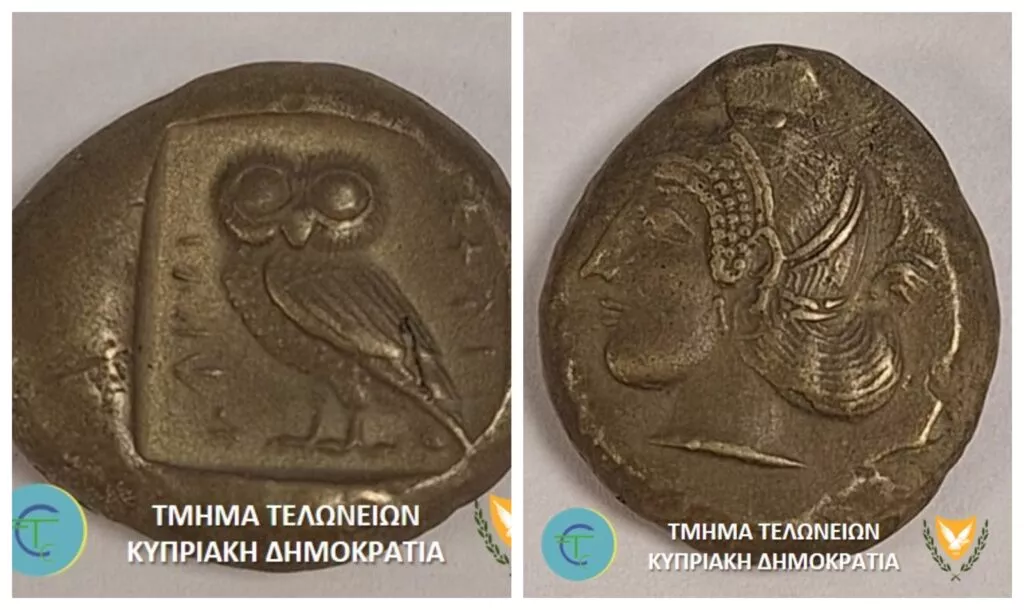
In a significant win against the illegal trade of cultural heritage, Cyprus’ Department of Antiquities took possession of two ancient coins last Friday (February 28, 2025), as part of ongoing efforts to combat antiquities smuggling.
The coins—both nearly 2,500 years old—were discovered in parcels during routine inspections conducted by customs officers at the island’s Mail Sorting Center in 2022 and 2023. Following expert evaluation, the Department of Antiquities confirmed their historical value, leading to their official confiscation and seizure by the Customs Department.
A Silver Stater from Ancient Lycia
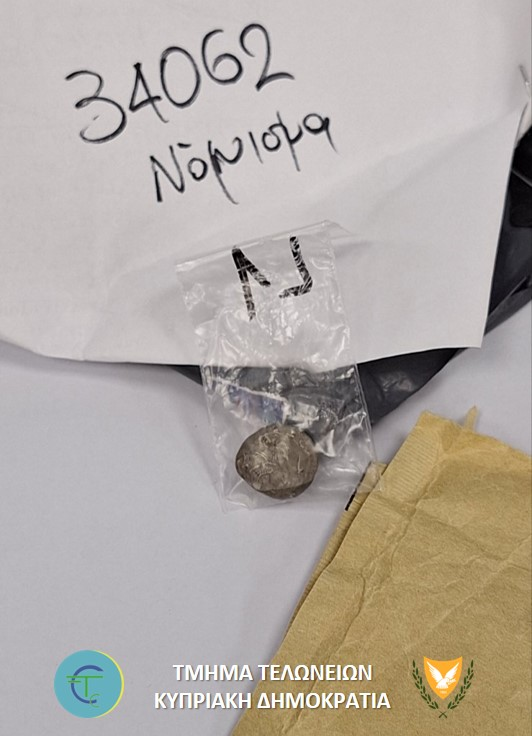
The first coin was intercepted on January 31, 2022, in a parcel originating from the United Kingdom. It was identified as a silver stater issued by Kherei, a ruler of ancient Lycia, dating between 410–390 BC. The coin was confiscated after the recipient failed to provide the required documentation proving legal ownership.
A Ptolemaic Coin with a Curious Backstory
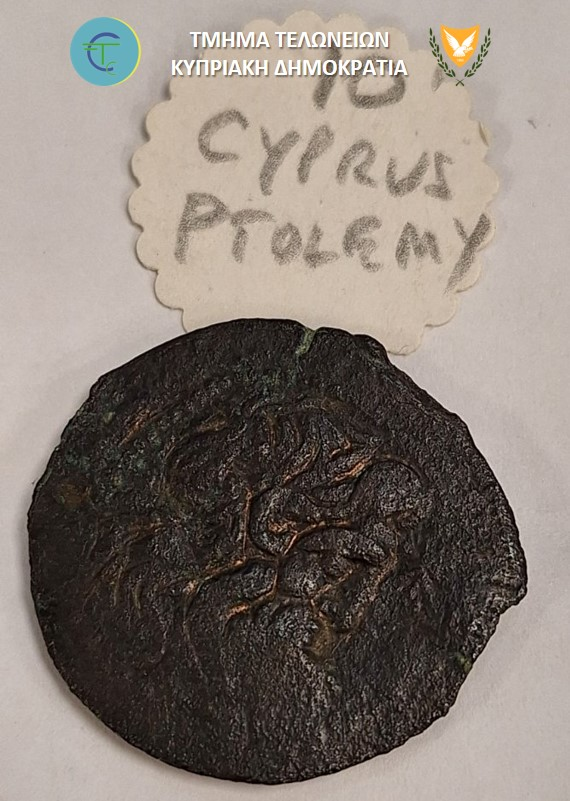
The second coin surfaced a year later, on January 10, 2023, in another UK-bound package. This one was a Cypriot coin from the Ptolemaic period, estimated to date from 310 to 30 BC. According to a handwritten note by the sender, the coin had been discovered in 1968 in a riverbed near Famagusta.
However, authorities noted that the sender did not possess a valid export license, as required under the Cyprus Antiquities Law. As a result, the coin was deemed to have been illegally exported from the Republic of Cyprus.
Preserving History, Protecting Heritage
Both coins are considered rare and highly valuable, not just for their age but for their connection to key periods in Cypriot and global history. Their recovery highlights the critical importance of collaboration between customs and antiquities authorities.
By ensuring these artifacts undergo thorough examination and conservation by qualified specialists, Cyprus safeguards its cultural legacy—preserving the past for the benefit of the public and future generations.
This case serves as a powerful reminder of the threats facing cultural heritage, and of the vigilant efforts needed to protect it.