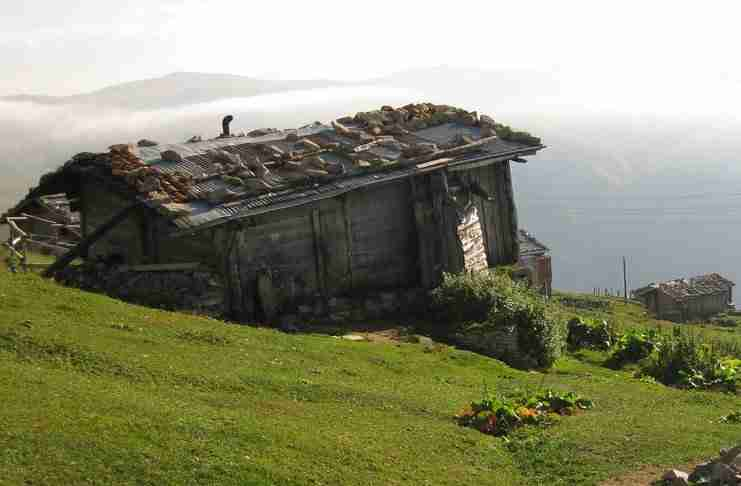
While most modern Greeks today know little—if anything—about the ancient Greek language, there is a small, isolated community in northeastern Turkey that continues to speak a dialect remarkably close to it.
Along the coast of the Black Sea, around 5,000 people are believed to speak a variant of Greek that retains many features of the language once spoken by Socrates and Plato. This linguistic treasure is found in a cluster of villages near the Turkish city of Trabzon, in what was once the ancient region of Pontus.
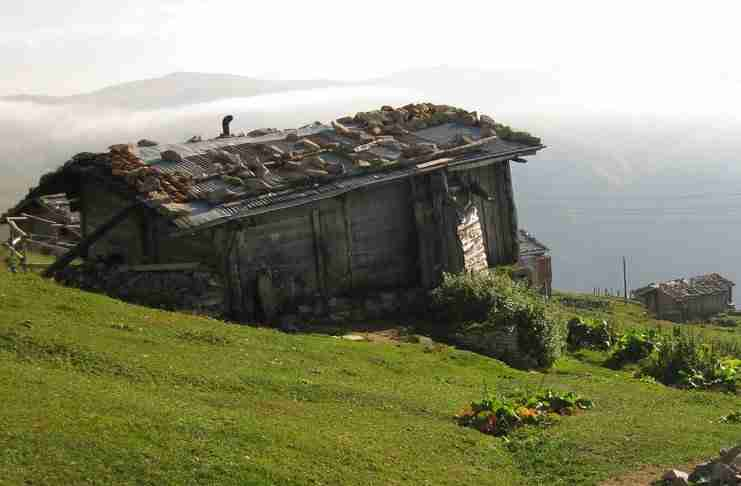
Linguists have identified the dialect as Romeyka, a rare branch of Pontic Greek. What makes it so extraordinary is that it preserves structural elements of ancient Greek that have disappeared from all other modern Greek dialects. Notably, Romeyka still uses the infinitive, a grammatical form that has vanished from contemporary Greek. As Dr. Ioanna Sitaridou, a lecturer in philology at the University of Cambridge, explains: “The infinitive has been lost in Modern Greek, but it survives in Romeyka.”
This linguistic anomaly offers scholars a unique window into the ancient language. By studying Romeyka, researchers are gaining valuable insights into how ancient Greek evolved over time—and in some respects, how it was once spoken in daily life.
The origins of this dialect are still debated. One theory suggests that the speakers of Romeyka are direct descendants of ancient Greeks who settled along the Black Sea as early as the 6th or 7th century BCE. Another possibility is that they descend from indigenous peoples or migrant tribes who adopted the language of the Greek colonists over centuries of interaction.
Interestingly, despite their linguistic heritage, the Romeyka-speaking villagers are devout Muslims. This religious identity is part of what allowed them to remain in Turkey following the 1923 Treaty of Lausanne, which mandated a population exchange between Greece and Turkey based on religion.
Romeyka is not just a linguistic curiosity—it is a living connection to one of the world’s most influential ancient languages, surviving in a modern world that has largely moved on. As researchers continue to study and document this rare dialect, it stands as a powerful reminder of how deeply language can preserve the past.