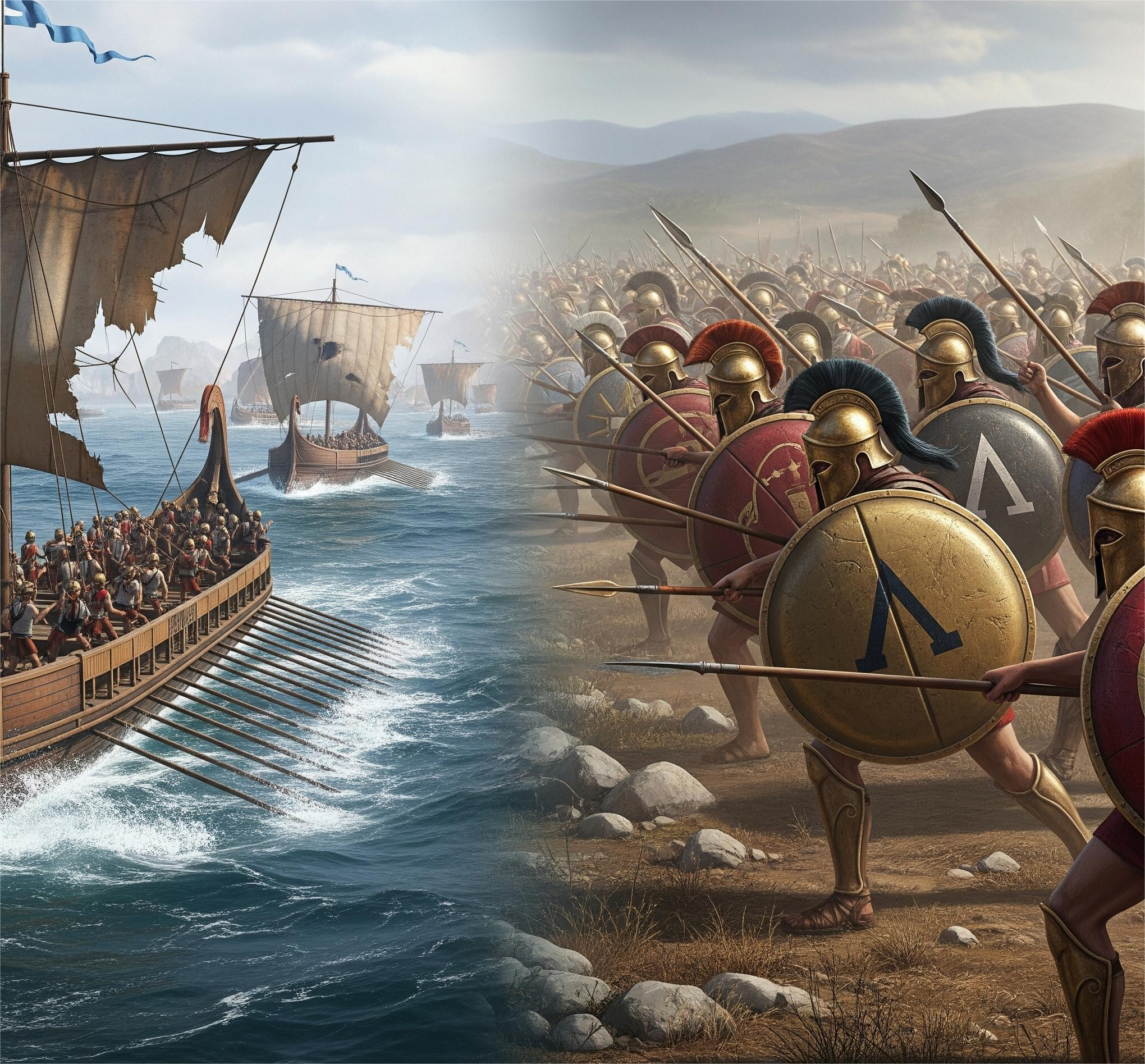
Tensions between Athens and Sparta eventually erupted into the Peloponnesian War (431–404 BCE), a protracted and devastating conflict that engulfed the entire Greek world. On one side stood the Delian League, led by Athens, with its powerful navy and democratic government; on the other, the Peloponnesian League, led by Sparta, known for its disciplined land forces and oligarchic structure.
The war was marked by a series of shifting strategies, betrayals, and brutal sieges. Early Athenian strategies relied on naval supremacy and retreating behind the city's Long Walls, while Spartan tactics focused on ravaging Athenian territory. The war took a toll on both sides, with plague decimating Athens’ population early on—including Pericles himself.
After brief truces and the rise of unstable alliances, the war reignited, growing even more destructive. Sparta’s eventual alliance with Persia, which provided funding for a navy, tipped the scales. In 404 BCE, after a final naval defeat at Aegospotami and a prolonged siege, Athens surrendered. The war ended Athens' Golden Age and left the Greek world fractured and weakened.