Maritime disappearances, sailors' superstitions, and the stories that linger after a vessel is gone.
Islands Shaped by the Sea
The Oinousses archipelago lies in the northeastern Aegean, near the island of Chios and the coast of Asia Minor. Its maritime setting has long connected island life with shipping, fishing, navigation, and the movement of people across the eastern Mediterranean. In such communities, the sea is both a source of opportunity and a powerful reminder of human vulnerability.
A vessel leaving harbor carries more than passengers and cargo. It also carries the expectations of families, the investment of owners, the work of sailors, and the hopes of people waiting for its return. When a ship disappears, is wrecked, or arrives without its expected crew, the event can leave unanswered questions that persist for generations.
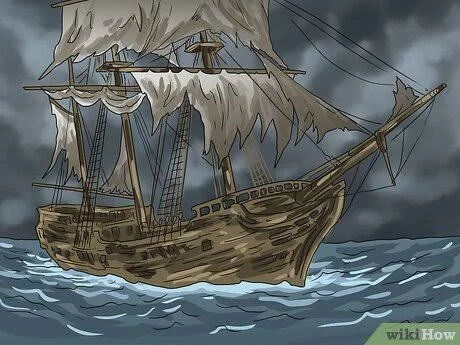
Stories about ghost ships have emerged in many maritime cultures. Some describe vessels appearing in fog before vanishing, while others tell of ships believed to continue sailing after their crews have died. Such narratives can reflect historical tragedies, navigational uncertainty, inherited superstition, or the imaginative reinterpretation of an unusual sighting.
The idea of rare ghost ships around Oinousses offers a compelling framework for investigating the relationship between maritime history and supernatural storytelling. Specific ghost-ship accounts attributed to the archipelago, however, need to be verified through local sources rather than presented as established incidents.
Why Sailors Developed Supernatural Traditions
Life at sea exposes people to conditions that can be difficult to control. Weather changes rapidly, visibility can deteriorate, and a vessel may be separated from land for long periods. Before modern communication and navigation systems, sailors often had limited access to reliable information about distant vessels or changing conditions.
These circumstances helped create an environment in which stories about omens, spirits, and mysterious encounters could flourish. Sailors passed traditions between ships and ports, adapting familiar stories to new routes and communities. A narrative that began in one maritime region could eventually circulate across a much wider area.
Ghost ships are particularly effective stories because they combine recognizable technology with an impossible event. A ship is an ordinary object, yet the idea of a vessel appearing without a living crew challenges expectations about the relationship between movement, life, and death.
Some accounts may have originated in genuine sightings of abandoned vessels, wreckage, or ships seen under unusual atmospheric conditions. Others may be literary creations or later embellishments. Without contemporary documentation, it can be difficult to establish how a particular story developed.
For researchers studying Oinousses, maritime folklore should be compared with the island's documented shipping history, local oral accounts, and records of known maritime incidents. This would help determine whether a ghost-ship narrative is associated with a specific event or belongs to a broader storytelling tradition.
Fog, Light, and the Uncertainty of the Horizon
The visual environment at sea can produce striking effects. Fog reduces contrast, distant objects may appear distorted, and the relative movement of a vessel can be difficult to judge when there are few landmarks. At night, lights reflected on water can create impressions that change as the observer or vessel moves.
These conditions offer possible explanations for some unusual maritime sightings, although they cannot account for every reported experience. Historical accounts must be evaluated individually, considering the weather, location, visibility, the observer's position, and the information available at the time.
Modern oceanography and meteorology can help reconstruct the conditions surrounding a reported sighting. Historical maps and navigation records can clarify where vessels were traveling, while ship registries and newspaper archives may establish whether a missing or abandoned vessel was reported in the same area.
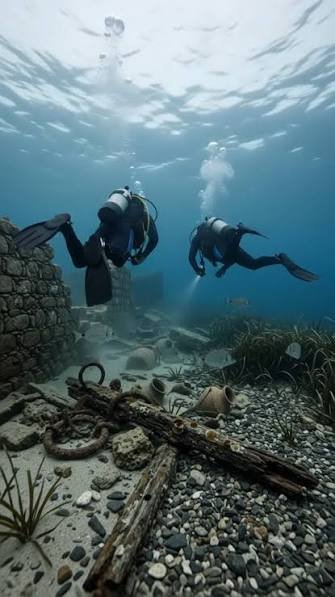
Underwater archaeology adds another dimension. A shipwreck can preserve evidence of construction methods, cargo, trade connections, and the circumstances of a vessel's final voyage. The discovery of a wreck does not validate a ghost story, but it can provide historical context for the maritime dangers that shaped local memory.
A careful investigation would therefore distinguish documented wrecks, historical sightings, later folklore, and supernatural interpretations. These categories can interact, but they should not be treated as interchangeable forms of evidence.
The Maritime Memory of Oinousses
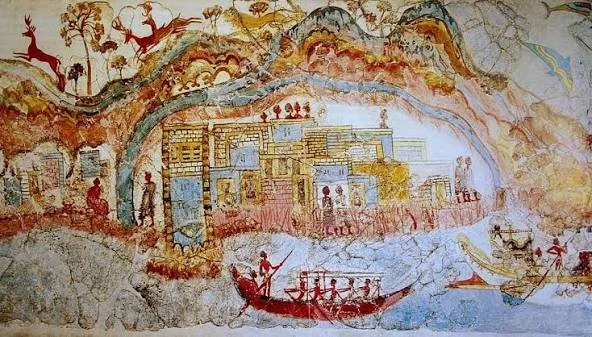
The northeastern Aegean has been an important maritime region for centuries. Routes connecting islands, ports, and the Anatolian coast supported trade, fishing, travel, and communication. Communities developed knowledge of local waters while remaining connected to wider networks of shipping and commerce.
In island societies, maritime memory often survives through family histories, stories about voyages, accounts of accidents, and traditions associated with particular vessels. A ship that failed to return could become part of a family's history, while a dangerous passage might be remembered through a story repeated to younger generations.
The historical study of Oinousses could draw on maritime archives, shipping records, port documents, photographs, and oral histories. Researchers might investigate whether local stories refer to named vessels, identifiable captains, or documented accidents. If a story cannot be linked to a historical incident, it can still be studied as folklore, provided its uncertain status is clearly acknowledged.
This approach also makes room for the experiences of sailors themselves. Their stories may reveal how crews understood danger, maintained morale, remembered lost colleagues, and developed shared customs. Supernatural narratives can sometimes communicate emotional truths about life at sea even when they do not describe literal events.
Modern Technology and the Search for Lost Vessels
Today's maritime investigations use tools that were unavailable to earlier generations. Satellite navigation, radar, sonar, underwater mapping, and digital shipping databases can help researchers locate vessels, reconstruct routes, and identify possible wreck sites.
Historical investigations can also benefit from digitized newspapers, searchable port records, and online archival catalogues. These resources may make it easier to compare reports from different locations and identify discrepancies in dates or descriptions.
However, technology has limitations. Older vessels may have left incomplete records, names may have changed across languages, and wrecks can be difficult to identify when little material survives. A location reported in a family story may also be imprecise, especially when the account has passed through several generations.
The most useful article would investigate the real maritime history of Oinousses and then examine how ghost-ship traditions fit within the broader culture of the Aegean. Where a specific legend can be documented, its development can be traced through historical sources and local testimony. Where evidence is missing, the story should remain an unverified tradition rather than a fabricated maritime mystery.