Household guardians, shepherd traditions, and the supernatural imagination of rural Crete.
The Hidden World of the Highland Household
Crete's mountainous interior has supported generations of shepherds, farmers, and families whose lives were closely connected to the land. Stone houses, seasonal grazing grounds, isolated mountain shelters, and traditional livestock practices formed part of a rural world in which daily life depended on weather, animals, family cooperation, and knowledge passed between generations.
In such environments, stories about unseen beings could become connected to the spaces people inhabited and the work they performed. A household might have traditions concerning protective spirits, while a shepherd might recount stories about unusual encounters in remote grazing areas. These narratives could express hopes for safety, anxieties about isolation, or respect for places whose histories were not fully understood.
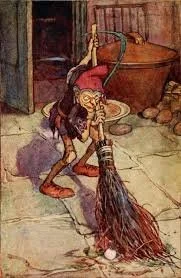
The title refers to brownie spirits, a term most strongly associated with Scottish and northern British folklore. Brownies are traditionally described as household beings that may perform helpful tasks when treated appropriately, although their behavior varies across stories. They should not automatically be treated as a recognized category of Cretan supernatural beings.
A more historically grounded investigation would compare the brownie motif with documented Greek household spirits, rural protective customs, and Cretan pastoral folklore. The central question would be how different communities imagined unseen helpers and guardians in the places where they lived and worked.
Spirits and the Meaning of Home
In traditional societies, the household was more than a building. It was a place of work, family continuity, food preparation, hospitality, worship, and the preservation of inherited customs. The home also contained valuable resources, from stored grain and tools to animals that might be housed nearby.
Stories about household spirits often reflect these practical concerns. A helpful being may protect the home or reward respectful behavior, while a troublesome spirit may represent disorder, neglect, or the consequences of violating customary expectations.
Across European folklore, household beings appear under different names and possess different characteristics. Some are associated with chores, some with the protection of property, and others with the boundaries between human and supernatural spaces. Their stories often explain why a household should be treated with care and why certain customs should not be ignored.
Greek folklore contains its own traditions concerning supernatural beings, including spirits associated with places, homes, and particular activities. However, the exact characteristics of these beings vary, and they should not be reduced to direct equivalents of Scottish brownies. Comparing traditions can reveal shared storytelling patterns while preserving the distinctions that make each tradition historically meaningful.
For Crete, researchers would need to examine Greek-language folklore collections, regional ethnographic studies, and recorded stories from local communities before identifying any particular household spirit as a traditional Cretan figure.
Shepherds and the Supernatural Landscape
Shepherding requires close attention to terrain, animal behavior, weather, and seasonal changes. In mountainous regions, livestock may be moved between grazing areas, and shepherds can spend long periods away from permanent settlements. The work requires practical knowledge as well as an ability to respond to uncertainty.
Remote landscapes have often become settings for stories about spirits, supernatural encounters, and unusual events. A strange sound heard at night, an animal behaving unexpectedly, or a sudden change in weather can become part of a memorable account. Such stories may also transmit practical lessons about danger, responsibility, and the importance of respecting the environment.
Cretan pastoral life offers a rich field for research into this relationship between work and storytelling. Historical studies of transhumance, livestock management, seasonal labor, and rural settlement can provide context for understanding the circumstances in which folklore developed.
Researchers could investigate whether particular supernatural narratives are associated with shepherds' huts, mountain springs, grazing paths, or periods when animals are especially vulnerable. They could also examine how stories changed as traditional pastoral practices encountered modern transportation, agricultural technology, and changing patterns of rural employment.
The objective would not be to assume that shepherds believed in one standardized set of spirits, but to understand how different communities used stories to interpret their surroundings and preserve local knowledge.
Recording Folklore Before It Changes
Oral traditions are not static. A story may change when it is retold, when communities move, or when new influences enter local culture. A narrative once associated with a particular household might later become a general village legend, while an imported character might gradually acquire a local identity.
This makes the study of oral history particularly valuable. Interviews can record the exact terms people use, the circumstances in which they heard a story, and whether they regard it as a historical account, a family tradition, a religious belief, or a form of entertainment.
Comparisons across generations can reveal how the meaning of a story changes. Older accounts may emphasize household obligations or agricultural work, while more recent versions may focus on mystery, tourism, or nostalgia for rural life.
Researchers should also distinguish living traditions from stories introduced through books, films, games, and the internet. Cultural exchange is a normal part of folklore, but identifying when a motif entered a community helps explain its development.
An article about unseen spirits among Cretan highland herds can therefore explore a broader and historically valuable subject: how rural communities imagine protection, cooperation, and the unseen forces that inhabit familiar places. The brownie provides a comparative starting point, while documented Cretan traditions must supply the local evidence.