
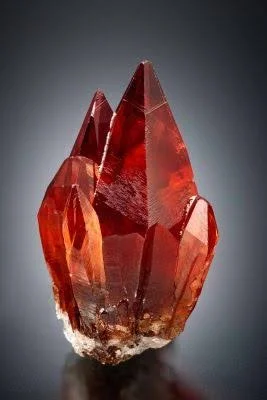
Pink manganese carbonate, ancient oceanic crust, and the complex geology of mountain formation.
A Mineral Known for Its Color
Rhodochrosite is a manganese carbonate mineral recognized for its pink to reddish coloration. It can occur as bands, crystalline aggregates, or irregular masses, and some specimens display delicate patterns that make them especially attractive to collectors.
The idea of rare rhodochrosite pockets within the Olympus ophiolites combines an unusual mineral with a distinctive geological setting. Yet the title describes a specific occurrence that requires confirmation: rhodochrosite should not be assumed to occur in the Olympus region simply because the area contains complex mountain geology.
Understanding Rhodochrosite
Rhodochrosite has the chemical formula manganese carbonate. Its formation requires manganese and carbonate under suitable chemical conditions, which may occur in hydrothermal veins, sedimentary environments, and mineral deposits associated with manganese enrichment.
The mineral can form rhombohedral crystals, granular masses, or layered material. Its color varies according to composition and other factors, so not every pink mineral should be identified as rhodochrosite.
Mineralogists distinguish it from similar-looking minerals through crystal properties, chemical analysis, and methods such as X-ray diffraction or Raman spectroscopy.
What Ophiolites Tell Geologists
Ophiolites are fragments of oceanic lithosphere that have been incorporated into continental mountain belts. They can contain rocks such as peridotite, gabbro, and basalt, along with altered varieties formed through interactions with seawater and later geological fluids.
These rocks provide valuable evidence about ancient ocean basins, seafloor processes, and tectonic movements. Their presence in a mountain range records a complicated history in which oceanic material was transported and eventually exposed on land.
However, ophiolites are not all mineralogically identical. Their composition depends on the original oceanic environment, the degree of alteration, and subsequent geological events.
Why the Proposed Location Needs Verification
To establish rhodochrosite in the Olympus ophiolites, researchers would need a documented sample and a precise geological location. They would examine the host rock, nearby veins, alteration zones, and evidence of manganese enrichment.
The term “pocket” also requires care. A small mineralized cavity, a vein, and a widespread mineral deposit describe different geological features. The scale of an occurrence should be based on observations rather than the attractiveness of a specimen.
If rhodochrosite were confirmed, researchers could investigate the fluids responsible for its formation and determine how the occurrence relates to the area's broader geological history.
The Value of Mineralogical Evidence
Rare minerals can reveal localized chemical conditions that differ from those of the surrounding rock. Their significance may be scientific even when the amount present is too small to have commercial value.
The proposed rhodochrosite pockets remain unverified unless supported by geological records or identified specimens. A rigorous investigation would connect mineral identification with field mapping, allowing the evidence to establish whether the Olympus region contains this particular mineral association.







