Ancient serpent symbolism, medieval bestiaries, and the enduring fascination with deadly creatures.
The Creature That Could Kill With a Gaze
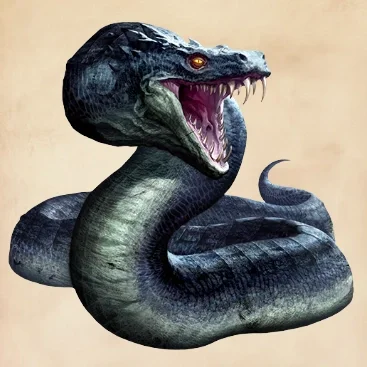
Few legendary creatures are as unsettling as the basilisk. In European tradition, the basilisk became associated with extraordinary danger, sometimes described as a serpent or hybrid creature whose gaze, breath, or presence could cause death. Its reputation developed through centuries of natural history writing, folklore, religious symbolism, and imaginative literature.
The basilisk is not a documented animal species. It belongs to the history of legendary creatures, and descriptions of its appearance and powers vary considerably. Some accounts depict a small but exceptionally dangerous serpent, while later illustrations and stories combine snake-like features with the body, wings, or crest of other creatures.
The title concerning secret basilisk eggs in the Mani region presents an intriguing question: how have stories about dangerous serpents traveled between cultures, and could local traditions preserve related motifs? A documented historical connection between basilisk eggs and Mani, however, should not be assumed. It would require evidence from regional folklore collections, manuscripts, historical descriptions, or reliable oral testimony.
Mani, the rugged peninsula of the southern Peloponnese, provides a compelling setting for such research. Its stone settlements, caves, mountainous terrain, and distinctive local history have inspired many stories about family identity, survival, conflict, and the natural world. Those characteristics make it an appropriate landscape for investigating serpent symbolism, even if the specific basilisk premise remains unverified.
Serpents in the Greek Imagination
Serpents have held complex meanings in Greek culture. They appear in mythology, religious traditions, healing symbolism, stories about monsters, and narratives connecting the human world with the divine or subterranean realms. Their meanings are not uniformly negative. In some contexts, snakes are dangerous adversaries; in others, they are associated with renewal, protection, healing, or sacred places.
The ancient Greek world included numerous serpent-related myths. The creature Python was associated with Delphi and its mythological history, while other stories featured serpentine monsters guarding locations or confronting heroes. These narratives connected serpents with the landscape, religious authority, and the challenges faced by legendary figures.
Such stories did not necessarily describe real animals or preserve memories of a single historical event. Mythology uses animal imagery to express ideas about danger, order, transformation, and the relationship between human beings and powerful forces. Serpents were particularly effective symbols because real snakes could be feared, admired, or treated with caution depending on the species and environment.
A study of Mani's serpent traditions could investigate how local communities understood snakes, which species inhabited the peninsula, and whether stories about them appear in regional folklore. Researchers could then compare documented local narratives with classical serpent mythology and later European legends about the basilisk.
How the Basilisk Entered Medieval Literature
The basilisk's history is closely connected to the development of ancient and medieval natural history. Classical authors transmitted accounts of unusual animals and legendary creatures, and later writers copied, expanded, or reinterpreted these descriptions. Over time, the basilisk acquired an elaborate collection of characteristics that made it one of the most feared beings in medieval bestiaries.
A bestiary was a text describing animals and creatures, often combining natural observations with moral or religious interpretations. Medieval readers did not always distinguish sharply between modern scientific categories and inherited accounts of extraordinary beings. A description might therefore combine a creature's supposed physical characteristics with a lesson about sin, temptation, evil, or spiritual danger.
The basilisk's lethal gaze made it particularly suitable for symbolic interpretation. It represented a threat that could act without physical contact, turning the act of looking into a source of danger. In some traditions, the creature's powers were explained through unusual birth stories or relationships with other animals.
These narratives changed as they moved between languages and literary traditions. A description in a classical text might differ from an illustration produced centuries later, and an image in a medieval manuscript might emphasize the creature's symbolic meaning rather than its supposed zoological appearance.
Researchers investigating Greek serpent lore could examine whether Byzantine manuscripts preserve references to the basilisk, how the creature was translated or described, and whether its image appeared in religious or scientific writing. This would establish a documented literary history without assuming the creature existed in the physical world.
Eggs, Origins, and the Power of Legendary Birth Stories
Stories about the origins of monsters often explain why a creature possesses extraordinary powers. Unusual births, forbidden unions, magical transformations, and mysterious eggs appear throughout mythology and folklore. These motifs help make an imaginary creature feel as though it belongs to a larger natural order, even when its existence is supernatural.
The basilisk acquired different origin stories in later European traditions. Some accounts connected it with unusual hatching conditions or other animals, producing a creature that seemed to violate the normal rules of reproduction. Such stories are valuable evidence for the history of ideas about nature, but they are not reliable biological descriptions.
The image of a hidden egg is particularly effective in storytelling because it suggests that danger may exist before the creature itself appears. An object that seems small and harmless can become the source of a much greater threat. This narrative structure has been repeated in legends about dragons, serpents, and other monsters across many cultures.
For Mani, a responsible investigation would begin by searching for actual local stories involving unusual eggs, dangerous serpents, or supernatural births. If no relevant source exists, the article could examine basilisk traditions alongside documented Greek serpent mythology, clearly identifying the comparison as an exploration of related motifs rather than proof of a regional basilisk cult.
Folklore, Zoology, and the Interpretation of Fear
The study of serpent folklore benefits from combining historical research with zoology and environmental history. Researchers can examine which snake species live in a region, how people traditionally encountered them, and whether local descriptions contain recognizable observations of animal behavior.
A dangerous encounter with a real snake could influence storytelling, but it would be simplistic to treat every supernatural serpent as a misunderstood species. Legendary creatures also emerge from symbolic traditions, literary transmission, religious interpretation, and the human tendency to create memorable explanations for danger.
Folklorists can compare versions of a story to see how its details change. Historians can trace written references, while zoologists can explain the behavior of real snakes. Archaeologists may contribute evidence of serpent imagery in architecture, pottery, or ritual objects, although an image alone cannot establish belief in a particular legendary creature.
The story of basilisk eggs in Mani is therefore best approached as a research question about the movement of monster traditions and the cultural importance of serpents. The historical record may reveal a connection, a broader comparative motif, or no local basilisk tradition at all. Each possibility offers a different way to understand how people have used stories about dangerous creatures to explore fear, uncertainty, and the boundaries between the natural and supernatural worlds.