
Introduction
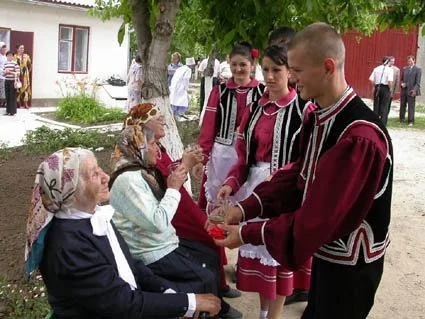
The Gagauz are a Turkic-speaking people historically associated especially with the Balkans and the northeastern regions of the Black Sea world.
Their history is complicated by questions of language, religion, migration, and identity.
The title Forgotten Gagauz Turkish-Greek Enclaves in Macedonia suggests the existence of Gagauz communities in Macedonia that may have developed within Greek cultural or religious environments.
Such a subject must be treated cautiously because Gagauz migration patterns were diverse, and not every Turkic-speaking Christian community in Macedonia should automatically be identified as Gagauz.
Who Are the Gagauz?
The Gagauz are generally recognized as a Turkic-speaking people whose traditional religion is Eastern Orthodox Christianity.
This combination of Turkic language and Orthodox religion makes their historical development particularly interesting.
Their linguistic identity demonstrates that language and religion do not necessarily correspond neatly to modern ethnic categories.
The Balkan Context
The medieval and early modern Balkans contained communities with highly complex identities.
People could identify themselves through:
religion,
village,
language,
occupation,
political allegiance,
family,
or regional affiliation.
Modern ethnic categories cannot always be projected backward without qualification.
Macedonia's Multilingual Landscape
Historical Macedonia contained Greeks, Slavs, Vlachs, Albanians, Turks, Jews, Roma, and other populations.
Settlements could be multilingual.
A village might contain several languages while sharing religious institutions or economic networks.
This environment created conditions in which communities could change languages without necessarily abandoning all other elements of cultural identity.
Gagauz and Orthodox Christianity
The Orthodox faith is particularly important when examining Gagauz history.
Greek Orthodox institutions could serve communities whose everyday language was not Greek.
Churches, monasteries, schools, and religious networks sometimes operated across linguistic boundaries.
Consequently, religious affiliation alone cannot identify a community's ethnic background.
Migration and Resettlement
Balkan populations experienced repeated movement.
Wars, economic opportunities, political reforms, land availability, and changing borders all influenced settlement.
Some communities moved toward the Black Sea.
Others moved into Anatolia or the Russian Empire.
Still others became incorporated into emerging Balkan nation-states.
What Would an Enclave Look Like?
An "enclave" implies a relatively concentrated community surrounded by a different population.
Historical evidence would ideally include:
distinctive linguistic records,
local names,
census documentation,
church records,
family histories,
school records,
or ethnographic descriptions.
Without such material, it is difficult to identify a forgotten Gagauz enclave with confidence.
The Importance of Language
Language provides one of the strongest clues.
Gagauz belongs to the Oghuz branch of Turkic languages and is closely related to other Turkic languages of the region.
However, linguistic similarity alone does not prove migration from a particular community.
Language can spread through contact, intermarriage, education, or political circumstances.
Modern Identity
Gagauz identity today is particularly visible in Moldova's autonomous Gagauzia, while Gagauz communities and historical populations have existed elsewhere.
Diaspora history therefore requires distinguishing between present-day demographic concentrations and older historical settlements.
Conclusion
The Forgotten Gagauz Turkish-Greek Enclaves in Macedonia offer a fascinating way to examine the complexity of Balkan identity.
A specific hidden Gagauz enclave in Macedonia should not be presented as established without direct evidence.
The broader historical question, however, is significant.
The Balkans were never divided into perfectly separated linguistic and religious blocks. Communities interacted, migrated, intermarried, changed languages, and adapted to new political systems.
Gagauz history demonstrates how complicated the relationship between language, religion, and identity can become across centuries.







