
Introduction
The Mani peninsula of southern Greece developed a distinctive reputation for maritime activity, fortified settlements, political independence, and resistance to outside authority.
The title Forgotten Maniot Pirate Descendants in Caribbean Greece Links proposes a connection between Maniot maritime communities and the Caribbean.
This subject must be approached carefully.
There is no established evidence for a distinct population of Maniot pirate descendants forming a historical "Caribbean Greece" community.
However, Greek maritime migration into the wider Mediterranean and later global commercial networks is historically significant.
Mani and Maritime Culture
Mani's geography strongly influenced its history.
The peninsula contains mountains descending toward the sea.
Its communities developed around fortified villages and coastal settlements.
Fishing, seafaring, trade, raiding, and military activity all appear in different periods of Maniot history.
Piracy in the Mediterranean
Piracy was a recurring feature of Mediterranean history.
The distinction between piracy, privateering, warfare, and maritime raiding could be blurred.
A sailor might be considered a legitimate fighter by one political authority and a pirate by another.
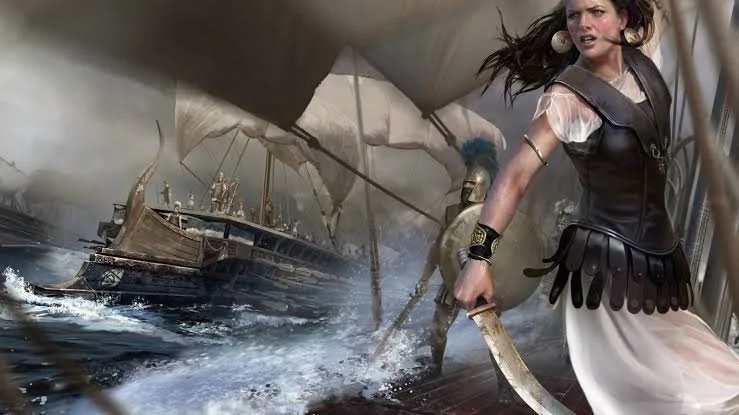
Maniot maritime communities participated in this complex environment.
The Maniot Diaspora
Maniots migrated for economic, military, and political reasons.
Some moved into other Greek regions.
Others became involved in shipping and trade.
Diaspora communities could preserve family names, traditions, and networks far from the peninsula.
Greek Mariners and the Wider World
Greek sailors became increasingly important in Mediterranean shipping.
By the eighteenth and nineteenth centuries, Greek merchants and shipowners participated in extensive international trade.
Ships connected Greek ports with Italy, the Ottoman Empire, western Europe, the Black Sea, and eventually global markets.
The Caribbean
The Caribbean was an important region of Atlantic commerce.
European empires operated plantations, ports, naval stations, and trading networks.
Ships from the Mediterranean could theoretically reach Caribbean ports through European commercial systems.
Individual Greek sailors or merchants may therefore have traveled there.
But this is different from establishing a specific Maniot colony.
Family Traditions
Diaspora families sometimes preserve stories of ancestors who traveled overseas.
Such traditions can be valuable.
However, genealogical claims require supporting documentation.
Ship manifests, immigration records, church registers, wills, merchant correspondence, and port records can establish individual connections.
The Problem of the "Pirate Descendant"
A family may have maritime ancestry without being descended from pirates.
Historical labels can become exaggerated through oral tradition.
A sailor may become a "pirate" in later storytelling because of an adventurous reputation.
Researchers must distinguish family legend from documentary evidence.
Conclusion
The Forgotten Maniot Pirate Descendants in Caribbean Greece Links remain an intriguing diaspora hypothesis rather than a documented historical community.
Maniot maritime culture is genuine.
Greek global migration and shipping networks are also well documented.
The possibility that individual Maniot sailors reached Caribbean ports is historically plausible, but proving a sustained community requires genealogical and archival evidence.
The larger story is perhaps more fascinating: a mountain peninsula at the southern edge of Greece could produce generations of people whose lives eventually connected them with maritime worlds far beyond the Mediterranean.







