
Introduction
The Arvanites played an important role in the social and military history of southern Greece.
Arvanite-speaking communities developed in various parts of Greece during the medieval and early modern periods and later participated in the political transformations surrounding the creation of the modern Greek state.
The title Rare Arvanite Naval Clans Ruling Gulf of Patras evokes powerful Arvanite maritime families controlling shipping and naval activity in the Gulf of Patras.
This should not be interpreted literally as evidence of an Arvanite naval dynasty ruling the gulf.
Instead, it provides an opportunity to examine the relationship between Arvanite communities, maritime activity, military service, and western Greek political networks.
The Gulf of Patras
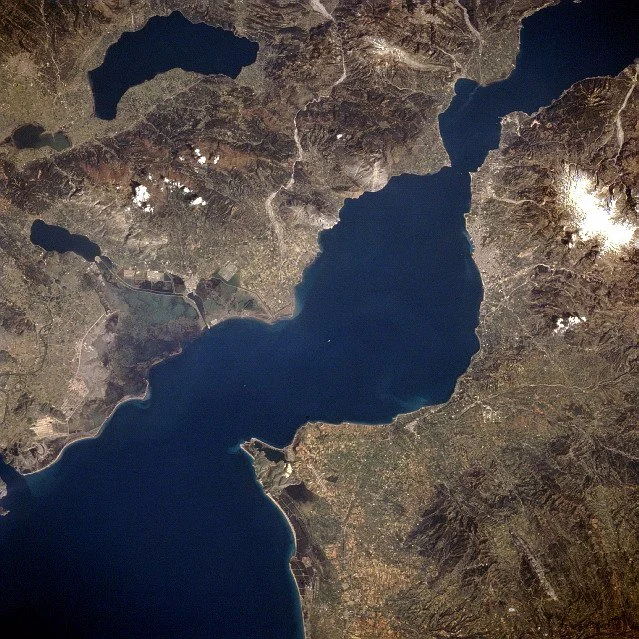
The Gulf of Patras forms an important maritime passage between the Ionian Sea and the Gulf of Corinth.
Its strategic location made it significant for:
commerce,
naval warfare,
fishing,
transportation,
and regional politics.
Control of the surrounding coastline had considerable military importance.
Arvanite Communities
Arvanite communities existed in numerous regions of Greece.
Their members engaged in agriculture, livestock raising, military service, crafts, trade, and maritime occupations.
Community organization varied.
The term "clan" can be useful when discussing extended family networks, but it should not imply a standardized political institution.
Maritime Warfare
The Ionian and western Greek seas experienced intense maritime conflict.
Venetians, Ottomans, pirates, local shipowners, and revolutionary forces all operated in the region at different times.
Local knowledge of coastlines and islands could be militarily valuable.
Arvanites and Military Service
Some Arvanite-speaking groups developed strong military traditions.
Their participation in armed forces became particularly visible during the Greek War of Independence.
Individuals served as fighters, sailors, commanders, and local leaders.
But their roles varied considerably by region and period.
Patras and the Greek Revolution
Patras was an important center during the Greek War of Independence.
The surrounding gulf became strategically significant.
Naval forces attempted to control maritime movement.
The revolution transformed local political relationships.
Family Networks
Maritime economies often depended on family networks.
Boat ownership, fishing, shipping, and trade could remain within families.
Skills were passed from one generation to another.
Such networks could become influential without constituting formal "naval clans."
The Problem of "Ruling"
Historical power should be defined carefully.
A family might possess substantial local influence without exercising sovereign authority.
A community might control a harbor temporarily without ruling the surrounding region.
Political authority should therefore be distinguished from economic or military influence.
Conclusion
The Rare Arvanite Naval Clans Ruling Gulf of Patras is best understood as a study of Arvanite participation in western Greek maritime and military history.
There is no established evidence for a unified Arvanite naval dynasty ruling the Gulf of Patras.
What is historically significant is the broader role of local communities in controlling movement, participating in warfare, operating boats, and maintaining family networks along strategically important waterways.
The Gulf of Patras was shaped not only by empires and formal navies but also by local sailors, merchants, fishermen, soldiers, and families whose activities connected the mainland with the wider Ionian and Mediterranean worlds.
Conclusion
Across these fourteen subjects, a common historical pattern emerges: migration and diaspora rarely leave behind the monumental evidence associated with ancient cities and royal centers.
Refugee camps disappear.
Pastoral routes become roads.
Languages become endangered.
Musical traditions migrate into new neighborhoods.
Family networks cross political borders.
And oral memories preserve journeys that official archives sometimes barely record.
The histories of Circassians, Gagauz, Cappadocians, Tsakonians, Vlachs, Arvanites, Romani, Pontic Greeks, Jews, Cumans, Pomaks, and other communities demonstrate that southeastern Europe has always been a region of movement and cultural exchange.
The most compelling stories are therefore not necessarily those involving secret kingdoms or hidden treasures. They are the stories of ordinary people who carried languages, instruments, religious traditions, crafts, memories, and family identities across mountains, seas, borders, and empires.







