
Introduction
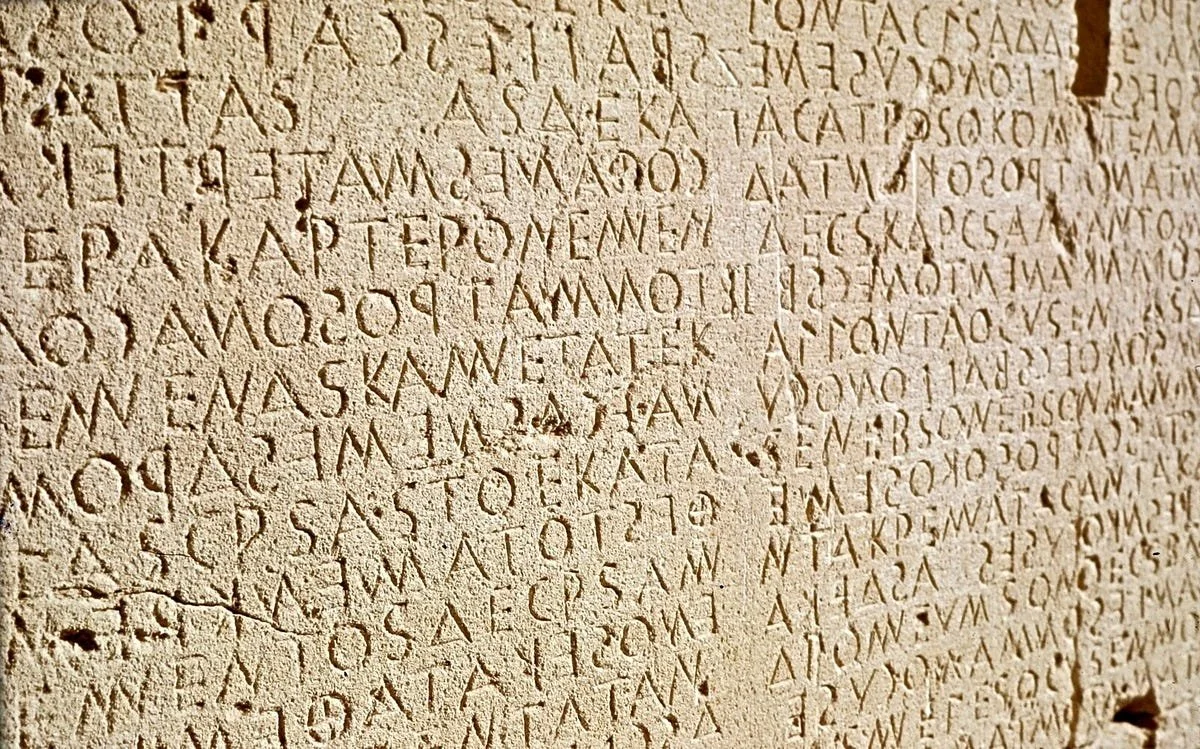
Tsakonian is one of the most remarkable surviving varieties of Greek.
Traditionally spoken in the eastern Peloponnese, particularly around the Tsakonia region, it has long attracted linguistic attention because of its distinctive characteristics and its relationship to earlier forms of Greek.
The title The Lost Tsakonian Dialect Keepers in Spartan Valleys evokes isolated speakers preserving the language in the valleys and mountains around ancient Sparta.
The title should not be interpreted as evidence that Tsakonian completely disappeared or that a secret community of speakers has recently been discovered. Tsakonian has survived into the modern period, although it is considered endangered.
A Distinctive Greek Variety
Tsakonian differs significantly from Standard Modern Greek.
Its historical development is unusual.
Linguists have debated its precise relationship to ancient and medieval Greek varieties, but it is widely recognized as a particularly distinctive branch of the Greek linguistic landscape.
Its survival is partly related to geographic isolation.
Tsakonia and the Peloponnese
Tsakonia lies in the eastern Peloponnese.
The region's mountainous terrain historically limited communication with surrounding areas.
Mountain isolation can encourage linguistic differentiation.
When communities interact primarily with their own neighbors, distinctive vocabulary and pronunciation can persist for generations.
The Myth of Complete Isolation
Tsakonia was never completely isolated.
People traded with neighboring communities.
They participated in regional religious networks.
They migrated.
They interacted with the wider Greek economy.
Language survival therefore resulted not simply from isolation but from a balance between local continuity and outside contact.
Oral Transmission
For much of history, dialects were transmitted orally.
Children learned language from parents and grandparents.
Local songs, stories, jokes, agricultural terminology, place names, and everyday conversation reinforced vocabulary.
This made families central to linguistic preservation.
Why Dialects Decline
Modernization can dramatically change linguistic patterns.
Education in a national standard language encourages language convergence.
Mass media exposes speakers to dominant forms.
Urban migration separates younger generations from traditional speech communities.
Economic mobility can also reduce the everyday usefulness of a minority dialect.
These pressures affect many endangered languages around the world.
Tsakonian and Cultural Identity
Language can become a powerful marker of regional identity.
For speakers, Tsakonian may represent family history and local belonging.
Preserving the language therefore involves more than recording vocabulary.
Researchers must document pronunciation, grammar, stories, songs, and everyday usage.
Linguistic Documentation
Modern linguistic technology offers important opportunities.
Researchers can create:
audio recordings,
digital dictionaries,
grammatical descriptions,
annotated oral histories,
school materials,
and searchable language archives.
Such resources can preserve evidence even if the number of fluent speakers declines.
Sparta and Tsakonia
The title's connection with Spartan valleys is evocative but should not imply that Tsakonian is simply the language of ancient Sparta.
The historical relationship between Tsakonia and ancient Lakonia is complex.
Similar geographic proximity does not automatically prove direct linguistic descent from classical Spartan speech.
Linguistic continuity requires detailed evidence.
Conclusion
The Lost Tsakonian Dialect Keepers in Spartan Valleys represent a broader story of linguistic survival.
Tsakonian is not merely an archaeological relic.
It is part of the living linguistic heritage of the Peloponnese.
Its endangered status demonstrates how quickly languages can change when education, migration, technology, and economic life transform traditional communities.
Preserving Tsakonian means preserving not just words, but an entire way of describing landscape, family, work, memory, and identity.







