Introduction
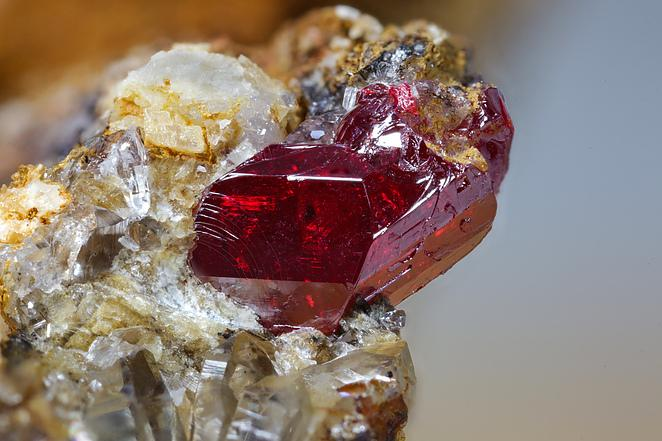
Cinnabar is a bright red mineral composed primarily of mercury sulfide, with the chemical formula HgS. It is historically important because it served as a source of mercury and was used as a red pigment in various cultures.
The possibility of cinnabar seeps or mineral deposits associated with cave pools in the Psiloritis region of Crete presents a geological topic involving mineral formation, groundwater movement, cave environments, and mineral chemistry.
The specific cinnabar occurrence described in the title is unverified. The discussion focuses on the geological conditions required for cinnabar formation and the methods used to investigate such deposits.
Cinnabar Mineral Properties
Cinnabar is characterized by its distinctive red color, which can range from bright scarlet to deeper red tones.
Its principal properties include:
Chemical composition: mercury sulfide.
Color: red to scarlet.
High density.
Relatively low hardness.
Association with mercury-bearing geological environments.
Cinnabar is an important mercury ore mineral, although mercury may also occur in other mineral forms and geological settings.
Geological Formation
Cinnabar commonly forms in hydrothermal environments.
Hydrothermal fluids move through fractures and permeable rocks, carrying dissolved elements and compounds.
When conditions change, minerals may precipitate.
Cinnabar formation may be associated with:
Volcanic activity.
Hydrothermal circulation.
Faults and fractures.
Sulfur-rich fluids.
Changes in temperature and chemical conditions.
The presence of volcanic or geothermal activity in a region does not automatically establish the presence of cinnabar.
Cave Pools and Mineral Deposition
Cave pools are influenced by groundwater movement, mineral dissolution, and chemical changes.
Mineral deposits may form around pools when dissolved substances precipitate from water.
However, cinnabar formation in cave pools would require particular chemical conditions and a source of mercury and sulfur.
A red deposit in a cave may represent iron oxides, pigments, biological material, or another substance rather than cinnabar.
Mineralogical testing is essential.
Scientific Investigation
Researchers investigating possible cinnabar deposits would use:
Geological mapping.
Mineral identification.
X-ray diffraction.
Raman spectroscopy.
Chemical analysis.
Microscopic examination.
Groundwater sampling, where appropriate.
The surrounding rock and sediment would also be examined to determine whether the mineral formed in place or was transported into the cave.
Historical Uses of Cinnabar
Cinnabar has been used historically as a pigment in painting, decoration, and ceremonial contexts.
Its vivid color made it attractive for artistic and symbolic applications.
Mercury-containing materials, however, pose serious health risks.
Cinnabar and other mercury-bearing materials should not be collected, ground, heated, or handled casually. Mercury exposure can affect the nervous system and other organs.
Scientific investigation should be undertaken by trained professionals using appropriate protective procedures.
Conclusion
Cinnabar is a scientifically and historically important mineral associated with hydrothermal processes and mercury-bearing geological environments.
The possible occurrence of cinnabar near Psiloritis cave pools would require laboratory confirmation and careful environmental investigation because red-colored cave deposits can have many different origins.