Eos, the goddess of the dawn, occupies a unique position in Greek mythology.
Every morning she opens the way for the Sun and brings daylight to the world.
Yet her myths are often dominated by stories of her relationships with mortal men.
These tales explore desire, mortality, aging, and the painful difference between immortal gods and human beings.
Who Was Eos?
Eos was the daughter of the Titans Hyperion and Theia in many traditions.
She was sister to:
Helios, the Sun;
and Selene, the Moon.
Her role was to announce the arrival of daylight.
The Dawn Goddess
Eos was imagined as rising at the beginning of each day.
She opened the gates of heaven and traveled across the sky.
Her imagery emphasizes:
renewal;
beauty;
transition;
and the beginning of time's daily cycle.
Tithonus
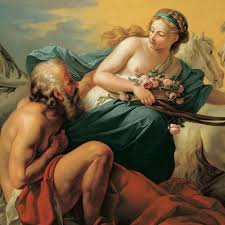
The most famous of Eos' mortal lovers was Tithonus.
He was a prince associated with Troy.
Eos loved him so deeply that she asked Zeus to grant him immortality.
The Tragic Wish
Eos asked that Tithonus never die.
But she failed to request eternal youth.
Tithonus therefore continued aging.
He became increasingly old and frail.
Immortality Without Youth
The myth presents one of Greek mythology's most powerful warnings.
Immortality is not necessarily a blessing.
Without eternal youth, Tithonus experiences endless deterioration.
In some versions, he eventually becomes so diminished that Eos keeps him enclosed and he is transformed into a cicada.
The Meaning of the Story
The Tithonus myth demonstrates that mortality is not simply the opposite of immortality.
A human life is meaningful partly because it has limits.
Cephalus
Another mortal associated with Eos was Cephalus.
Different traditions tell different versions of their relationship.
Cephalus was connected with stories of hunting, marriage, jealousy, and transformation.
Orion
Eos was also sometimes connected with Orion, the great hunter.
Different ancient traditions vary concerning their relationship.
The inconsistency demonstrates how Greek mythology developed through multiple local and literary traditions.
Mortal Beauty
Why are Eos' lovers so often mortal?
One interpretation is that dawn itself represents fleeting beauty.
Every morning is beautiful precisely because it is temporary.
Divine Desire
The stories also challenge the assumption that immortality eliminates emotional suffering.
Eos is a goddess, yet she experiences:
love;
desire;
grief;
and loss.
Dawn as Metaphor
Dawn is a natural symbol of transition.
It stands between:
night and day;
darkness and light;
sleep and waking.
Eos' romantic myths reinforce this transitional identity.
Conclusion
The Tale of Eos and Her Mortal Lovers is ultimately about the tension between immortality and mortality.
Her relationship with Tithonus is particularly powerful because it reveals the danger of separating eternal life from eternal youth.
The goddess of dawn may renew herself every morning, but humans cannot.
The myth therefore transforms the daily sunrise into a meditation on time, aging, desire, and the limits of human existence.