
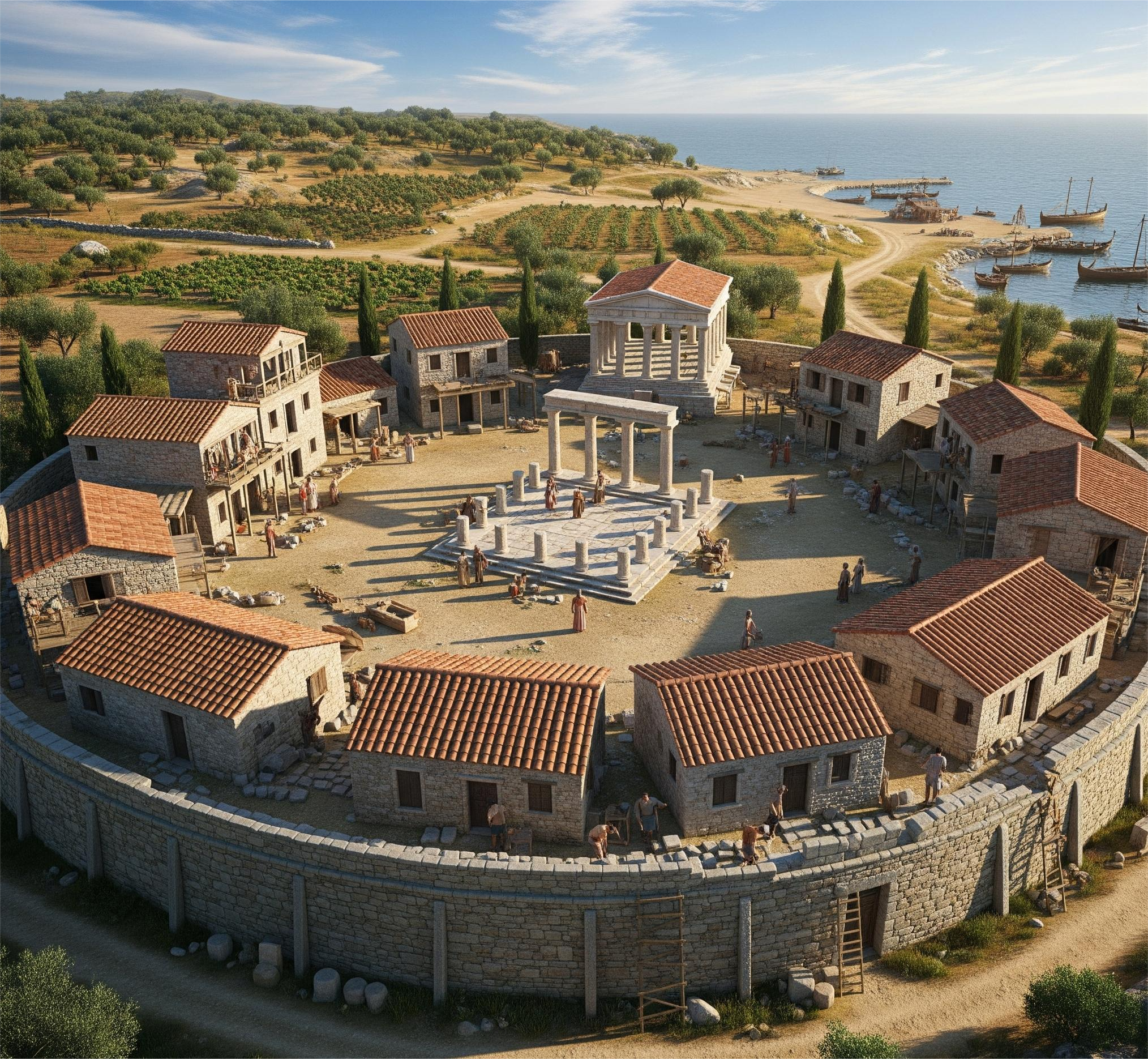
Around the 8th century BCE, Greece witnessed the gradual formation of the polis, or city-state, which became the cornerstone of Greek political life. Each polis was a self-governing urban center, typically including a central town and surrounding countryside. It functioned as an independent political entity with its own laws, military, economy, and religious institutions.
The structure of the polis was deeply influenced by geography. Greece’s mountainous terrain and scattered islands naturally encouraged the development of small, autonomous communities rather than a centralized empire. Some of the most famous city-states include Athens, Sparta, Corinth, and Thebes.
The polis was more than just a political unit; it was a cultural and social hub. Citizens (free adult males) actively participated in civic life, a concept that fostered a sense of identity and community. The agora (public marketplace) and acropolis (religious center) served as vital gathering places, while temples and festivals strengthened communal bonds. The emergence of the polis also facilitated the development of early constitutional governments, paving the way for democracy and oligarchy in different regions.


