
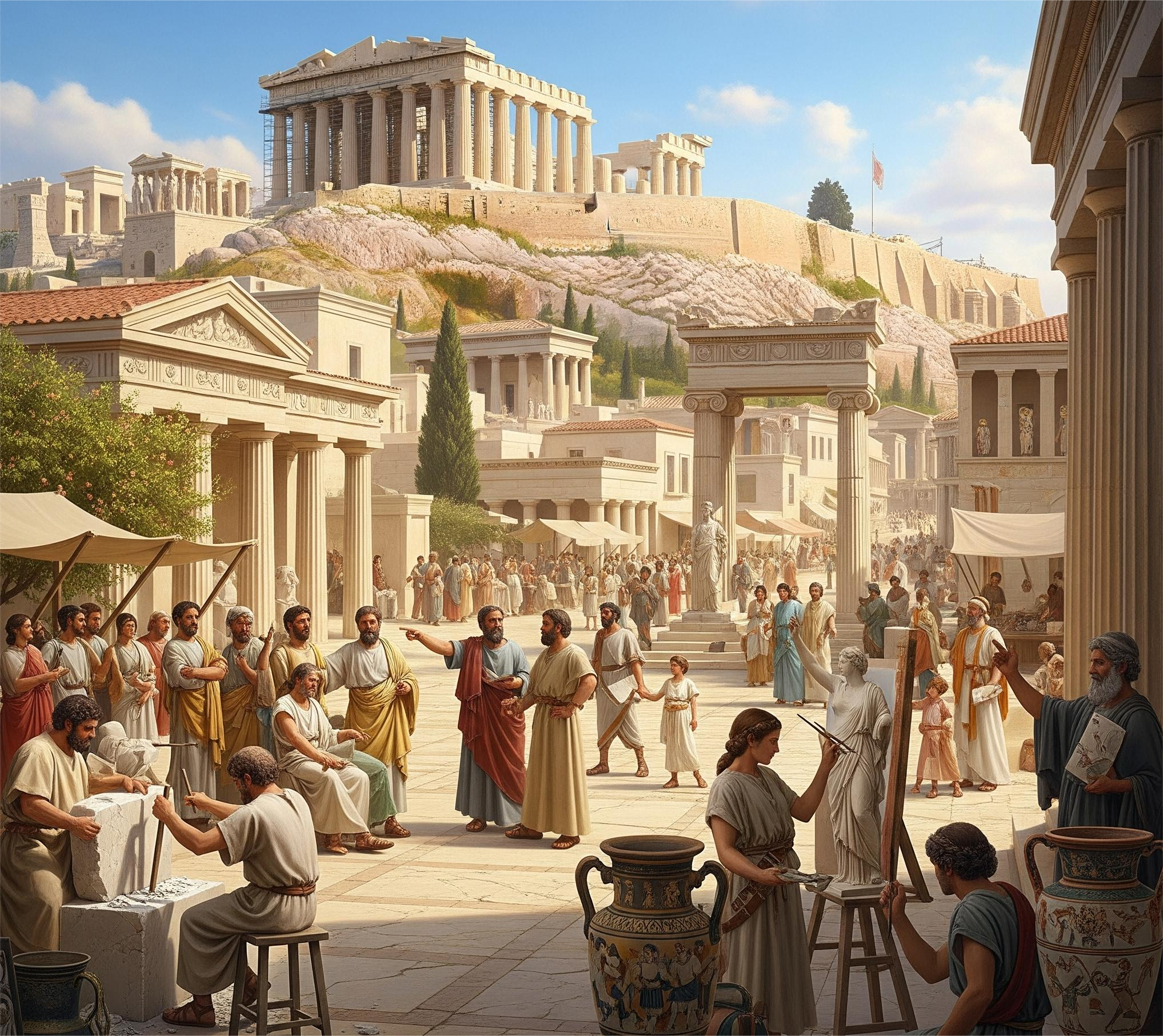
Following the Persian Wars, Athens entered a period of prosperity and cultural brilliance under the leadership of Pericles, who dominated Athenian politics from 461 to 429 BCE. This era, often referred to as the Golden Age of Athens, saw the city become the intellectual and artistic heart of the ancient world.
Pericles championed democracy, extending political rights to a broader segment of the population, and instituted policies that allowed even the poorest citizens to participate in civic life. He embarked on ambitious building projects, including the construction of the Parthenon, a testament to Athens’ glory and its patron goddess, Athena. The city became a magnet for philosophers, playwrights, artists, and scientists—names like Socrates, Sophocles, and Phidias thrived in this vibrant environment.
Economically, Athens prospered through its maritime trade and the tributes of its Delian League allies. Yet, its growing power and assertiveness sowed resentment among rival city-states, particularly Sparta, setting the stage for future conflict.


