The Battle of Mantinea: The Struggle for Greek Supremacy
Introduction
The Battle of Mantinea was one of the most important land battles of the Peloponnesian War period. Fought in 418 BCE, it represented a decisive clash between competing Greek alliances struggling for dominance after years of shifting power struggles. Although Sparta ultimately prevailed, the battle did not produce a permanent peace, but it reinforced Spartan military reputation.
Background of the Conflict
After the early phases of the Peloponnesian War, alliances in Greece shifted frequently.
Key Alignments:
Sparta led the Peloponnesian League
Athens led the Delian League
Argos attempted to challenge Spartan influence
Smaller city-states aligned based on political advantage
Mantinea became a focal point of rivalry in the Peloponnese.
The Armies Involved
Spartan Forces:
Highly trained hoplite army
Strong discipline and cohesion
Experienced commanders
Allied Forces (Argos and others):
Coalition of several city-states
Less unified command structure
Mixed levels of training and discipline
Despite numerical advantages in some cases, coalition coordination was weaker.
The Battle Formation and Strategy
Spartan Strategy:
Traditional hoplite phalanx formation
Emphasis on discipline and right-wing dominance
Controlled, steady advance
Allied Strategy:
Attempted coordinated multi-city assault
Less consistent formation strength
Vulnerabilities in coordination between units
The battle demonstrated the importance of unity in Greek warfare.
Course of the Battle
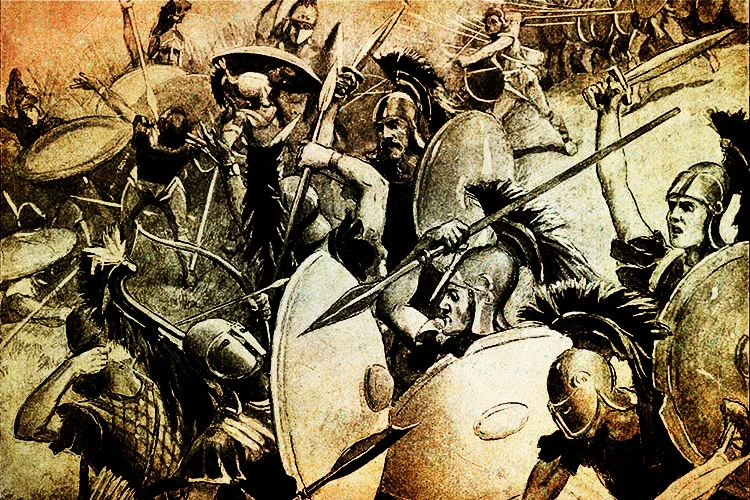
The battle unfolded in a series of intense infantry clashes:
Both sides advanced in phalanx formation
Spartan right wing initially gained advantage
Allied formations began to break under pressure
Spartans exploited gaps in enemy lines
Coalition forces eventually retreated
Spartan discipline proved decisive.
Outcome
Spartan victory
Breakdown of opposing coalition
Reinforcement of Spartan dominance in the Peloponnese
Temporary stabilization of Spartan influence
However, the victory did not end broader Greek conflict.
Significance of Mantinea
Military Importance:
Confirmed effectiveness of Spartan hoplite warfare
Showed weaknesses of unstable alliances
Reinforced importance of disciplined formation tactics
Political Impact:
Shifted power balance toward Sparta
Weakened Argive and allied resistance
Continued instability in Greek politics
Long-Term Consequences
Despite Spartan success:
Greek city-states remained divided
Athens and Sparta continued rivalry indirectly
Future conflicts eventually weakened Sparta itself
Mantinea did not bring lasting peace
It was a temporary victory in a longer struggle for dominance.
Conclusion
The Battle of Mantinea was a key moment in the struggle for supremacy in ancient Greece. It demonstrated the strength of Spartan military organization and the weaknesses of fragmented alliances. While Sparta emerged victorious, the broader conflict among Greek city-states continued, reflecting the persistent instability of the Greek world during the Classical period.