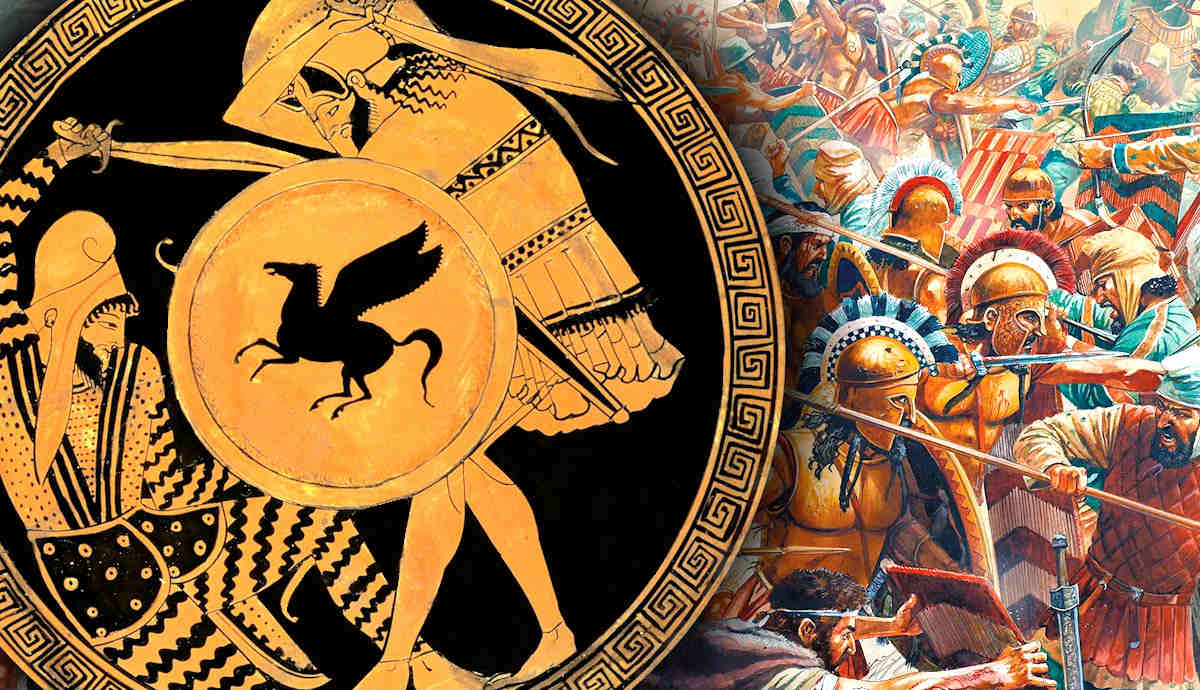
The Battle of Mycale (479 BCE) was the stunning, aggressive finale to King Xerxes’ grand invasion of Greece. Occurring on the exact same day as the famous land victory at the Battle of Plataea, Mycale was a daring amphibious assault that shattered what remained of the Persian navy, liberated the Ionian Greek colonies, and permanently shifted the theater of war from the European mainland back to the shores of Asia Minor.
1. The Prey Flees: The Setup at Mycale
Following their catastrophic defeat at the Battle of Salamis the previous year, the Persian fleet was terrified of a direct engagement with the Greek navy. Instead of patrolling the Aegean, the remaining Persian ships retreated to the shores of Ionia (modern-day Turkey) and took refuge under the slopes of Mount Mycale, just opposite the island of Samos.
The Persian commander, Tigranes, decided to abandon the open sea entirely. He ordered his men to drag their roughly 30,000-man fleet onto the beach. They constructed a makeshift, heavily fortified palisade made of stone and fruit trees, surrounded by a deep trench, intending to hold their ground as a land army.
2. Leotychidas's Daring Gamble
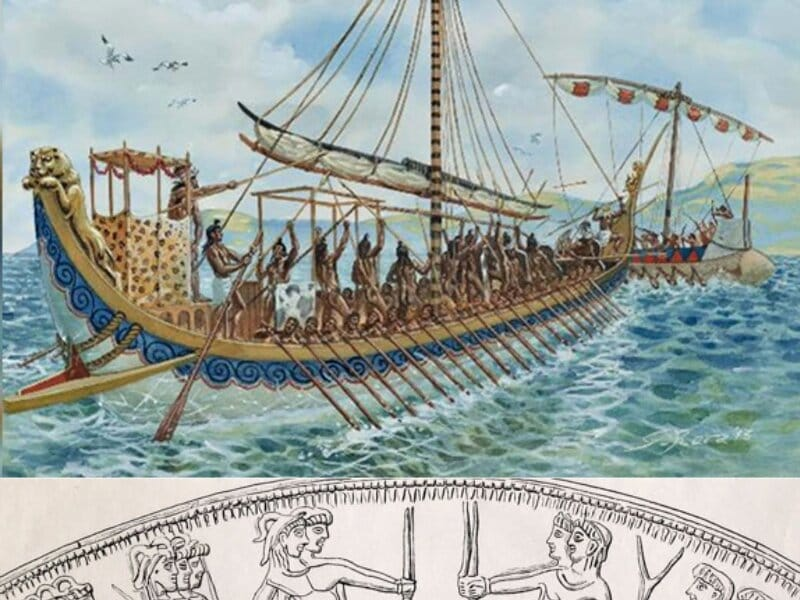
The Greek allied fleet, commanded by the Spartan King Leotychidas and the Athenian general Xanthippus (the father of Pericles), sailed across the Aegean hunting for the Persians. When they arrived at Mycale and saw the enemy entrenched behind defensive walls on the beach, Leotychidas faced a critical dilemma: sail away, or attempt an incredibly risky amphibious landing against a fortified position.
He chose to attack. As the Greek ships glided past the shoreline, Leotychidas utilized a clever psychological warfare trick. He sailed close to the beach and had a herald shout out to the Ionian Greeks who were forced to fight in the Persian army, urging them to remember their own liberty and revolt when the battle began. By sowing immediate distrust between the Persians and their Greek subjects, he fractured the enemy's cohesion before a single blow was struck.
3. The Amphibious Assault
The Greek forces landed on the beaches of Asia Minor and split into two distinct wings to execute a flanking maneuver against the fortified camp:
The Athenian Wing: The Athenians, along with troops from Corinth, Chalcis, and Troezen, marched along the flat beachhead directly toward the main Persian barricade.
The Spartan Wing: The Spartans, alongside the Peloponnesian allies, took a more treacherous, roundabout route through deep ravines and hills to outflank the Persians from behind.
The Athenians reached the enemy first and engaged in a brutal, uphill melee. Initially, the Persians fought bravely from behind their wicker-shield barricades. However, the heavily armored Athenian hoplites eventually smashed through the palisade, forcing the Persian troops to retreat into the confines of their fort.
4. The Ionian Revolt from Within
Just as the Athenians breached the fort, the psychological seed planted by Leotychidas bore fruit.
The Samian and Ionian Greek conscripts within the Persian camp saw the tide turning and immediately turned their weapons against their Persian masters. This sudden internal rebellion sparked utter chaos inside the fort. At that exact moment, the Spartan wing emerged from the hills, sealing off the rear escape routes and turning the battle into a total rout.
5. The Consequence of Victory
The slaughter at Mycale was immense. The Persian commander Tigranes was killed in the fighting, and the victorious Greeks set fire to the beached Persian ships, completely burning the remnants of Xerxes' western fleet.
The immediate historical ramifications changed the course of Western civilization:
The End of the Invasion: Along with the victory at Plataea on the same day, Mycale marked the definitive end of the Persian invasions of mainland Greece.
The Birth of the Delian League: By taking the fight to Asia Minor and liberating the Ionian cities, Athens demonstrated its naval supremacy, paving the way for the creation of its maritime empire.
The Shift in Geography: From 479 BCE onward, the Greeks were no longer fighting for survival on their own soil—they went on the offensive, turning the Aegean Sea into a Greek lake.
Mycale remains a masterclass in ancient military coordination, proving that even a heavily fortified coastline could not withstand the combined tactical pressure of an aggressive amphibious landing and internal psychological subversion.