For the ancient Greeks, dreams were the ultimate battleground between the external supernatural world and the internal human psyche. As Greek thought evolved, the explanation for dreams underwent the same profound transformation as their study of the cosmos: shifting from mythos (divine messages sent by the gods) to logos (biological and psychological processes of the human mind).
1. The Divine Phase: Dreams as External Visitors
In the Archaic period and early Greek epic poetry (such as Homer’s Iliad and Odyssey), a dream was not something a person had within their mind; it was an objective entity that visited them.
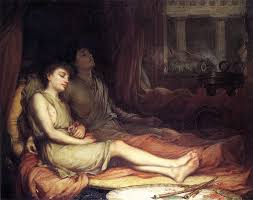
The Oneiroi: The Greeks personified dreams as the Oneiroi, dark-winged sons of Nyx (Night) who lived in the underworld. They exited through two gates: the Gate of Horn, which sent true, prophetic dreams, and the Gate of Ivory, which sent deceptive, false dreams.
The Ritual of Incubation: This divine view culminated in the cult of Asclepius, the god of medicine. Sick pilgrims traveled to sacred healing complexes called Asclepieia. After purifying themselves, they slept inside a holy hall (the Abaton) in a practice known as incubation.
The Greeks believed the god would visit them in their sleep, either healing them instantly or delivering a symbolic dream that temple priests would interpret as a medical prescription.
2. Democritus: The Atomic Transmissions
The Atomists offered the first mechanical, non-divine explanation for dreams, stripping away the gods while keeping the idea that dreams originate outside the body.
Democritus (c. 460–370 BCE) argued that all physical objects constantly shed ultra-thin, microscopic layers of atoms from their surfaces. These atomic films, called eidola (images/phantoms), floated through the air.
During the day, a person's waking senses block out most of these stray films. But at night, when the senses are quiet, these atomic eidola penetrate the pores of the sleeper's body and enter the mind. Democritus believed that if a person was highly emotional or stressed when they cast off these atoms, their eidola would arrive distorted, causing chaotic, vivid, or frightening dreams.
3. Plato: The Wild Beast Within the Soul
In The Republic, Plato (c. 428–348 BCE) took a brilliant, inward turn, presenting a theory of dreams that strikingly anticipates modern Freudian psychoanalysis.
Plato divided the human soul (psyche) into three parts:
The Rational (Logistikon): The intellect that seeks truth and exercises control.
The Spirited (Thymoeides): The seat of courage, anger, and pride.
The Appetitive (Epithymetikon): The chaotic zone of raw desires, hunger, and lust.
Plato argued that during the day, reason keeps our wild, appetitive desires tightly bound. However, when we sleep, the rational part of the mind dozes off, relaxing its guard.
The Awakening of Desire: With reason asleep, Plato wrote, "the wild beast-like part of the soul... springs up and seeks to satisfy its instincts." Free from social taboos, the appetitive soul uses dreams to act out forbidden fantasies, including lawless violence, incest, and unbridled indulgence.
For Plato, a dream was a direct window into the hidden, untamed aspects of human nature.
4. Aristotle: The Biological Echoes of Sensation
Aristotle (c. 384–322 BCE) completely rejected both divine intervention and floating atomic phantoms. In his dedicated scientific treatises on sleep (Parva Naturalia), he treated dreaming as a purely somatic (bodily) and psychological process.
Aristotle defined a dream as the activity of the waking senses during the state of sleep.
The Residual Movement: When we perceive things during the day (seeing a bright color or hearing a loud noise), the sensory organs are physically stimulated. When we go to sleep, those physical movements do not instantly stop; they leave behind residual vibrations or "echoes" traveling through the blood vessels toward the heart (the center of perception for Aristotle).
The Illusion Engine: While awake, these faint internal echoes are overwhelmed by the rush of new sensory information. But in the quiet of sleep, these leftover movements rise to the surface of the mind. Because the critical, logical faculty of the brain is dormant during sleep, the mind mistakes these internal sensory leftovers for actual, external reality, stitching them together into a dream narrative.
5. The Medical View: Hippocrates and Galen
For ancient Greek physicians, dreams were treated as vital diagnostic data to assess a patient's physical health. They believed the body operated on the balance of four vital fluids, or humors: blood, phlegm, yellow bile, and black bile.
The Hippocratic writers and later the Roman-Greek physician Galen argued that during sleep, the soul retreats deep into the interior of the body. In this state, it becomes hyper-sensitive to internal biological shifts that are unnoticeable during waking life.
Fire and Solar Dreams: Dreaming of fires, lightning, or a scorching sun indicated an overabundance of hot, dry yellow bile (a fever setting in).
Water and Floods: Dreaming of rain, overflowing rivers, or dark seas indicated a cold, wet buildup of phlegm.
Monsters and Darkness: Dreaming of pits, tombs, or terrifying shadows signaled an excess of cold, dry black bile, predicting depression or systemic illness.
6. Summary of the Conceptual Evolution
The Epic Era (Homer): Dreams are external, objective supernatural entities sent through gates of horn or ivory to deliver decrees.
The Atomist Era (Democritus): Dreams are external, material films of atoms invading the pores of a passive sleeper.
The Rationalist Era (Plato): Dreams are internal expressions of our repressed, primal desires breaking past the barrier of reason.
The Empirical Era (Aristotle/Galen): Dreams are internal, physiological echoes of daily sensations or early-warning signals of chemical imbalances in the body.
By moving the origin of dreams out of the heavens and deep into the human body and mind, Greek thinkers transformed sleep from an act of divine prophecy into a diagnostic tool for understanding human psychology and biology.