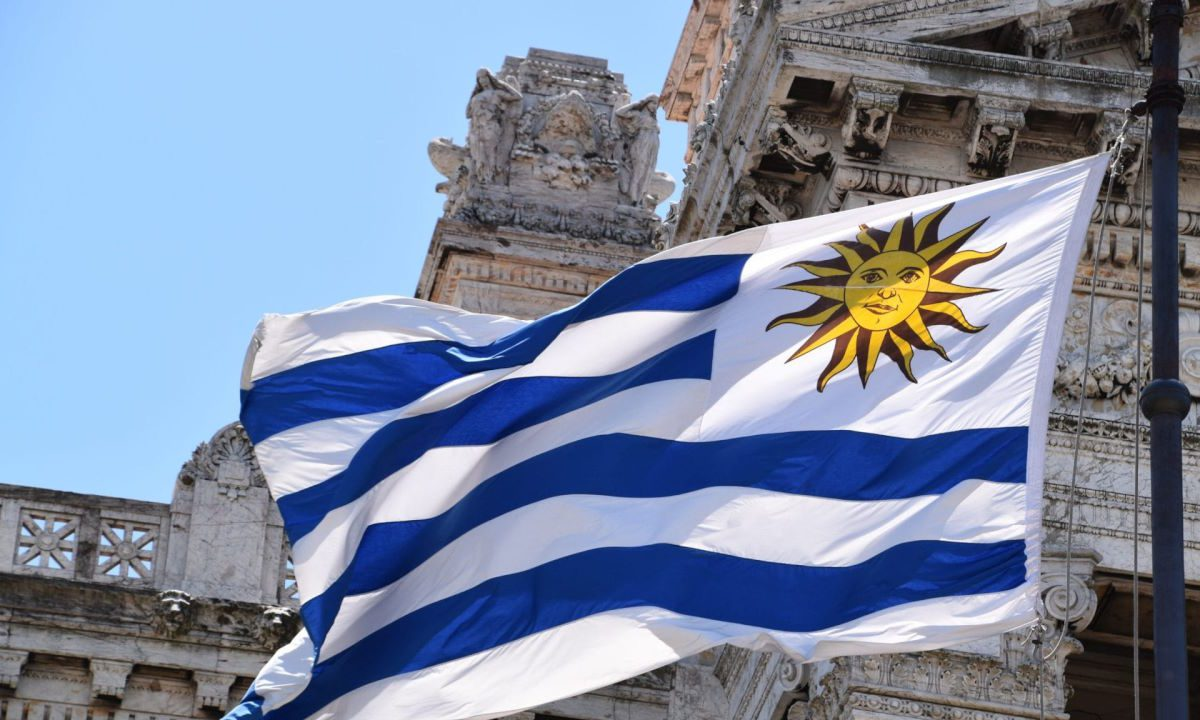
The flag of Uruguay, with its blue and white stripes and a sun emblem, closely resembles the Greek flag. But how is it possible that two nations from entirely different regions of the world have such similar flags? And which one came first? The answer lies in the revolutions, ideologies of the 19th century, and the shared symbolic desire for freedom.
The flag of Uruguay was established in 1830, the same year the newly independent state was founded after wars for independence from Spain and conflicts with Brazil and Argentina. The creators of the flag sought a national symbol that would convey dignity, independence, and unity. The nine horizontal stripes represent the nine regions of the country at the time of its founding. The Sun of May, a symbol also adopted by Argentina, refers to the first mass uprising against Spanish rule in May 1810 and features a human face—a representation of the sun god Inti from Incan mythology. The blue and white colors were already used in the revolutionary banners of the time, symbolizing independence.
On the other hand, the Greek flag was established in 1822, during the early years of the revolution against the Ottomans. Its nine stripes are believed to represent the syllables of the phrase "Freedom or Death." The blue and white colors symbolized purity and the sea, while also subtly referencing the Byzantine Empire and the colors of the Virgin Mary. The cross in the upper left corner emphasized the Orthodox Christian identity of the new Greek state, distinguishing Greeks from the Ottomans.
While the Greek flag came first, this doesn’t mean Uruguay copied it. In fact, Uruguay's flag design was more influenced by the flag of the United States, which had already established the idea of horizontal stripes representing geographical regions. Blue and white were common colors used in revolutionary flags of the time, symbolizing purity, the sky, freedom, and truth. Both flags look similar not because one copied the other, but because they were born out of the same historical context—the need for nations to express their independence through simple yet powerful symbols.
A Closer Look at the Similarities and Differences
Another aspect that causes confusion is that both flags use a similar shade of blue, and their stripes have the same pattern and number. However, the Greek flag features a white cross on a blue background, while Uruguay's flag has a sun on a white background. The Sun of May alludes to a pre-Columbian sun, with 16 rays alternating between straight and wavy, symbolizing light and power. In contrast, the cross on Greece’s flag is a symbol of faith and Christianity. The difference in meaning is significant, though the initial impression may seem almost identical.
The Global Interest in the Similarity
The similarity between the two flags has sparked interest among historians, designers, and casual observers alike. On several occasions, at international sporting events or online flag registries, the two flags have been confused, leading to humorous incidents as well as official corrections. The universality of symbols and the nations' desire to have flags that inspire their citizens and are recognized internationally sometimes leads to such parallel stories.
In the end, the flags of both Uruguay and Greece serve as powerful reminders of the struggles for independence and the deeply symbolic meaning nations attach to their national emblems.