A hidden treasure has come to light in the most unexpected place—a dusty old storage shed in the town of Elassona, Greece. What began as a routine clearing of the space led to an astonishing historical discovery.
A 500-Year-Old Book Unearthed
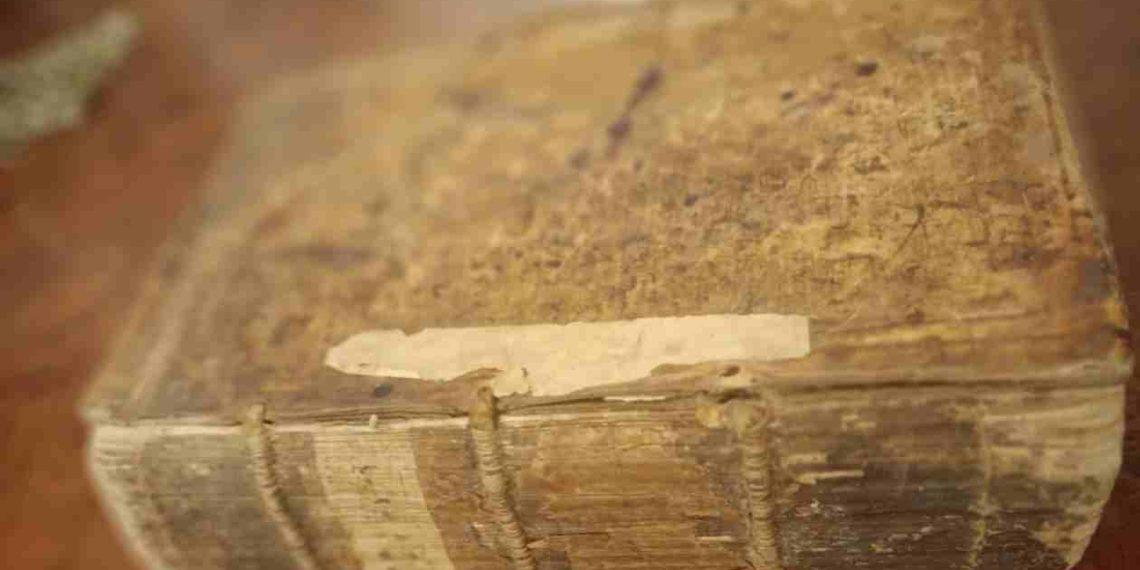
Among the forgotten items, a nearly 500-year-old book was found—an edition of the New Testament published in 1565 in Geneva. How it ended up in the region of Larissa remains a mystery, but its historical and cultural significance is undeniable.
According to Greek public broadcaster ERT, the discovery caught the attention of local history enthusiast Thanasis Paidis, who immediately recognized its potential value. After closer examination, it was confirmed to be a rare edition of the New Testament written by Théodore de Bèze, a disciple of the Protestant Reformer John Calvin.
A Trilingual Treasure
To verify the book’s origins and importance, Paidis reached out to E. Brousseau, a Byzantine scholar and collaborator of the renowned French archaeologist and epigraphist Bruno Helly—an expert in the history of Thessaly. After conducting thorough research, Brousseau confirmed that the volume was indeed published in Geneva in 1565.
What makes this edition even more remarkable is its trilingual format: the text is presented in Greek, Latin, and French—an indication of its scholarly purpose and international reach during the Reformation era.
Next Steps for Preservation and Display
Recognizing the significance of the find, Paidis has contacted Ms. St. Sdrolia, head of the Ephorate of Antiquities in Larissa, to ensure the book receives proper conservation and is made available for public viewing in an appropriate historical context.
This unexpected discovery not only sheds light on the religious and cultural exchanges of the 16th century but also serves as a powerful reminder: sometimes, history’s greatest treasures are hidden in the most unlikely of places.