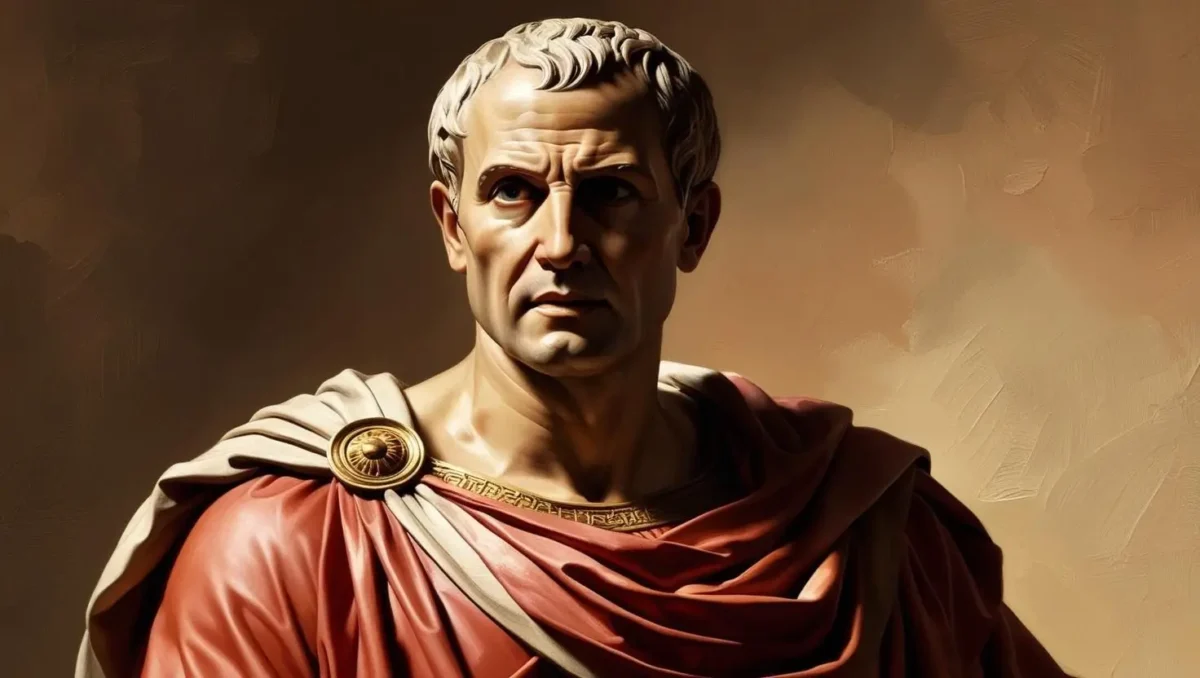
A powerful painting captures the moment of Julius Caesar's assassination, surrounded by Roman senators in flowing togas, their daggers raised in chaotic unison. Caesar’s last words are famously said to have been, "Et tu, Brute?" (And you, Brutus?), but why did he choose to speak in Greek?
The Assassination of Caesar
On March 15, 44 BCE, Caesar entered the Senate for his final meeting before departing for military duties. Ancient historians, particularly Plutarch and Suetonius, recount the dramatic sequence of events leading to his death. Upon his arrival, the conspirators divided into two groups: one near Caesar and the other near his seat.
Tillius Cimber, supported by several senators, approached Caesar, requesting the return of his exiled brother. When Caesar refused, Cimber aggressively grabbed Caesar’s toga, signaling the beginning of the attack. Casca landed the first blow, striking Caesar in the neck, though it was not fatal. Shocked, Caesar grabbed Casca's dagger and asked, "What are you doing?" Panicked, Casca called for help, and the conspirators began stabbing Caesar alternately.
Brutus, whom Caesar likely considered a son, delivered the final blow of the 23 stabs, hitting Caesar in the groin. The doctor Antistius, who examined Caesar's body, stated that only one wound, the stab to the chest, was fatal. Plutarch adds that Caesar collapsed near Pompey’s statue, a symbolic moment, as Pompey had been his great rival. Some say Caesar may have fallen there intentionally, while others believe the conspirators dragged him.
Caesar’s death enraged the Roman people, who rose up against the conspirators. Mark Antony took responsibility and, agreeing with Cicero’s idea of amnesty, managed to control the situation. With the Senate's approval, Antony appointed Brutus and Cassius as governors.
Brutus and Julius Caesar: A Complex Bond
Caesar had once had a romantic affair with Brutus’s mother, Servilia, who was married. Historians like Suetonius and Appian confirm this relationship, with Plutarch adding that Caesar may have believed Brutus was his son, given their close connection.
Brutus was one of Caesar's protégés and was particularly favored by him. After the civil war with Pompey, Caesar pardoned Brutus and assigned him significant roles, including the governance of Cisalpine Gaul. Although Brutus initially opposed Caesar during the war, Caesar’s clemency helped mend their relationship, and Brutus became an integral member of Caesar’s inner circle.
Despite this closeness, Brutus led the conspiracy to assassinate Caesar, believing that Caesar's increasing power, culminating in his appointment as "dictator for life," threatened the Roman Republic. He saw his actions as defending democratic freedom against Caesar’s potential monarchy.
Caesar’s Last Words and the Role of Greek Culture
The phrase "Et tu, Brute?" has come to symbolize the unexpected betrayal by someone close. Shakespeare’s Julius Caesar made the Latin version famous, where Caesar addresses Brutus upon realizing that he is among his murderers.
However, earlier accounts, including those by Suetonius, suggest that Caesar may have spoken in Greek: "Καὶ σύ, τέκνον;" ("And you, my child?"). This version implies a deeper emotional sense of betrayal.
Suetonius believed Caesar's use of Greek might have been deliberate, emphasizing the personal nature of the betrayal. Greek was the language of the Roman elite, used for philosophical, diplomatic, and dramatic purposes. For a man of Caesar's stature, who was fluent in Greek, it was the natural choice for expressing profound emotions.
Further Insights
The use of Greek in such a moment not only reflects Caesar's education and cultural sophistication but also adds layers to the emotional depth of his final moments. It shows how Greek culture was integral to Roman intellectual and political life, even in such personal, tragic circumstances.