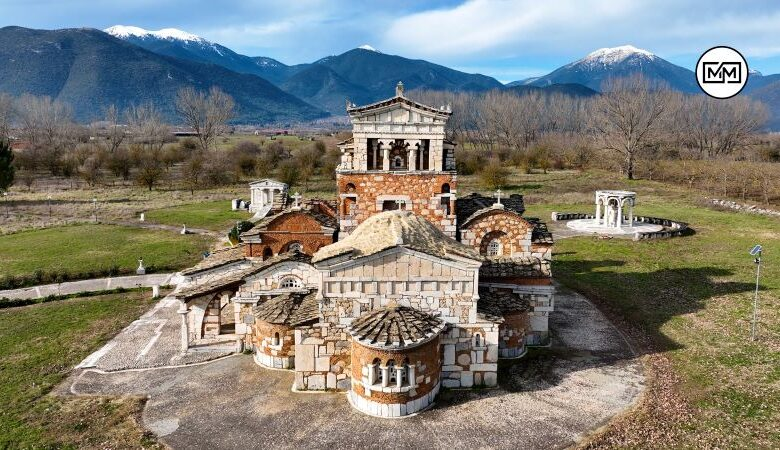
Greece is full of churches, grand temples, and chapels perched in some of the most unique and striking locations. In the heart of the ancient Mantineia plain in the Arcadia region, just 15 kilometers from the city of Tripoli in the Peloponnese, lies Agia Fotini, a remarkable church that stands out not only for its architectural design but for its fusion of different historical influences.
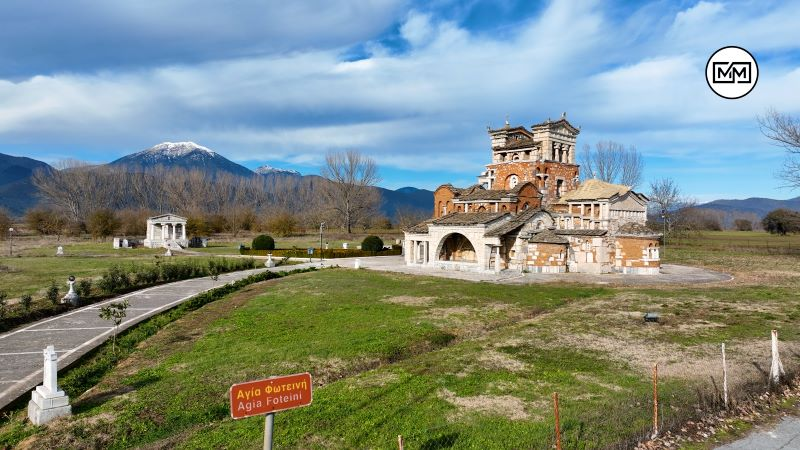
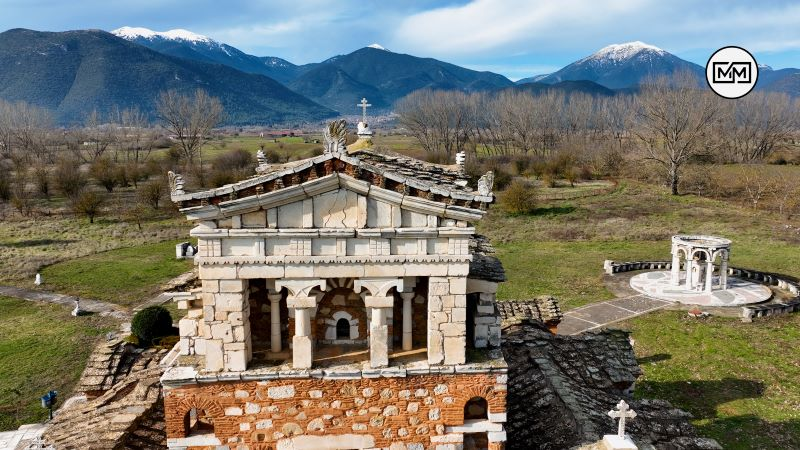
The Christian church of Agia Fotini is considered an architectural paradox, as it breaks from the classical ecclesiastical style. Built in 1973, it has since sparked mixed reactions. Some visitors stand in awe of its unique structure, while others consider it an "unorthodox" church due to its departure from the traditional design of most Christian churches in Greece.
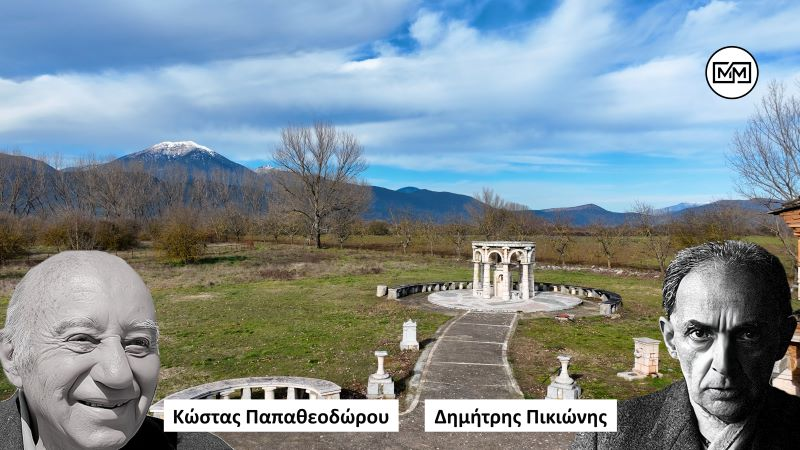
The story of its construction began in 1970 when the Mantineian Association sought an architect to design a distinct church within the ancient city's walls. The talented architect, painter, and iconographer Kostas Papadheodorou, a student of the renowned architect Dimitrios Pikionis, took on the project. Papadheodorou, who was working at the Ministry of Culture at the time, resigned to pursue this dream project, dedicating himself passionately to its realization.
The church was completed externally by the end of 1973, with interior decoration continuing in the following years. Papadheodorou personally worked with materials from quarries and demolitions, shaping them into the desired forms. Locals recall seeing him travel through Mantineia and Tripoli to gather these materials. Stone, wood, tiles, and marble were used extensively, while cement was completely avoided in its construction.
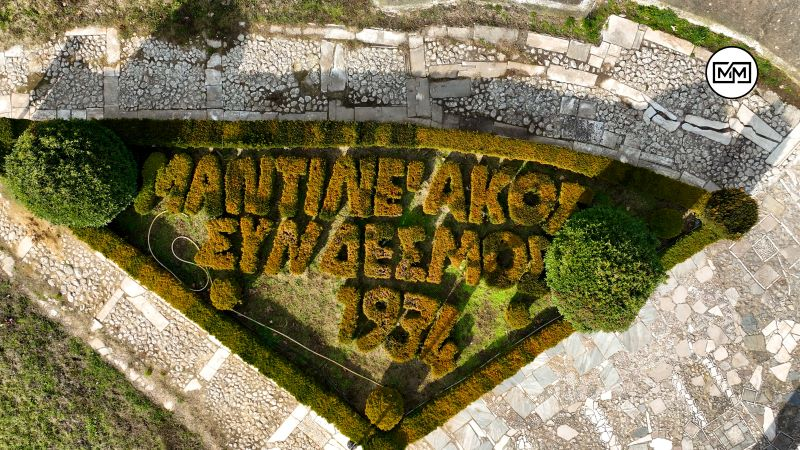
The church belongs to the Mantineian Association (founded in 1934), and its inauguration took place in 1978, officiated by the then Metropolitan Kyrillos Theoklitos II of Philippi.
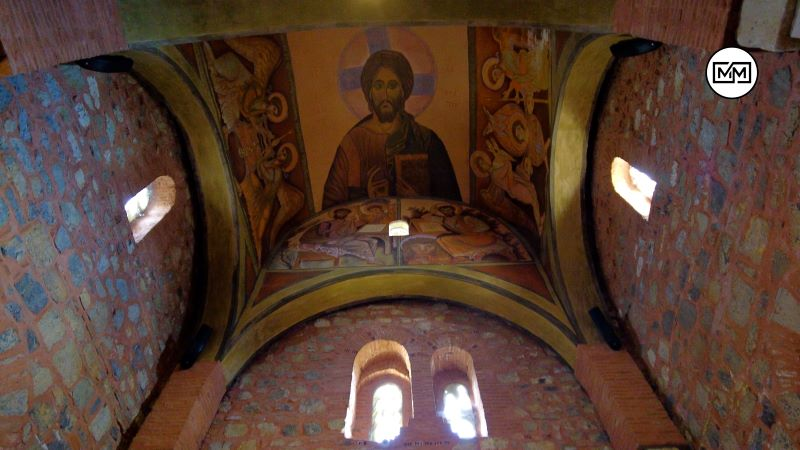
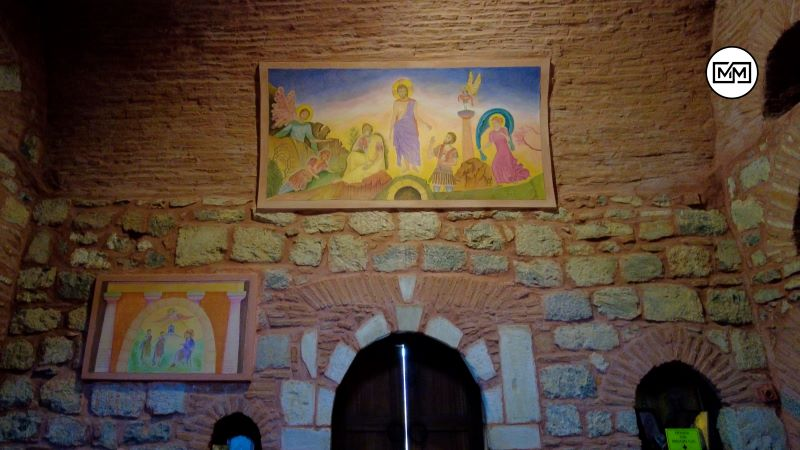
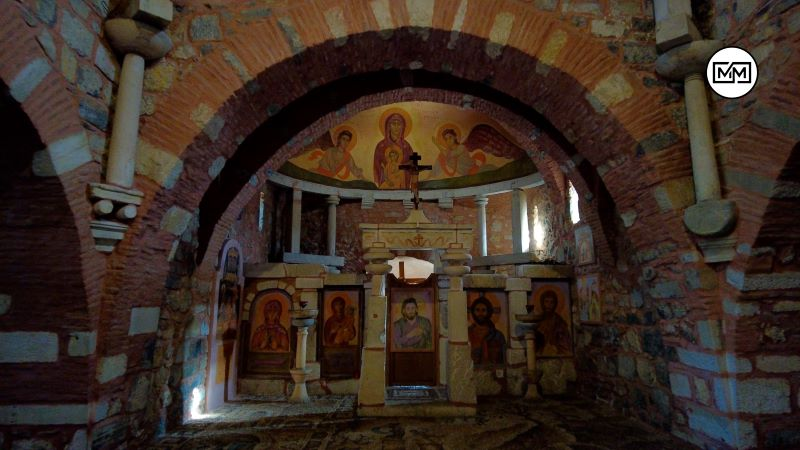
Agia Fotini is a tripartite church with three main sanctuaries. The central one is dedicated to Agia Fotini, the northern sanctuary to Saint Cosmas of Aetolia, and the southern sanctuary to Saint Apostle Philip, with the addition of an image of Saint George. All the icons in the church's iconostasis are painted with fresh plaster. The central sanctuary can only be accessed by narrow corridors on either side, symbolizing the catacombs of Rome where Agia Fotini (the Samaritan woman) died.
The result is a striking fusion of architectural styles that blends elements of ancient Greek heritage with Christian tradition, creating a harmonious mix of architectural rhythms. The interior of Agia Fotini features Byzantine influences, with prominent elements from ancient Greek culture, notably seen in the mosaic floors and wall representations.
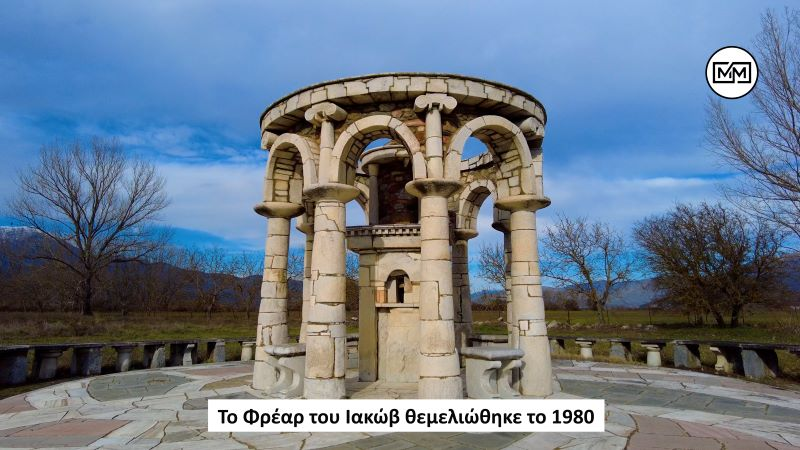
To the west of the church stands the Jacob's Well, which was established in 1980 and symbolizes the encounter between Jesus and the Samaritan woman. In the church's courtyard, there is also the Heroon, established in 1976, in honor of all those who fought for the country and are originally from the Municipality of Mantineia. Together, these three structures—the church, the Jacob's Well, and the Heroon—symbolize the Holy Trinity.
Watch the video by Michael Miller for a deeper look into this remarkable site.