In ancient Greece, few gods embodied joy, transformation, and wild abandon like Dionysus, the god of wine, fertility, and theatre. While the City Dionysia of Athens is well-known for its grand theatrical competitions and civic pomp, the lesser-known Rural Dionysia presents a more intimate, earthy window into how everyday Greeks worshipped the wine god — in fields, villages, and small towns across Attica.
Local and Lively: The Rural Dionysia
Held during the month of Poseideon (roughly December–January), the Rural Dionysia was a festival deeply rooted in the agricultural calendar. It marked the beginning of the wine-drinking season, after the autumn harvests had been fermented and aged just long enough to be shared.
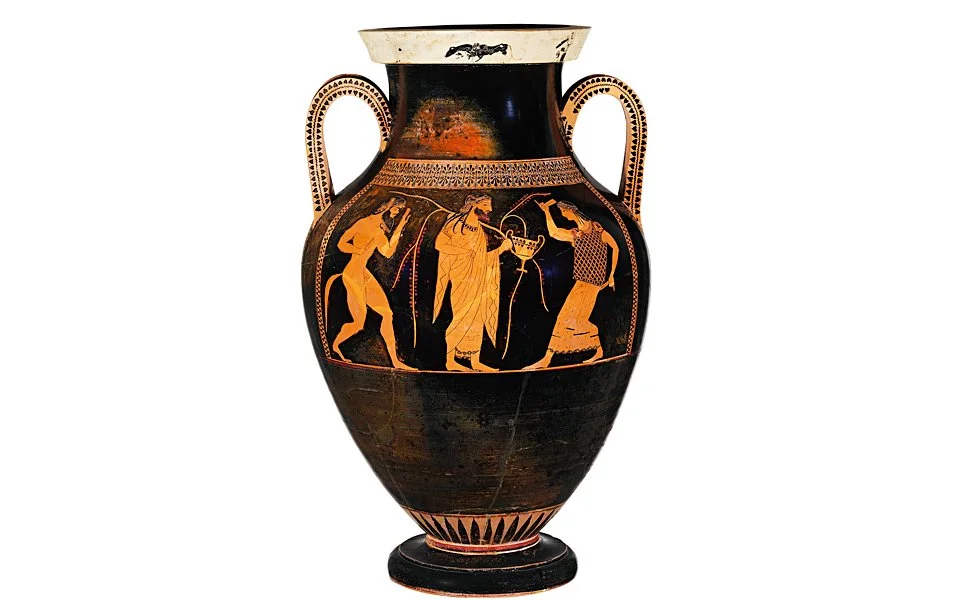
Rather than large stadiums and elaborately staged dramas, rural communities held processions through fields, carrying phalloi (phallic symbols) in a celebration of fertility, humor, and life’s generative forces. Villagers dressed in costumes, sang dithyrambs (choral hymns to Dionysus), and staged informal performances on makeshift wooden platforms. These were often comedic, bawdy, and full of improvisation — an ancestor, perhaps, of street theatre or carnival.
The spirit was one of collective joy, with neighbors gathering to drink, laugh, and honor the god whose wine broke social boundaries and offered a glimpse into divine ecstasy.
City Dionysia: Drama and Democracy
By contrast, the City Dionysia (or Great Dionysia), held in Athens during spring (Elaphebolion), was a far more political and prestigious affair. Established in the 6th century BCE, it showcased new tragedies and comedies by playwrights like Aeschylus, Sophocles, Euripides, and Aristophanes. These performances took place in the Theatre of Dionysus, a large stone amphitheater at the foot of the Acropolis, before thousands of spectators.
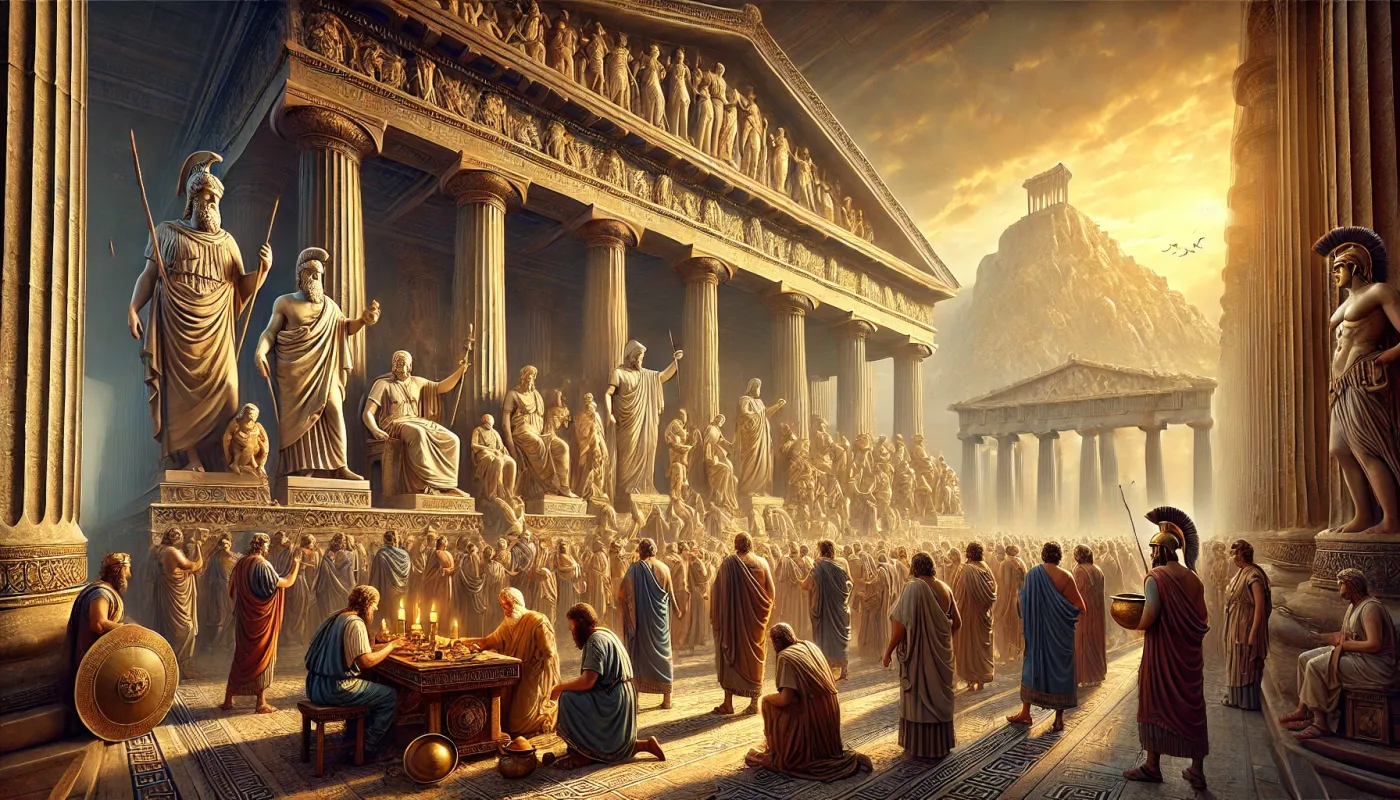
The festival lasted several days and included sacrifices, ritual processions, and civic honors. Foreign dignitaries were invited. Orphans of war were paraded before the public. The city even paid for the poor to attend — a testament to how Dionysian worship was tied to Athenian identity and democratic ideals.
In this context, Dionysus wasn’t just a god of intoxication, but of transformation through art, where plays explored justice, fate, and the human condition.
Earth and Sky, Village and Polis
The Rural Dionysia and City Dionysia illustrate the range and richness of Greek religious life. In the countryside, Dionysus was the god of the vine, of rustic joy and fertile fields, celebrated in festivals that blurred the line between sacred and profane. In the city, he became the patron of theatre and civic spectacle, celebrated with grandeur, innovation, and political nuance.
Where the City Dionysia sought to elevate, the Rural Dionysia embraced the everyday. One looked to the gods for wisdom, the other for release. Yet both honored the same divine figure — a reminder that Dionysus was a god of contradictions, who thrived at the edge of order and chaos, logic and madness, polis and pasture.