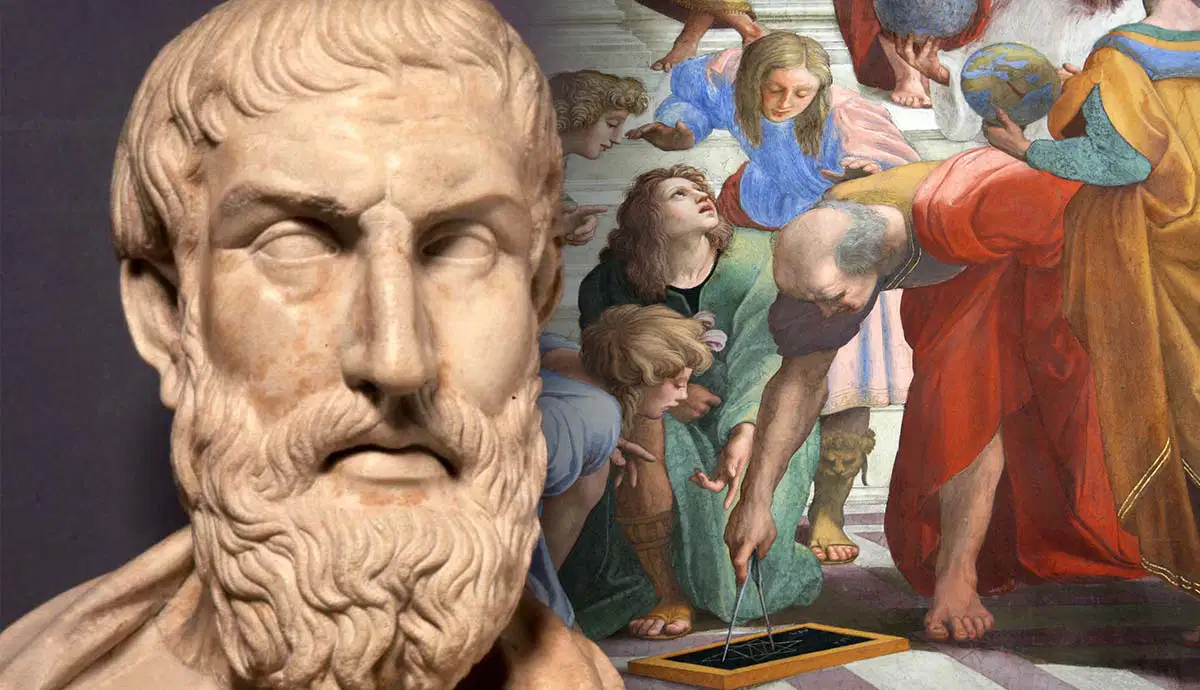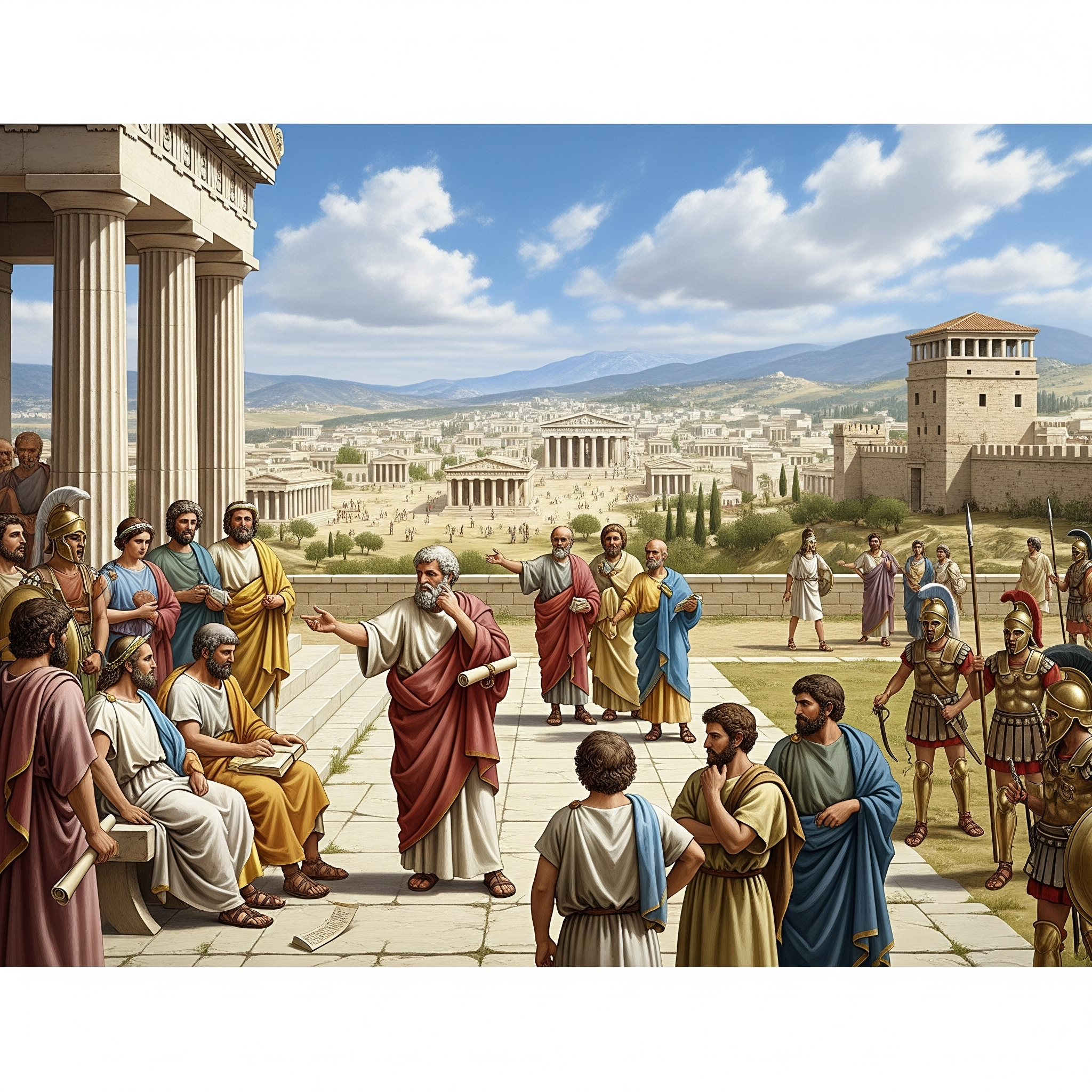
Few thinkers have shaped the discourse on politics, governance, and civic life as profoundly as Aristotle. In his seminal work Politics, written in the 4th century BCE, Aristotle offers a deeply analytical and practical examination of how societies organize themselves—and how they ought to.
Unlike his teacher Plato, who envisioned ideal states, Aristotle takes a more empirical approach, studying actual city-states (poleis) to understand what makes governments successful or flawed. His insights remain remarkably relevant today.
The Purpose of the State
Aristotle begins with a fundamental claim:
“Man is by nature a political animal.” (Politics, Book I)
Humans, he argues, are naturally inclined to form communities. The state (polis) is the highest form of this association because it exists not merely for survival, but for the good life—a life of virtue and self-sufficiency.
The state, therefore, is a moral entity, not just a political one.
The Building Blocks of the Polis
According to Aristotle, the state is composed of:
Households (Oikoi) – The basic economic and reproductive unit.
Villages – Formed by combining several households.
Polis – The final, complete association that ensures a full, virtuous life.
Thus, the state is a natural evolution of human cooperation, fulfilling our highest needs.
Types of Government: The Good and the Corrupt
Monarchy is ideal but unstable; it risks devolving into tyranny.
Aristocracy (rule by the virtuous few) is also good but prone to corruption.
Polity is the most realistic and stable: a constitutional government that blends oligarchic and democratic elements.
Aristotle criticizes radical democracy, where majority rule becomes mob rule, as well as oligarchy, where the wealthy dominate the poor.
Citizenship and Civic Virtue
A central theme in Politics is the role of the citizen (politēs). For Aristotle, a citizen is someone who participates in judgment and office—that is, in deliberating and ruling.
Key points on citizenship:
It is not merely a matter of residence or birth, but of active engagement in the life of the city.
Citizenship requires virtue, especially the ability to rule and be ruled in turn.
Education is essential for cultivating civic virtue.
Aristotle’s ideal citizen is someone who prioritizes the common good over personal gain and understands governance as a shared responsibility.
Justice and the Middle Class
A unique contribution of Aristotle’s political theory is his emphasis on the middle class. He argues that a strong, sizable middle class makes for the most stable and just society.
“A polity in which the middle class is large… is the best constituted.” (Politics, Book IV)
Why? Because the middle class is less likely to act out of extreme wealth or desperate poverty, leading to more moderate and fair governance.
Practical Politics vs. Idealism
Unlike Plato, Aristotle does not chase utopias. His work is grounded in reality:
He studies over 150 constitutions to identify what works and what doesn’t.
He advocates for adaptable systems that match a society’s character and conditions.
His analysis is deeply contextual, reflecting the diversity of city-states in the Greek world.
Legacy and Influence
Aristotle’s Politics had a profound impact on Roman thought, Christian philosophy, and modern political theory:
Influenced thinkers like Thomas Aquinas, Machiavelli, Locke, and Rousseau.
Anticipated concepts such as constitutional government, mixed regimes, and civic education.
Provided a framework for republicanism and liberal democratic ideals, especially the importance of active citizenship.