When Athens teetered on the brink of civil war in the early 6th century BCE, it was the poet, philosopher, and statesman Solon who stepped forward to reshape its legal and political landscape. His sweeping reforms not only saved the city from internal collapse but also established a legal foundation that would influence Athenian democracy and Western legal traditions for centuries to come.
The Crisis Before Solon
Before Solon, Athens was plagued by:
Debt slavery, where poor citizens were sold into servitude.
Sharp class divisions between aristocrats and the common people.
A harsh and inflexible law code previously established by Draco, known for its severe punishments (hence the term draconian).
Rising tension between rich landowners and impoverished farmers.
Faced with the threat of violent revolution, Athenians turned to Solon around 594 BCE, granting him extraordinary powers to reform the laws and restore order.
Solon’s Legal Reforms
Solon’s laws sought a balance between justice and stability, protecting the poor without alienating the wealthy. His key legal innovations included:
1. Seisachtheia – “The Shaking Off of Burdens”
Canceled all existing debts.
Freed those enslaved for debt.
Prohibited the future use of one’s body or family members as collateral.
This eliminated a major source of civil unrest and redefined personal freedom in Athens.
2. Reformation of Draco’s Laws
Retained only Draco’s laws on homicide, which were considered just.
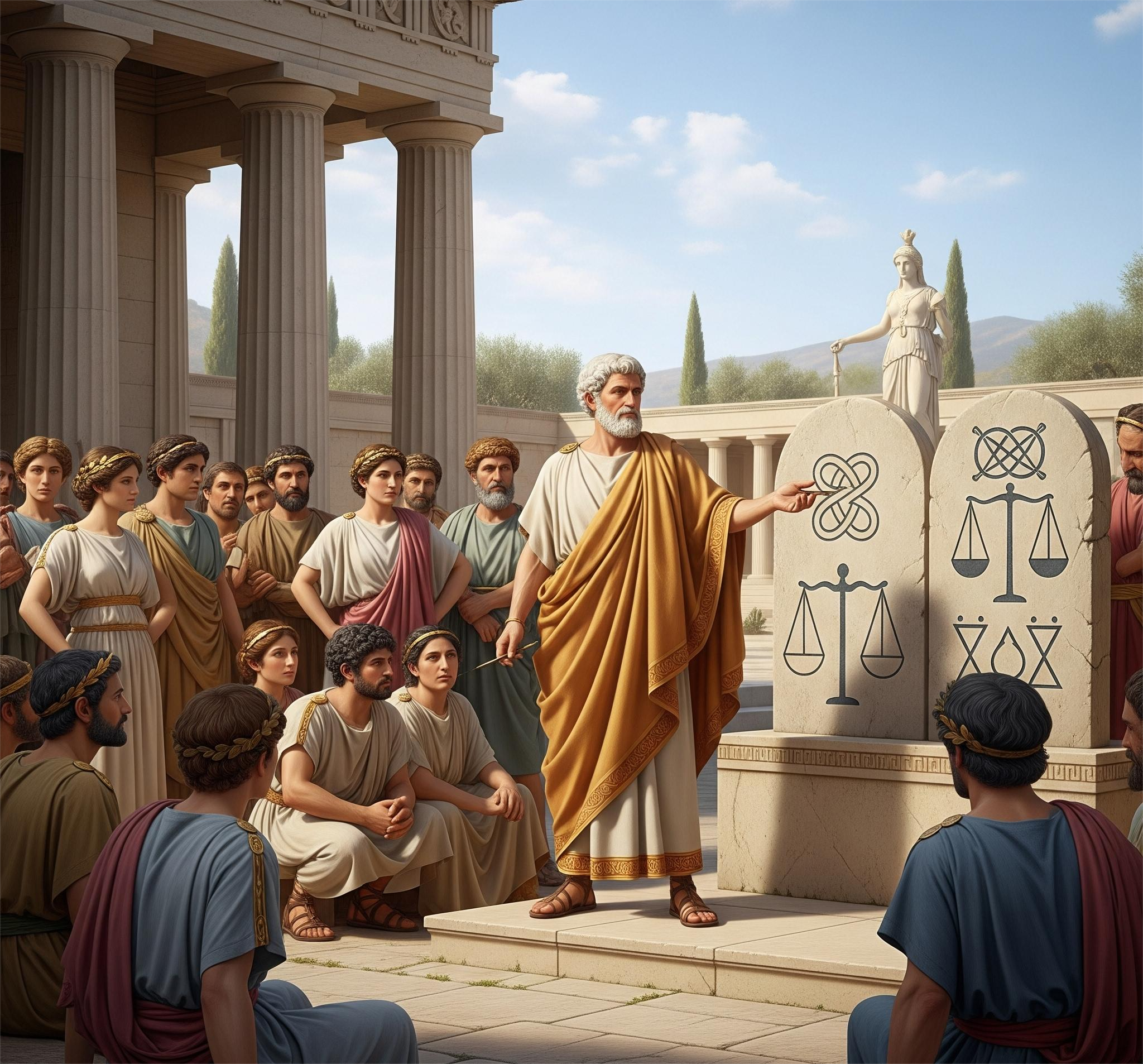
Replaced the rest with more humane and rational laws, which were publicly posted for all to see.
Solon’s system emphasized equal access to legal knowledge, marking a shift from oral aristocratic traditions to codified, civic law.
3. Creation of New Political and Legal Institutions
Divided citizens into four property-based classes, allowing broader political participation.
Introduced the Heliaia, a popular court of appeal, where any citizen could appeal a magistrate’s decision.
Expanded access to public office and political decision-making—especially for middle-class citizens.
4. Legal Standing for All Male Citizens
Allowed any male citizen to bring charges on behalf of another, reinforcing communal responsibility and public justice.
Lasting Influence
Solon’s reforms did not establish full democracy, but they set the groundwork for what would follow under Cleisthenes and Pericles. His legal legacy includes:
Codification of law as a tool for justice and transparency.
Foundations of popular courts and legal equality.
Early expression of the principle that law should serve all citizens, not just the elite.
Solon the Philosopher-Lawmaker
Solon wasn’t just a legislator—he was also a moral philosopher and poet. He saw law as a means to achieve balance (sophrosyne), fairness, and societal well-being. In his own words:
“I gave the people just as much power as is sufficient, neither robbing them of their dignity nor giving them license.”
—Solon, Fragment 36
Solon’s Place in Legal History
Solon’s legacy can be seen as a bridge between monarchy and democracy, between arbitrary rule and institutional law. His emphasis on codification, equality before the law, and civic participation influenced not only Classical Greece, but also future legal systems in Rome, the Byzantine Empire, and even modern democratic states.