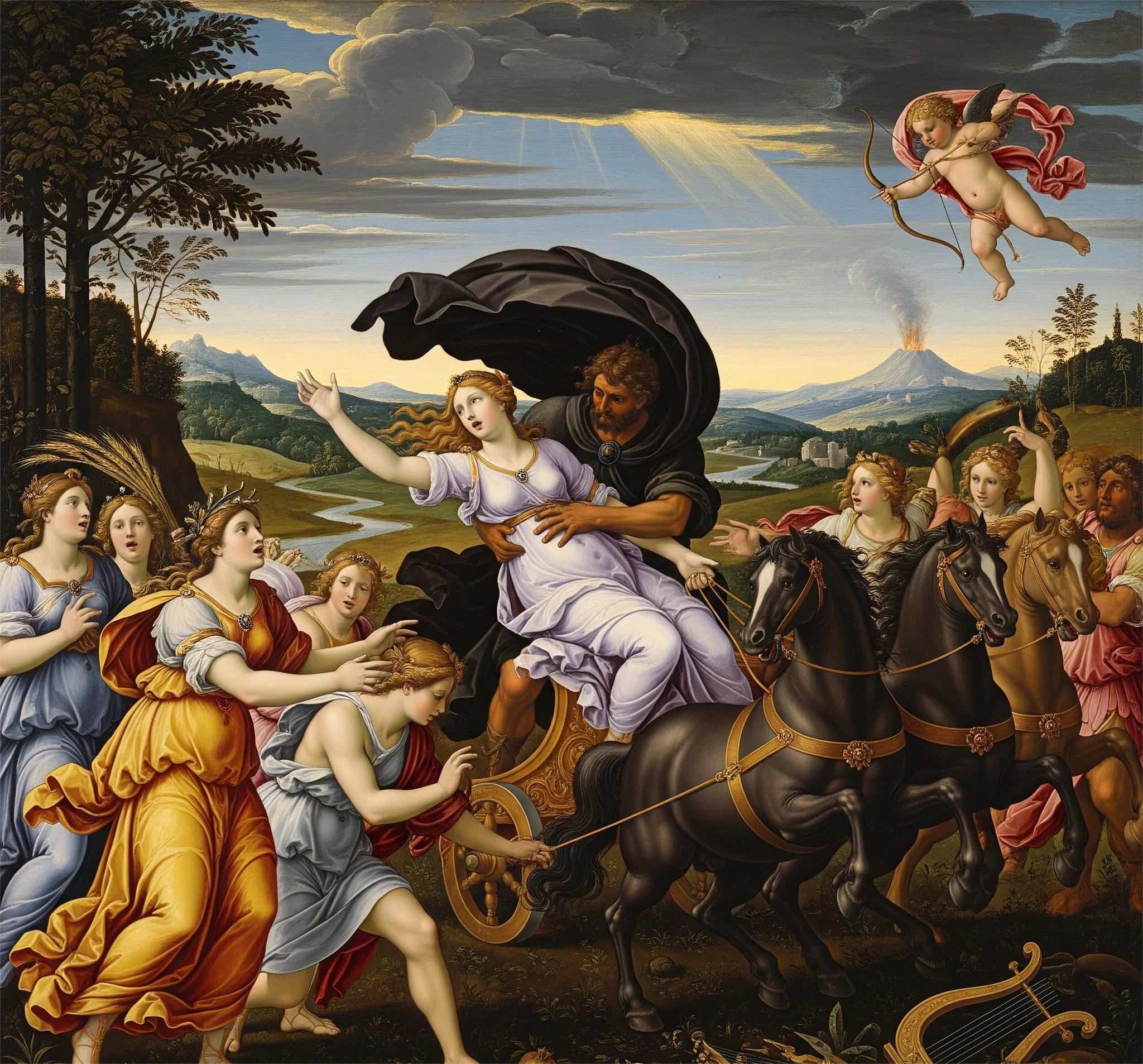
During the Renaissance, European artists looked to the classical world for inspiration—reviving ancient Greek and Roman ideals, philosophies, and stories. Among the most captivating sources of inspiration was Greek mythology, with its rich pantheon of gods, heroes, and symbolic narratives. These myths didn’t just serve as decorative themes; they offered artists a profound language for expressing human emotion, divine beauty, political power, and philosophical thought.
Let’s explore how Renaissance artists infused their work with mythological storytelling, and what those depictions meant.
Why Greek Mythology Resurfaced During the Renaissance
The Renaissance (14th–17th century) was a rebirth of classical knowledge and art. With the rediscovery of ancient texts and the rise of humanism, artists and intellectuals turned to Greek myths as allegories for human experience and moral insight.
Greek mythology gave artists a way to:
Celebrate human beauty and form
Explore themes of love, loss, ambition, and tragedy
Reflect political messages through classical allegory
Bridge Christianity with pagan tradition
Notable Mythological Themes in Renaissance Art
1. The Birth of Venus – Sandro Botticelli (c. 1484–1486)
One of the most iconic paintings of the Renaissance, Botticelli's The Birth of Venus shows the goddess emerging from the sea atop a shell. Inspired by classical sculpture and ancient poetry, Venus symbolizes:
Divine beauty and purity
The Neoplatonic ideal of spiritual love
Nature’s harmony, a central theme in humanist thought
Venus, though a pagan goddess, was interpreted in Renaissance circles as a metaphor for spiritual awakening and philosophical contemplation.
2. Primavera – Sandro Botticelli (c. 1482)
This myth-laden work features Venus, Mercury, the Three Graces, and Flora. It's an allegory of spring, fertility, and the transformative power of love and beauty. The use of overlapping mythological figures showcases the Renaissance fascination with:
Cosmic order
Seasonal change
Eroticism and virtue coexisting in harmony
3. Leda and the Swan – Leonardo da Vinci & Michelangelo
This myth, where Zeus seduces or assaults Leda in the form of a swan, was often used to explore:
The blending of divine and mortal realms
Erotic transformation
The creation of heroic offspring (like Helen of Troy)
Artists used this myth to challenge the boundaries between sacred and profane, beauty and violence.
4. The Rape of Europa – Titian (c. 1560–1562)
Commissioned by King Philip II of Spain, this painting shows Zeus (as a bull) abducting Europa. It reflects:
Divine power and mystery
Political allegory: Europa often symbolized the European continent, suggesting divine favor and conquest
The use of myth to elevate royal patrons
Symbolism in Mythological Representation
Greek myths weren't just painted literally; they were loaded with symbolism and philosophical subtext. For example:
Apollo often represented order, reason, and the arts
Dionysus embodied chaos, emotion, and ecstasy
Hercules was a symbol of virtue through struggle (used to flatter rulers or noble patrons)
Medusa, in portraits and sculpture, often symbolized dangerous beauty or female rage
By choosing these myths, Renaissance artists invited viewers to reflect on human nature, ethics, and the divine in a secular age.
Mythology and Christianity: A Complicated Dance
Although the Church dominated life in Renaissance Europe, artists often blended pagan imagery with Christian themes:
Venus as an analogue for the Virgin Mary’s ideal beauty.
Orpheus descending into the underworld mirrored Christ’s descent into Hell.
Judgment of Paris compared with moral temptation and the Fall of Man.
This syncretism allowed classical myths to thrive in a Christian context, enriching the symbolic depth of the artworks.
Patronage and Power
Wealthy patrons like the Medici family and European monarchs loved mythological subjects because they:
Projected intellectual sophistication
Linked their lineage to heroic or divine figures
Provided a moral veneer for indulgent or erotic art
Renaissance art became a visual playground for elite identity-building through the lens of myth.
Lasting Impact
The mythological themes popularized during the Renaissance continued to inspire later art movements:
Baroque artists added drama and movement to classical myths.
Neoclassicism revived clean lines and noble ideals of ancient heroes.
Even modern surrealists like Salvador Dalí reinterpreted Greek myths with psychoanalytic twists.