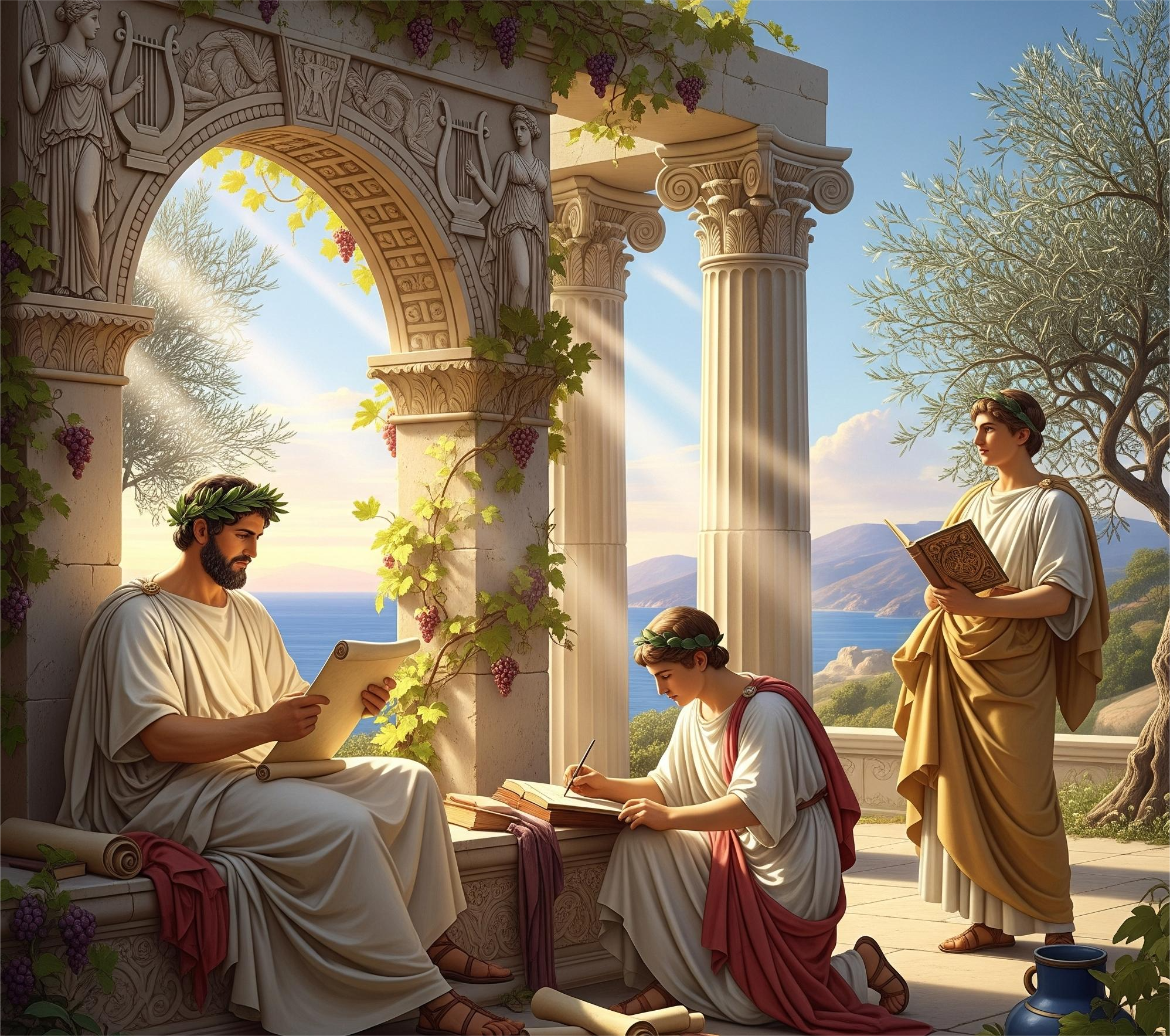
In the 18th and 19th centuries, Europe experienced a sweeping cultural phenomenon known as the Neoclassical movement—a return to the ideals of ancient Greece and Rome, inspired by Enlightenment values, archaeological discoveries, and a renewed admiration for classical antiquity. While Neoclassicism shaped architecture, visual arts, and philosophy, it also deeply influenced literature, leading to a Greek revival in form, theme, and tone.
This article explores how ancient Greek ideals of beauty, heroism, democracy, and tragedy found new life in the pens of poets, playwrights, and novelists across Europe and beyond.
The Seeds of Revival: Enlightenment and Antiquity
During the Enlightenment, European intellectuals celebrated reason, civic virtue, and harmony—principles associated with classical Greece. Philosophers and writers saw the ancient world not just as a source of aesthetic inspiration, but as a model for moral and societal ideals. As a result:
Greek myths, dramas, and political ideals were reimagined in contemporary literature.
Writers began using classical allusions, Greek poetic forms, and philosophical themes to enrich their works.
This return to Greek themes was bolstered by archaeological discoveries (like those in Herculaneum and Pompeii) and translations of Greek texts that made ancient literature more accessible.
Themes and Motifs in the Greek Revival
Neoclassical literature often reflected core Greek ideas, such as:
Tragic heroism: Characters caught in fate, reminiscent of Oedipus or Antigone.
Moral order and balance: Stories emphasizing reason and virtue over emotion and chaos.
Democratic ideals: References to Athenian democracy and civic responsibility.
Mythological reimaginings: Modern takes on the tales of Homer, Hesiod, and Greek tragedians.
These themes were not simply copied—they were reinterpreted through a contemporary lens, often serving political or philosophical purposes in a rapidly changing world.
Notable Authors and Works
1. Johann Wolfgang von Goethe (Germany)
Goethe's Iphigenia in Tauris (1787) is a prime example of Greek-inspired drama, reworking Euripides' tragedy with Enlightenment humanism. Goethe believed Greek literature embodied the highest ideals of beauty and rationality.
2. Lord Byron (Britain)
The Romantic poet and Greek independence supporter drew heavily from classical sources. His poem Childe Harold’s Pilgrimage (1812–1818) mourns the fall of Greece and celebrates its ancient glory. Byron even died in Greece fighting for its freedom.
3. Percy Bysshe Shelley (Britain)
In Hellas (1822), Shelley used a Greek dramatic form to comment on the Greek War of Independence. He saw ancient Greece as the birthplace of liberty and Enlightenment.
4. André Chénier (France)
A poet of the French Revolution, Chénier used Greek meters and themes to critique tyranny and corruption, blending classical form with political passion.
5. Ugo Foscolo (Italy)
His work Dei Sepolcri (1807) was filled with Greek-style meditations on death, memory, and civic virtue, inspired by Homeric epic and Greek funeral traditions.
Classical Translations and Adaptations
The period also saw a boom in translations of Greek texts into vernacular languages, which influenced emerging national literatures:
Translations of Homer and Sophocles became literary events.
Educated Europeans learned Greek in schools, making direct engagement with texts possible.
Greek themes appeared in opera librettos, epic poems, and historical novels, influencing both high and popular culture.
Greece as Symbol: Romanticism and National Identity
By the early 19th century, especially during the Greek War of Independence (1821–1830), Greece became a symbol of heroic struggle and ancient virtue reborn. Romantic writers:
Framed modern Greece as a descendant of classical glory, deserving support.
Used Greek imagery to inspire nationalist movements elsewhere in Europe.
Saw the ancient Greek past as a lost Eden of democratic ideals and artistic perfection.
Beyond the West: Global Echoes
The Greek literary revival wasn’t confined to Europe:
In America, writers like Ralph Waldo Emerson and Thomas Bulfinch drew from Greek myth and ethics to shape New England’s intellectual identity.
Philhellenism influenced early education and elite culture globally, tying modern national aspirations to classical ideals.