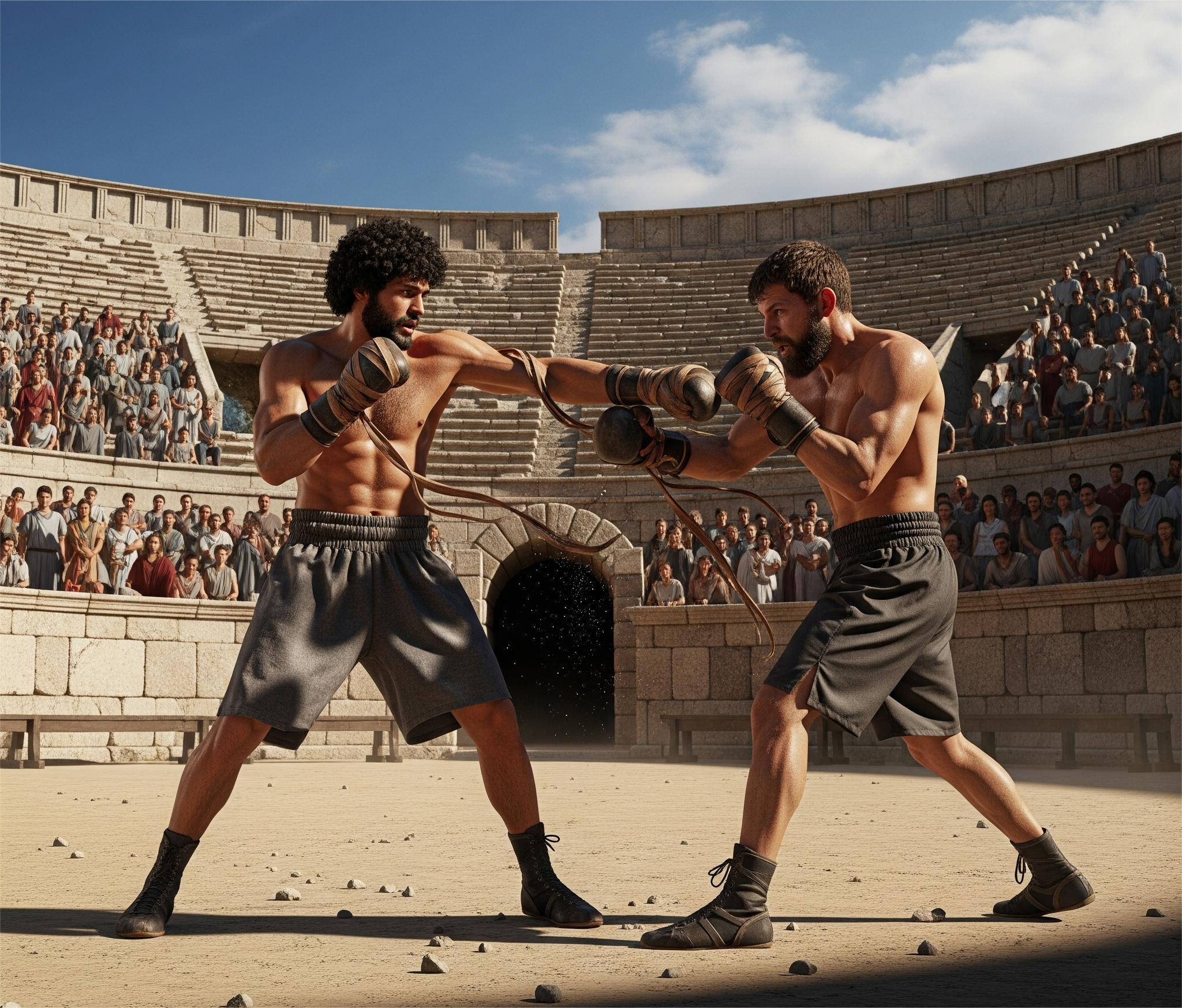
Greek boxing, or pygmachia, was a fierce and physically taxing sport featured in major athletic festivals. It likely originated from early forms of hand-to-hand combat training and developed into a regulated competition emphasizing endurance and striking ability.
Unlike modern boxing, ancient Greek boxers did not fight within a ring. Instead, matches took place in open areas where combatants faced off until one conceded, was incapacitated, or signaled defeat by raising a finger. There were no rounds or timed breaks.
Boxers wrapped their hands and wrists with leather thongs called himantes to protect their knuckles and inflict greater damage. Later variations included more dangerous oxys, reinforced straps with harder edges.
Rules were minimal: kicking was not allowed, but fighters could target the head and body freely with punches. There were no weight divisions, meaning smaller, more agile fighters had to rely on speed and technique against larger opponents.
Prominent boxers, such as Theagenes of Thasos—an Olympic champion in both boxing and pankration—were revered across the Greek world. Their victories were immortalized in statues and songs.
Boxing exemplified Greek values of toughness, discipline, and competitive spirit. It prepared young men for war while offering fame and honor in peacetime.