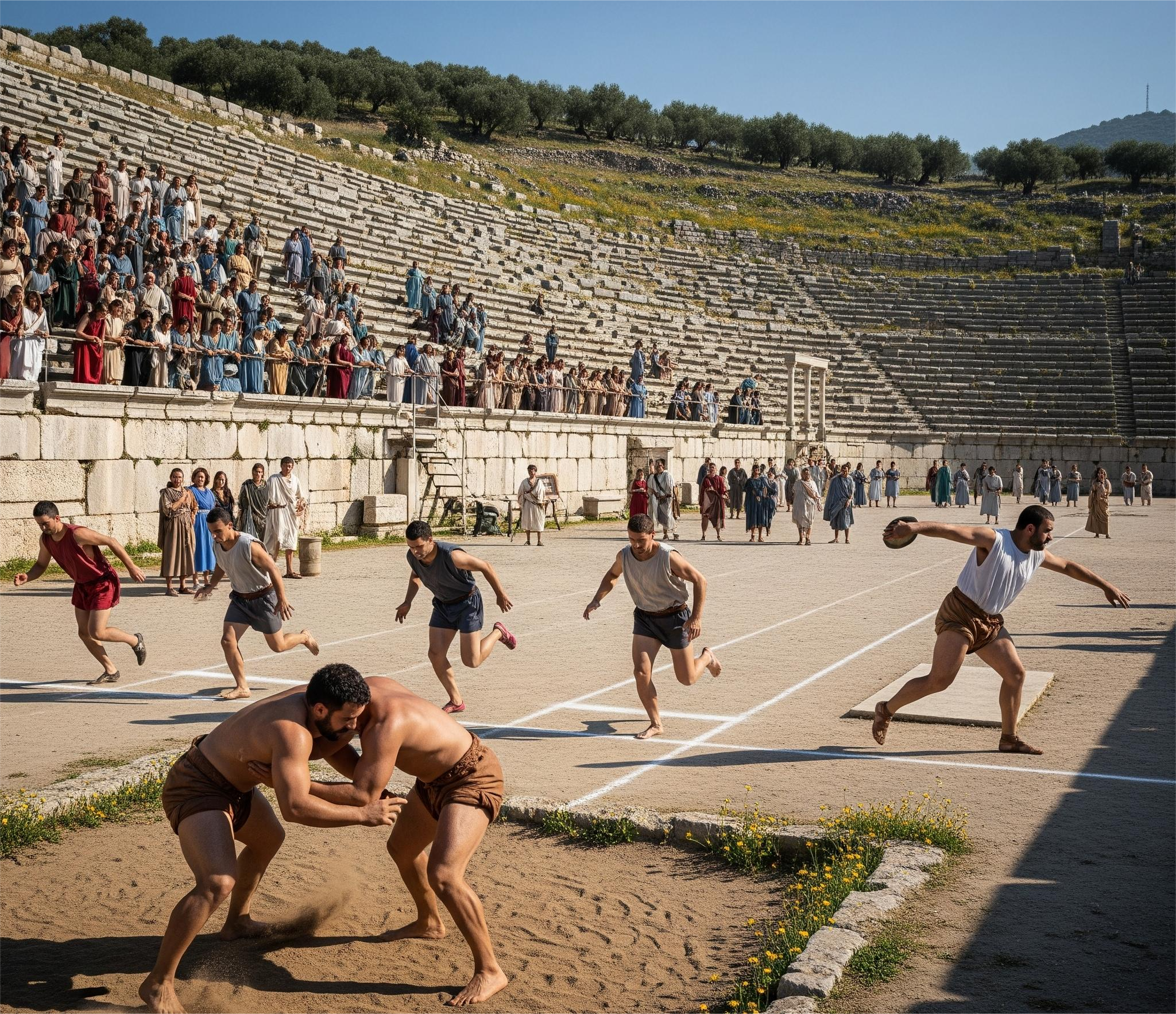
The Nemean Games, held every two years in the sanctuary of Zeus at Nemea, were among the four Panhellenic Games of ancient Greece, alongside the Olympic, Pythian, and Isthmian Games. Although less famous than the Olympics, they were equally significant in celebrating athletic excellence and religious devotion.
Founded in the 6th century BCE, the Nemean Games honored Zeus and featured a full array of competitions, including footraces, wrestling, boxing, pankration, chariot racing, and even musical contests. Victors were crowned with a wreath of wild celery—a symbol of honor and triumph.
Unlike the Olympics, which had stricter eligibility rules, the Nemean Games sometimes allowed broader participation, including boys' divisions. The games were deeply tied to myth: legend says they were established to commemorate the death of Opheltes, a child protected by the Nemean lion.
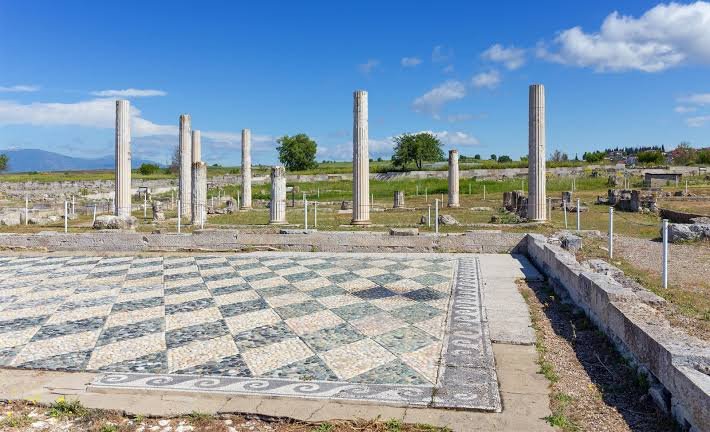
The stadium at Nemea, with its stone starting line and underground tunnel entrance for athletes, still stands as a testament to the grandeur of the games. Recent efforts have even revived the Nemean Games as a modern cultural and historical event.
Through the Nemean Games, the Greeks celebrated arete, piety, and unity—values that defined their civilization.