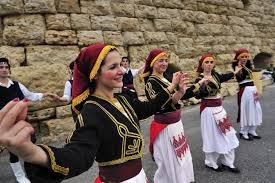
From the rhythmic stamping of ancient warriors to the jubilant circle dances of village festivals, dance has always been a vibrant part of Greek life and identity. Greek dance traditions span millennia, reflecting the country’s rich regional diversity, religious beliefs, and social customs.
Ancient Beginnings
In ancient Greece, dance was more than entertainment—it was a vital expression of emotion, spirituality, and civic duty. Ritualistic dances honored the gods, especially Dionysus, the god of wine and ecstasy. Choral dances accompanied theatrical performances, often symbolizing cosmic order or community unity. Military dances like the pyrrhiche were used to train soldiers, combining rhythm with combat moves.
Regional Folk Dances
Across Greece’s many islands and mainland regions, unique folk dances emerged, often accompanied by live music and colorful traditional costumes. Some well-known types include:
Kalamatianos: A popular circle dance from the Peloponnese, performed at weddings and festivals. It’s characterized by a 7/8 rhythm and graceful, flowing movements.
Tsamiko: Known for its slow, proud steps and high leaps, this dance originated from the mountainous regions of mainland Greece. Traditionally performed by men, it embodies strength and heroism.
Pentozali: A lively Cretan dance known for its fast footwork and energy, often performed during major celebrations.
Ikariotikos: A dance from the island of Ikaria, beginning slowly and increasing in tempo—symbolizing joy building into exuberance.
Sirtaki: A Modern Invention with Ancient Roots
Perhaps the most globally recognized Greek dance is Sirtaki, often associated with the film Zorba the Greek (1964). Interestingly, Sirtaki is not a traditional folk dance but a choreographed sequence created for the movie. It blends elements of slow and fast dances, such as the hasapiko and hasaposerviko, reflecting both discipline and spontaneous joy.
Social and Cultural Significance
Greek dances are deeply tied to communal identity. They are central to weddings, baptisms, religious feast days, and national holidays. Each step, gesture, and rhythm reflects shared heritage and intergenerational continuity. The dance circle, in particular, symbolizes equality and unity—everyone joins hands, regardless of age or status.
Preservation and Modern Revivals
Today, traditional dance groups and cultural festivals across Greece and the diaspora work to preserve these forms. Schools and universities often include dance in their curricula, while contemporary choreographers experiment with blending ancient steps with modern performance styles.
Greek dance is not merely an art—it is a living tradition, binding past and present, the local and the global, in every well-timed step.