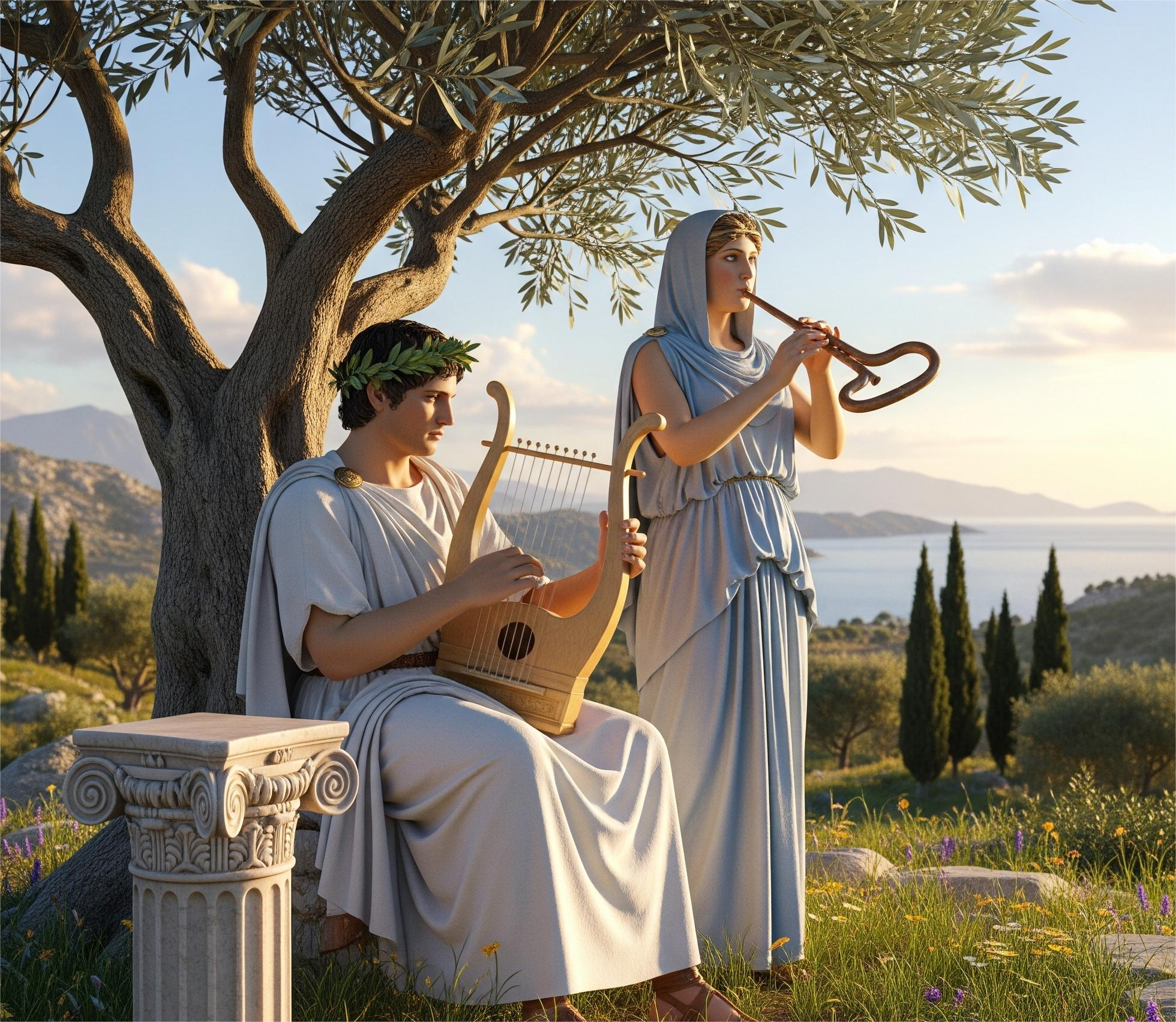
Ancient Greek musical culture was rich and deeply integrated into everyday life, religious rituals, and public entertainment. Among the most iconic instruments of ancient Greece were the lyre and the aulos, both of which played crucial roles in shaping the musical landscape of the time.
The lyre, a stringed instrument resembling a small harp, was associated with Apollo, the god of music and harmony. Constructed from a tortoiseshell base and arms of wood or horn, it was strung with gut strings and played with either a plectrum or fingers. The lyre was commonly used in educational settings, poetry recitations, and private symposia. It symbolized refinement and was considered essential for a well-rounded education among the elite youth of Athens.
In contrast, the aulos was a wind instrument typically played in pairs. Made of wood, bone, or ivory, each pipe had finger holes and a reed mouthpiece, producing a sound more intense and reedy than the lyre. The aulos was closely associated with the god Dionysus and often accompanied dramatic performances, athletic competitions, and ecstatic religious rites such as the Dionysia. Its energetic sound made it suitable for stimulating movement and emotional intensity.
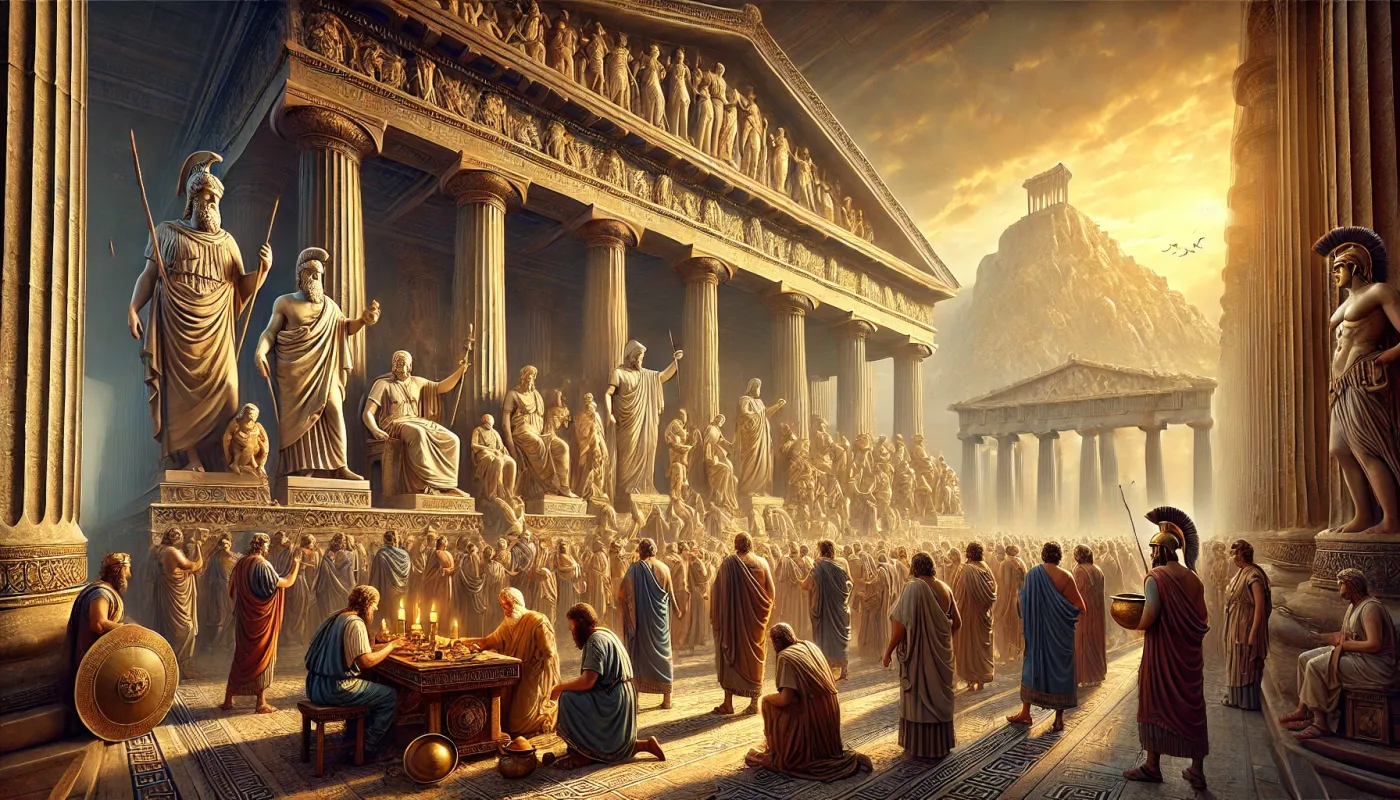
Both instruments featured prominently in Greek festivals and public ceremonies. Musicians playing the lyre or aulos would accompany choruses, dancers, and theatrical performances, reinforcing communal identity and divine reverence. Music competitions held during Panhellenic festivals like the Pythian Games highlighted the cultural prestige of skilled performers.
In sum, the lyre and the aulos encapsulate the diversity of ancient Greek music: from serene harmonies to vigorous rhythms. Their enduring legacy continues to echo through modern interpretations of Greek cultural heritage.