The Peloponnesian War (431–404 BCE) left Athens shattered. Once the envy of the Greek world, Athens surrendered to Sparta after nearly three decades of attritional warfare. Starvation, internal strife, and the catastrophic defeat at the Battle of Aegospotami had crippled the Athenian spirit and destroyed its fleet—the cornerstone of its power.
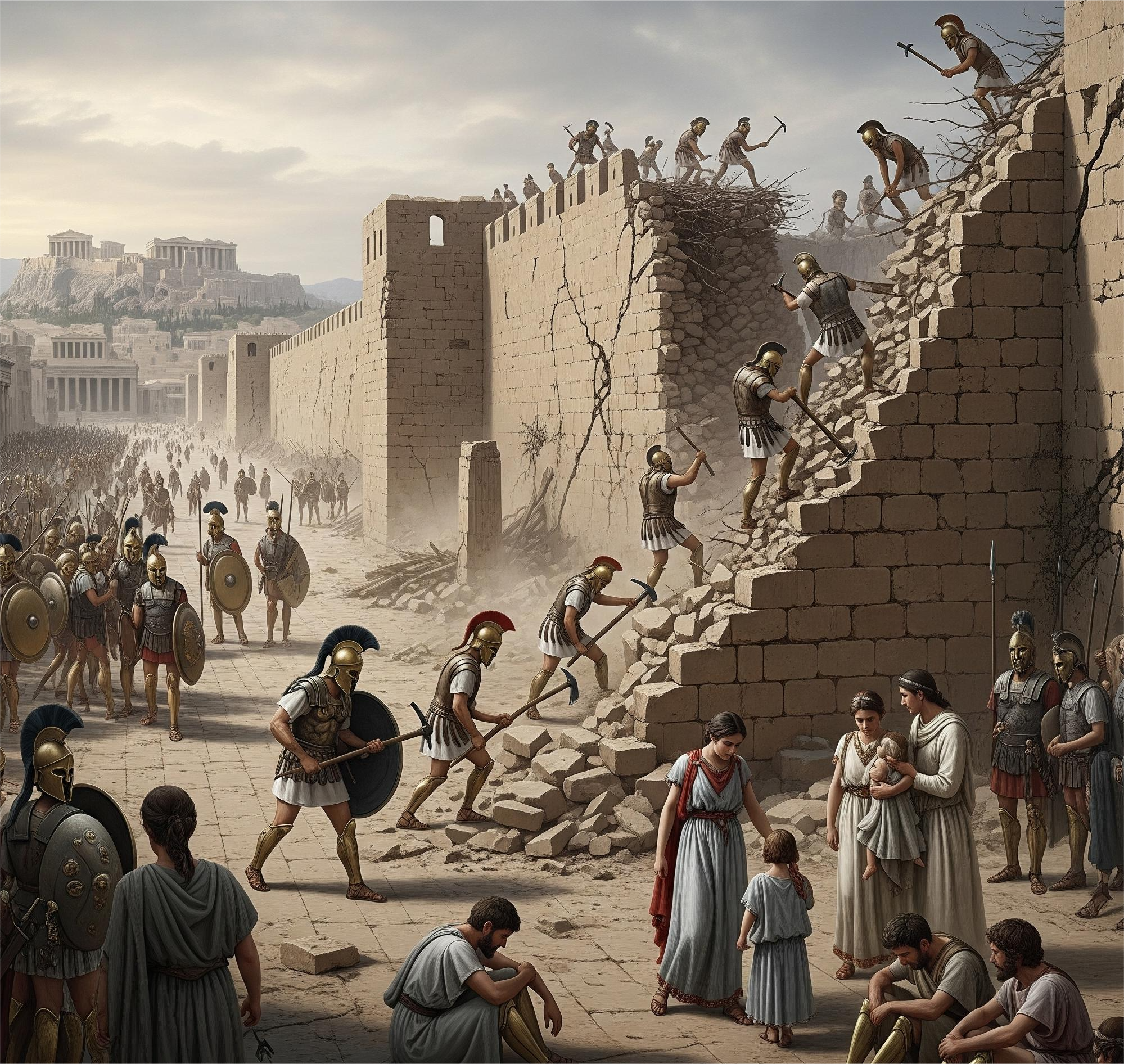
Sparta’s terms were brutal. Athens was forced to dismantle its Long Walls, surrender its navy (except for 12 ships), and accept an oligarchic regime known as the Thirty Tyrants, backed by Spartan force. The brief but bloody rule of these tyrants saw mass executions and exiles. Though democracy was restored the following year (403 BCE) in a rare act of reconciliation, Athens would never again dominate the Greek world as it once had.
Yet even in its defeat, Athens remained a cultural powerhouse. Philosophy, drama, and rhetoric continued to flourish, producing minds like Plato and Xenophon. But politically and militarily, a power vacuum had emerged—and other city-states would soon rush to fill it.