Greek mythological monsters, sea caves, and the ancient imagination of dangerous winds.
The Blue Caves and the Power of the Coast
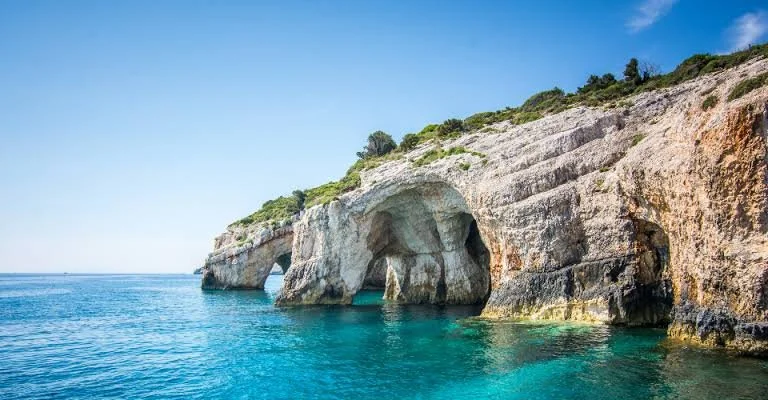
Zakynthos, one of the Ionian Islands, is known for its rugged coastline, limestone formations, and sea caves carved by the action of water over long periods. Among its best-known natural features are the Blue Caves, where sunlight entering the water can create striking shades of blue and turquoise.
The caves are real geological formations, but their appearance can feel otherworldly. Light changes with the position of the sun, reflections move across the cave walls, and the sea can shift from calm to rough conditions. Such environments provide powerful settings for storytelling, particularly in cultures where the sea was associated with divine forces, monsters, and unpredictable danger.
The idea of harpy nests hidden inside the caves combines a famous figure from Greek mythology with a recognizable coastal landscape. There is no established archaeological evidence of harpy nests at Zakynthos, and the title should therefore be treated as a myth-inspired premise rather than a report of a discovered site.
The historical question is more revealing: why did Greek storytellers imagine dangerous winged beings that could move between the air and the human world, and how did natural forces influence the stories told about them?
The Harpies of Greek Mythology
Harpies appear in ancient Greek mythology and literature as supernatural beings associated with powerful winds, abduction, and the disturbance of human life. Their descriptions changed across sources and artistic periods, but they were often portrayed as winged female figures or creatures combining human and bird-like characteristics.
In some mythological narratives, harpies act as agents of punishment or divine intervention. Their ability to arrive suddenly, seize or carry away objects, and disappear into the air makes them particularly effective figures in stories about forces beyond human control.
The harpies are not simply another type of mermaid or sea monster. Their traditional associations are strongly connected with air, wind, and sudden movement, although individual stories can place them in different geographical settings. Their role must be understood through the ancient texts and artistic traditions in which they appear.
Classical authors and later interpreters used such beings to express ideas about divine power, justice, danger, and the limits of human agency. Their appearance in a mythological narrative does not indicate that ancient people had encountered a real species of winged monster.
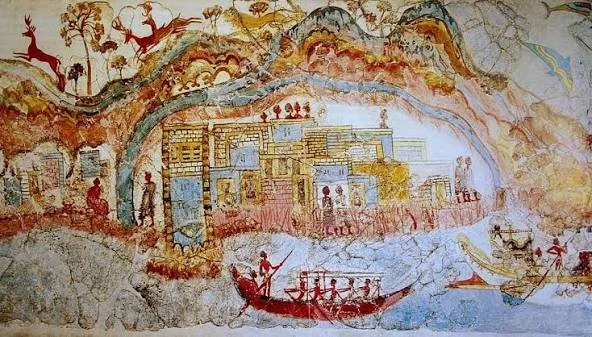
Researchers can trace harpy traditions through literature, vase painting, sculpture, and later manuscript illustrations. Comparing these sources reveals how the creatures' appearance and symbolic roles developed over time.
Caves, Wind, and the Experience of the Unfamiliar
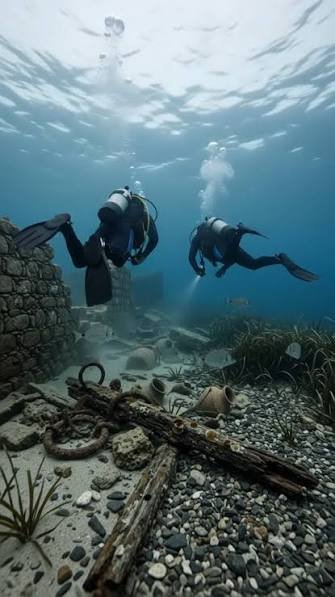
Sea caves occupy an unusual position between land and water. Their entrances may be visible from the shore or approached only by boat, while their interiors can be difficult to inspect safely. Waves entering narrow openings produce changing sounds, and wind passing through gaps may create echoes that are difficult to locate.
These features can make caves feel isolated from ordinary life. In folklore, caves often become entrances to hidden worlds, dwellings of supernatural beings, or places where humans encounter powers that lie beyond the boundaries of their community.
The association between caves and monsters is not unique to Greece. Different cultures have placed giants, dragons, spirits, and other extraordinary beings in underground chambers or remote coastal formations. These stories can reflect the physical danger of such places, their distance from familiar settlements, and their potential to conceal what lies beyond direct observation.
At Zakynthos, geological research can explain how the caves formed and how waves and erosion continue to change them. Coastal geomorphology, underwater surveys, and photographic documentation can help researchers understand the environment in which modern visitors experience the site.
Folklore research would address a different question: whether particular stories about supernatural beings have been recorded locally and how those stories relate to the caves' appearance. A general association between caves and monsters should not be presented as evidence of a specific harpy tradition on Zakynthos.
The Ancient Greek Understanding of Wind
Wind could be a powerful and sometimes dangerous force for ancient Mediterranean communities. Sailing, agriculture, travel, and everyday activities all depended to some degree on weather conditions. Sudden gusts could disrupt a voyage, while prolonged unfavorable winds could delay ships and threaten supplies.
Greek mythology frequently gave natural forces divine or supernatural personalities. Wind deities and other mythological figures provided a way to describe powerful phenomena within a larger religious and literary world. The harpies' association with swift movement and violent intervention belongs to this broader imaginative landscape.
This does not mean that every mythological creature was created as a direct explanation for a natural event. Stories developed through literary traditions, religious practices, artistic invention, and the reinterpretation of earlier narratives. Natural experience was one influence among several.
An article could compare ancient descriptions of harpies with historical accounts of Mediterranean navigation and the dangers of coastal travel. It could also examine how artists represented the creatures and how later readers interpreted their role in classical stories.
Such an investigation would connect mythology with environmental history while avoiding the unsupported claim that harpies occupied particular caves.
Protecting and Interpreting the Blue Caves
The Blue Caves are also an example of how a natural landscape can acquire multiple meanings. They may be studied as geological formations, experienced as scenic destinations, and interpreted through cultural narratives. Each perspective highlights different aspects of the same place.
Tourism introduces its own challenges. Popular destinations can accumulate dramatic stories that are repeated without clear information about their origins. A modern legend may become associated with a location simply because the landscape seems suitable for it, even when no historical record supports the connection.
Researchers can investigate these processes by examining guidebooks, local publications, tourism materials, and oral accounts. If a harpy story is documented in a particular source, its date and relationship to older Greek mythology can be established. If the story appears only in recent creative material, that fact should be made clear.
A strong article can use the image of hidden harpy nests as an invitation to explore the ancient mythology of winged monsters, the geology of Zakynthos, and the human fascination with inaccessible places. The caves provide the real landscape, while classical literature and documented local traditions supply the historical evidence.