Ancient burial customs, restless-dead traditions, and the archaeology of fear.
The Uncertainty Surrounding the Dead
Burial is among the most enduring practices in human history. Across cultures, people have developed rituals to mark the death of an individual, care for the body, preserve family memory, and express beliefs about what follows life. These practices can provide archaeologists with valuable evidence about religion, social relationships, and the ways communities understood the boundary between the living and the dead.
Yet burial has also been surrounded by uncertainty. Stories about restless spirits, returning corpses, and the dead who disturb the living appear in many societies. Such narratives may express anxiety about improper burial, unresolved conflict, unexpected illness, or the fear that death has not fully separated an individual from the community.
Greek folklore includes traditions about the vrykolakas, a revenant figure whose characteristics vary across regional and historical contexts. Some accounts describe a dead person returning to cause harm or disturbance, while others connect the phenomenon with particular burial circumstances or religious concerns.
The title concerning secret revenant graves on Amorgos presents an evocative archaeological mystery, but the existence of a specific group of revenant graves on the island should not be assumed without reliable evidence. The more grounded subject is the relationship between Greek beliefs about the returning dead and the archaeological study of funerary practices.
Amorgos and the Archaeology of Burial
Amorgos is an island in the Cyclades with a long history of settlement and maritime connections. Its archaeological landscape reflects different periods of human activity, while its churches, villages, cemeteries, and historical buildings preserve aspects of its cultural heritage.
Like other Greek islands, Amorgos can be studied through its burial sites, funerary objects, inscriptions, and historical records. These sources may reveal changes in burial customs, religious practices, social status, and relationships between local communities and the wider Aegean world.
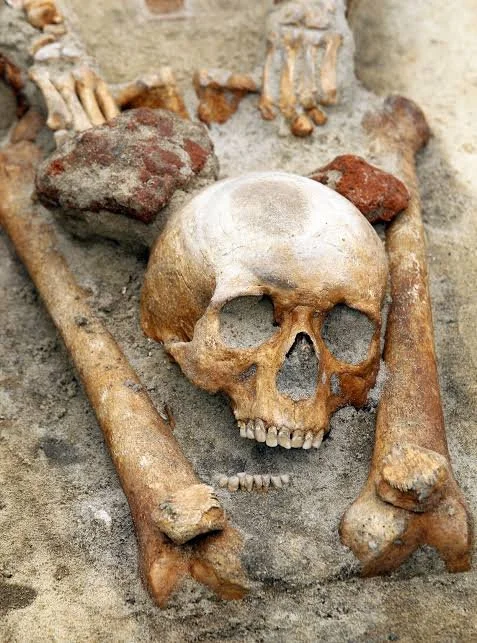
Archaeologists examine graves by documenting their construction, orientation, contents, and relationship to surrounding structures. Human remains, where preservation permits, may provide information about age, health, diet, injury, and aspects of an individual's life. Objects placed in graves can also offer clues about identity and funerary ritual, although their meaning must be interpreted in context.
An unusual burial does not automatically indicate fear of a revenant. A body positioned differently from others may reflect a local custom, the circumstances of death, later disturbance, or practical limitations. Researchers need multiple forms of evidence before attributing a grave arrangement to supernatural concerns.
A study of Amorgos would therefore begin with documented archaeological sites and published research, then investigate whether any burial features have been reliably connected with revenant beliefs.
The Vrykolakas and the Returning Dead
Greek revenant traditions developed within a wider southeastern European history of beliefs about the dead who return to disturb the living. The term vrykolakas has a complicated history, and its meanings have varied across regions, languages, and periods.
Some historical accounts describe communities interpreting unexplained events as evidence that a deceased person had become dangerous. Reports might mention illness, repeated disturbances, or beliefs about a body that appeared not to have decomposed as expected. Such descriptions tell historians about the beliefs and concerns of the people who recorded them, not about the literal existence of supernatural beings.
The circumstances surrounding death could be important in these traditions. Improper burial, unresolved religious concerns, social exclusion, or suspected wrongdoing might influence how a deceased person was remembered. In some communities, unusual funerary treatment was associated with the fear that the dead might return.
These traditions were not uniform across Greece. A custom recorded in one region cannot automatically be attributed to Amorgos, and later descriptions may reflect outside observers' assumptions rather than local explanations.
Folklorists can compare regional accounts to identify recurring motifs, while historians can examine when and where those motifs were recorded. This approach reveals how beliefs about death circulated and changed without assuming that every community shared the same understanding.
Identifying Unusual Burials
Modern archaeology has developed increasingly detailed methods for investigating burial sites. Careful excavation records the position of the body, the structure of the grave, associated objects, and any evidence of disturbance. Laboratory analysis may help establish dates, examine biological relationships, or investigate the individual's diet and health.
Bioarchaeology can identify patterns of injury or disease, but it cannot determine that a deceased person was a revenant. Similarly, the discovery of stones, unusual objects, or altered skeletal arrangements does not by itself establish an anti-vampire ritual.
To support such an interpretation, researchers would need evidence that the burial treatment differs meaningfully from local funerary practice and that the difference corresponds to a documented historical tradition. Ideally, the archaeological findings would be compared with written sources or ethnographic accounts from the same region and period.
The distinction between an archaeological observation and its interpretation is crucial. A report may establish that a grave was reopened or that a body was positioned in an unusual way. Explaining why this happened requires additional evidence, and several interpretations may remain possible.
For Amorgos, any claim about secret revenant graves should therefore be checked against published excavation reports and reliable local historical sources. If no such evidence exists, the article can still explore the wider history of Greek revenant beliefs and the methods archaeologists use to investigate unusual burials.
Memory, Ritual, and the Fear of Restless Spirits
Burial practices are closely connected with memory. Families and communities use funerary rituals to recognize loss, maintain social bonds, and express ideas about the continuing significance of the deceased. When a death is sudden, violent, or surrounded by uncertainty, these processes can become especially complicated.
Stories about restless dead may give shape to feelings that are otherwise difficult to express. A revenant narrative can portray the fear that an unresolved conflict continues beyond death, or that a person who has been excluded from ordinary rituals remains connected to the living world.
Such interpretations should not be imposed on every historical account, but they provide useful questions for researchers. Why did a particular community associate danger with certain deaths? Which burial practices were considered appropriate? How did religious authorities respond to local concerns? Did the stories change when medical knowledge or burial regulations changed?
These questions can be investigated through historical documents, funerary archaeology, religious studies, and oral history. Together, the sources can reveal how people understood death and how beliefs about the returning dead influenced cultural practices.
The idea of hidden revenant graves provides a dramatic starting point, but the strongest investigation lies in examining the actual evidence for burial customs and the historical traditions that gave those practices meaning.