
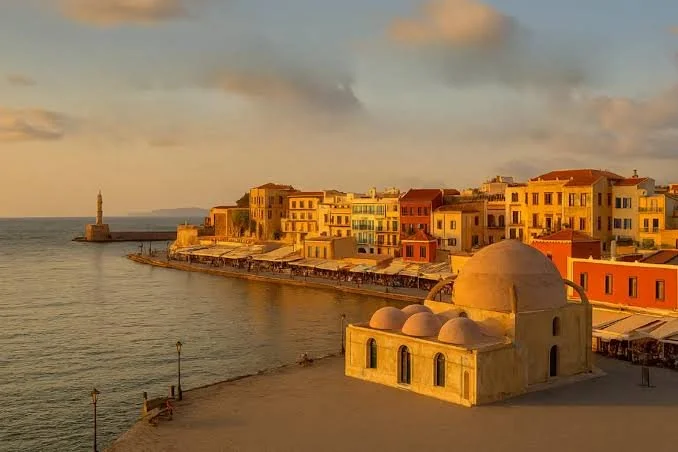
Venetian architecture, supernatural disturbances, and the layered history of Crete's old harbor city.
The Historic Streets of Chania
Chania, on the northwestern coast of Crete, preserves a distinctive architectural landscape shaped by centuries of Mediterranean contact. Its old harbor and surrounding streets contain buildings and urban features associated with Venetian rule, Ottoman administration, and later periods of Greek history.
Historic houses can carry several layers of memory. A building may have served different owners and functions, undergone renovations, survived earthquakes or fires, and become associated with stories passed between generations. When the original occupants are long gone, gaps in the historical record can encourage speculation about what happened inside.
The title's reference to poltergeist haunts in Venetian villas evokes stories about unexplained noises, moving objects, and disturbances attributed to unseen forces. Poltergeist traditions appear in many modern supernatural narratives, but a specific historical tradition involving Venetian villas in Chania must be established through reliable sources.
A grounded investigation would examine the architecture and ownership history of selected buildings, then investigate whether documented local ghost stories became associated with them. The result could explore how historical places acquire supernatural reputations without presenting unverified hauntings as established events.
Venetian Architecture and the Memory of a Building
Venetian influence on Crete developed during a period when the island was connected to the maritime and commercial networks of the Republic of Venice. Chania's harbor and fortifications reflect the strategic and economic importance of the city, while surviving architectural features provide evidence of different periods of construction and adaptation.
Historic villas and townhouses can reveal information about social status, domestic arrangements, commercial activity, and changing architectural fashions. Their interpretation requires close examination of building materials, floor plans, decorative details, inscriptions, and documentary records.
A building that appears Venetian today may contain elements added or altered during later periods. Architectural styles were reused, rooms were reorganized, and structures sometimes changed ownership or purpose. Consequently, an apparent feature of one period may not belong to the building's original construction.
Historical research can help separate these layers. Property records, maps, photographs, and archival documents may establish who occupied a house and how it was used. Such information can also clarify whether a story associated with a building belongs to the Venetian period or emerged much later.
What Is a Poltergeist?
The term poltergeist comes from German words associated with noise and disturbance. In modern supernatural literature, it generally describes an alleged phenomenon involving unexplained sounds, objects moving, or disturbances within a home or other enclosed space.
Accounts vary considerably. Some describe knocking or footsteps, while others involve objects that appear to move without an obvious cause. Historical explanations have included supernatural forces, psychological interpretations, misperception, deliberate deception, and ordinary environmental factors.
A report of a poltergeist is not evidence that a supernatural being was present. Researchers investigating such accounts need to establish the original source, the circumstances of the reported event, and whether alternative explanations were considered.
The history of the term also matters. A story attributed to a Venetian household several centuries ago may not have been described using the modern word poltergeist. Applying the term retrospectively can create a misleading impression that people in different periods understood the events in the same way.
A responsible article would therefore identify the language used in the earliest available account and explain how later writers interpreted it.
Why Old Houses Inspire Ghost Stories
Historic buildings can create powerful sensory impressions. Thick masonry walls may transmit or amplify certain sounds, while timber floors, shutters, roof structures, and plumbing can produce noises as materials respond to temperature and humidity. Wind can enter openings and create drafts, and changes in air pressure may cause doors or windows to move.
These physical processes can explain some household disturbances, although they should not be used to dismiss every account without examining its details. A particular event may have several possible explanations, and historical sources rarely contain enough information to resolve every uncertainty.
The appearance of a building also influences how people interpret it. Dark corridors, enclosed courtyards, old staircases, and rooms with limited natural light can encourage a sense of isolation. Knowledge that a house has existed for centuries may further influence expectations about what might have happened there.
Psychology offers useful questions about perception, memory, and suggestion. Once a building acquires a reputation for being haunted, visitors may interpret ambiguous sounds or movements in ways consistent with the story. Such processes do not prove that every report is mistaken, but they help explain how reputations can persist.
Investigating a Chania Villa
A serious investigation would begin by selecting a specific historic building and establishing its documented history. Researchers could consult architectural surveys, municipal records, archival photographs, property documents, and local historical publications.
The next step would be to locate the earliest traceable account of the alleged haunting. Was it recorded in a newspaper, a memoir, a family history, or a recent tourism article? Does the account identify witnesses, dates, or circumstances? Have later versions added details that were absent from the original story?
Architectural analysis could then examine whether ordinary environmental conditions might account for reported sounds or movement. This would not establish a definitive explanation for every incident, but it would help separate observable building characteristics from later interpretation.
Oral history could reveal how the story circulated among residents and how it became associated with the villa. Researchers should distinguish firsthand testimony from accounts repeated through hearsay and should avoid presenting the privacy or personal experiences of current occupants without appropriate permission.
The history of haunted villas in Chania is therefore best approached as an investigation into architecture, urban memory, and the evolution of supernatural stories. Even when no verifiable haunting can be established, the development of the legend can reveal how historic buildings acquire new meanings within a changing city.







