Ancient Greek botanical knowledge, magical plants, and the mysterious boundary between medicine and enchantment.
The Mountain Landscape of Plants and Legends
Mount Parnassus occupies a prominent place in Greek mythology and cultural history. Associated with Apollo, the Muses, and the sanctuary of Delphi, the mountain has long been connected with poetry, prophecy, religious activity, and the search for knowledge. Its varied terrain also provides a setting for studying the relationship between human communities and the plants that grow around them.
For thousands of years, people living in the Mediterranean have gathered plants for food, medicine, household purposes, and ritual activities. Their knowledge developed through observation, experimentation, inherited practices, and the transmission of information between generations. Some plants acquired reputations that extended beyond their practical uses, becoming associated with protection, healing, divination, or supernatural transformation.
The idea of shapechanger herbs growing in hidden gardens around Parnassus combines these themes with the long history of European witchcraft folklore. There is no established botanical evidence for plants capable of transforming humans into animals, nor should the existence of secret witch gardens in the Parnassus region be assumed without documentation. The more productive subject is the history of plants believed to possess extraordinary powers and the ways ancient writers described their effects.
Plants in Ancient Greek Medicine
Plants were central to ancient Greek medical knowledge. Physicians and naturalists recorded information about herbs, roots, seeds, leaves, and other materials used in remedies. Their writings included observations about preparation, dosage, taste, perceived effects, and the circumstances in which particular substances were administered.
The surviving literature demonstrates that ancient medical knowledge was diverse. Some treatments drew on careful observations of the body and the effects of natural substances, while others reflected theories that differ substantially from modern medicine. Ancient descriptions must therefore be interpreted within their historical context rather than treated as equivalent to contemporary pharmacological evidence.
Theophrastus, whose writings contributed significantly to the history of botany, examined the characteristics and growth of plants. Dioscorides, writing during the Roman period, produced an influential work on medicinal substances that circulated widely in later centuries. Their works helped preserve botanical information, although the identification of plants described in ancient texts can be difficult because names, distributions, and descriptions changed over time.
Research into plants associated with magical traditions can begin with these historical sources. Scholars can compare ancient descriptions with modern botanical knowledge, examining which plant identifications are plausible and which remain uncertain. This process can reveal how knowledge about useful plants circulated alongside stories about extraordinary or dangerous substances.
Circe, Transformation, and Magical Plants
One of the most famous plant-related transformation stories in Greek literature appears in Homer's Odyssey. Circe, a powerful enchantress, uses a prepared substance in an episode in which Odysseus's companions are transformed into pigs. The story connects botanical imagery with the broader themes of temptation, deception, hospitality, and the limits of human control.
Circe is a literary and mythological figure, not evidence of a historical witch who cultivated transformation herbs on Parnassus. Nevertheless, her story illustrates how plants and prepared substances could become symbols of extraordinary power in ancient storytelling.
Greek mythology contains numerous narratives in which plants, potions, or divine substances influence human bodies and minds. These stories do not all operate according to the same logic. Some concern healing, others transformation, and still others the boundary between human and divine abilities.
The distinction between a literary plant and a real botanical species is essential. A plant mentioned in a myth may have been inspired by a recognizable species, but its supposed magical properties cannot be established simply because the story includes a botanical description.
Researchers can investigate how transformation motifs developed across classical literature and later folklore, tracing the ways ancient stories were interpreted by medieval writers and early modern readers. Such research can reveal how the image of the magical plant evolved without treating mythological events as botanical observations.
The Ethnobotany of Traditional Healing
Ethnobotany examines how communities understand, use, name, and classify plants. It brings together botanical science and anthropology, offering a way to investigate the relationship between local knowledge and the natural environment.
Traditional plant knowledge can be highly detailed. Communities may distinguish between species that look similar, recognize seasonal differences, and understand which plant parts were historically used for particular purposes. Such knowledge may be transmitted orally and preserved through family practices, agricultural work, and local traditions.
In mountainous regions, access to plants can depend on altitude, soil, exposure, and seasonal conditions. Researchers studying the Parnassus landscape could investigate which plants occur in different habitats, how their distributions have changed, and which species appear in historical medical writings.
A separate question concerns the stories attached to those plants. An herb may be associated with protection or supernatural influence even when its actual properties are ordinary. In other cases, a plant may contain biologically active compounds that help explain why it acquired a reputation for producing particular effects.
These possibilities must be investigated carefully. Traditional use does not automatically demonstrate medical effectiveness, and a historical claim about a plant's power is not sufficient evidence of safety. Some plants are toxic, and attempts to reproduce historical preparations can cause serious harm.
The most useful research would combine documented traditional knowledge with botanical identification and historical analysis, while respecting the communities whose knowledge is being studied.
Witchcraft, Gardens, and the Hidden Power of Nature
The image of the witch's garden became prominent in European storytelling because it brought together several powerful ideas. A garden represents cultivation and control over nature, while an isolated garden suggests knowledge kept away from ordinary society. When associated with a mysterious figure, it can become a setting for stories about dangerous expertise, forbidden knowledge, and transformations that challenge the normal order of life.
These motifs developed differently across European cultures. They should not be assumed to describe one universal historical institution or a consistent tradition of hidden gardens. Some stories were literary inventions, while others were influenced by real practices involving medicinal plants, household remedies, and ritual objects.
For Parnassus, an investigation could examine the historical relationship between the mountain, Delphi, ancient religious traditions, and botanical knowledge. Researchers could also investigate whether regional folklore collections describe particular plants associated with prophecy, protection, or magical practices.
Any claim about a specific witch garden would require reliable evidence, such as a recorded local narrative, a historical document, or a clearly identified literary source. Without such evidence, the witch-garden concept is better presented as a comparative motif inspired by European folklore.
Modern Research and the Legacy of Ancient Botanical Knowledge
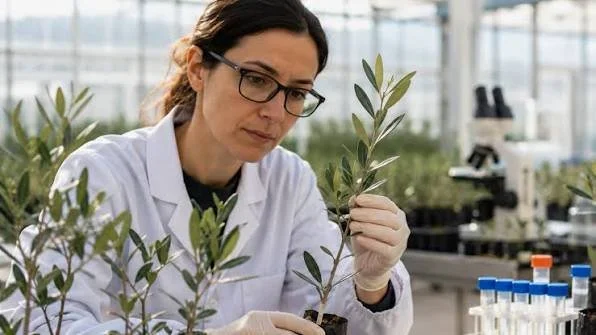
Modern analytical methods have transformed the study of historical plant use. Archaeobotanists can identify seeds, pollen, and other plant remains from archaeological sites, while chemical analysis can sometimes detect residues left in pottery or other containers. These findings may provide evidence of food preparation, trade, medicinal substances, or ritual activities.
Researchers can also use botanical databases and digitized historical texts to compare ancient plant names with modern species. Such comparisons require caution because a single ancient name may have referred to several plants, while a modern species may have had different names in different regions.
The study of ancient medicine can also reveal how practical knowledge and supernatural explanations interacted. A plant might be used for a recognizable physical effect while simultaneously appearing in stories about gods, enchantment, or transformation. These meanings could coexist without being identical.
An article about shapechanger herbs from Parnassus can therefore explore the history of magical plants, ancient pharmacology, and the cultural importance of the mountain. Its mystery lies not in claiming that people could literally transform into animals, but in investigating why plants became associated with extraordinary power and how those associations survived through literature, folklore, and changing understandings of nature.