Water spirits, dangerous lakes, and the folklore that connects human communities to mysterious waters.
A Lake Between Two Countries
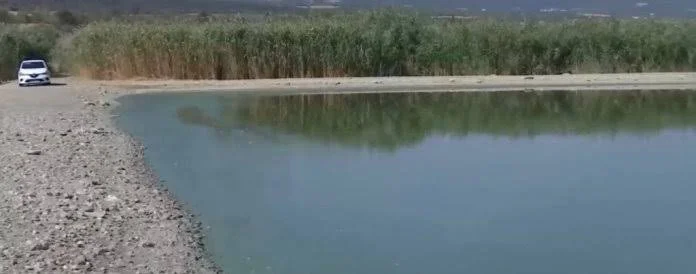
Lake Doirani, also known as Lake Dojran, lies on the border between Greece and North Macedonia. Its waters and surrounding wetlands support wildlife, fishing, and other activities that have shaped local life. Like many lakes, it can appear calm and familiar in one moment and difficult to interpret in another, particularly when mist, wind, or changing light obscures the shoreline.
Lakes have occupied a special place in folklore because they combine accessibility with uncertainty. People can approach the water, observe its surface, and depend on it for resources, yet its depths remain largely hidden from ordinary view. Sudden changes in weather, submerged vegetation, uneven ground, and fluctuating water levels can create real hazards that communities learn to recognize through experience.
Stories about supernatural beings associated with water have developed in many cultures. The Scottish kelpie is one particularly recognizable example: a shapechanging water spirit often associated with rivers and lochs, sometimes appearing as a horse that lures people toward danger.
The kelpie is a figure of Scottish folklore, not an established traditional being of Lake Doirani. The title therefore offers an opportunity for comparative folklore rather than evidence of a local kelpie legend. A historically grounded investigation would examine documented Greek and Balkan water-spirit traditions and compare them with the kelpie motif.
The Kelpie and Its Scottish Origins
In Scottish folklore, the kelpie is commonly associated with bodies of water and the danger they may conceal. Stories often describe a supernatural horse that appears near the shore, attracting an unsuspecting person who approaches or attempts to ride it. The encounter may then become dangerous as the creature reveals its supernatural nature.
Different versions of the kelpie story vary in detail. Some emphasize deception, others the creature's ability to change form, and still others the consequences of ignoring warnings about dangerous water. The stories form part of a broader European tradition in which supernatural beings inhabit rivers, lakes, springs, and other places where humans encounter uncertainty.
Water spirits can serve several narrative purposes. They may explain unexplained disappearances, reinforce warnings about unsafe places, or dramatize the dangers of trusting appearances. In some stories, the supernatural being represents the water's power to overwhelm human intentions.
The kelpie should not be confused with every other European water spirit. Similarities between stories do not prove that one tradition originated from another, and local names may refer to beings with different characteristics.
Comparative folklore researchers can investigate which elements recur across cultures, how those elements differ, and whether historical contact explains any similarities. This requires evidence from dated texts, regional collections, and recorded oral narratives.
Water Spirits in Greek and Balkan Traditions
Greek folklore includes numerous supernatural beings associated with water, including figures connected with springs, rivers, the sea, and other parts of the natural landscape. Nereids are among the best-known supernatural figures in Greek tradition, although their characteristics vary and they should not be treated as direct equivalents of Scottish kelpies.
The wider Balkan region also preserves a variety of supernatural narratives involving water and other natural features. Traditions can cross linguistic and political boundaries, especially in areas where communities have interacted through trade, migration, shared religious practices, and neighboring settlement.
Lake Doirani's border location makes it an interesting setting for examining how stories circulate between communities. Historical research could explore local Greek-language and Macedonian-language folklore collections, regional ethnographies, and accounts associated with fishing, wetlands, or dangerous parts of the lake.
However, the presence of water-spirit traditions elsewhere in Greece or the Balkans does not establish that a particular being was believed to inhabit Doirani. Researchers would need to identify the original name of the figure, the source of the account, and the circumstances in which it was recorded.
If no kelpie-related tradition is documented locally, the article can still investigate how the Scottish figure compares with other water spirits. The comparison should be clearly presented as an exploration of similar motifs rather than a claim that a Scottish creature belongs to Greek folklore.
The Natural Hazards Hidden Beneath the Surface
The physical characteristics of a lake can influence the stories associated with it. Water depth may change, underwater vegetation can obscure the bottom, and muddy shorelines can become difficult to cross. Wind can also affect the movement of water, creating waves that make a previously familiar area seem unfamiliar.
These conditions can pose genuine risks to people who fish, swim, or travel along the shoreline. Traditional stories may transmit warnings about dangerous locations, although it would be necessary to establish whether a particular narrative actually serves that function.
Limnology, the scientific study of inland waters, can help researchers understand lake ecosystems and changing environmental conditions. Measurements of water quality, depth, vegetation, and seasonal variation can clarify how the lake functions as an ecological system.
Environmental history adds another perspective. Changes in rainfall, land use, agriculture, fishing practices, and settlement can influence how communities interact with a lake over time. Such changes may also affect the settings in which stories are told and the meanings they acquire.
The scientific study of a lake does not invalidate its folklore. It provides a different kind of evidence, allowing researchers to distinguish physical processes from cultural interpretations while examining how both influence human experience.
Oral Traditions Along the Shore
Folklore associated with lakes can survive in family stories, fishing traditions, local place names, and narratives told about particular parts of the shoreline. Some accounts may describe supernatural encounters, while others explain why a location should be avoided or why a particular activity is performed in a certain way.
Collecting these traditions requires attention to detail. Researchers should record the original language, identify where the storyteller learned the account, and distinguish personal testimony from stories heard from others. The date of recording also matters, especially when a narrative may have been influenced by tourism, books, or modern media.
Because Doirani lies across an international border, a comparative project could examine how neighboring communities describe the lake and whether their stories share themes or differ in important ways. Similar stories might reflect common environmental experiences, long-standing cultural exchange, or more recent influences.
An investigation of the so-called kelpie waters of Doirani would be strongest when it combines the Scottish legend with documented local traditions, environmental research, and oral history. This creates a meaningful exploration of how peo