Greek revenant traditions, protective rituals, and the enduring fear of the restless dead.
When the Dead Were Feared to Return
In many societies, death has been understood not only as a biological event but also as a transition surrounded by spiritual uncertainty. Burial customs, mourning rituals, protective prayers, and stories about the returning dead reflect the difficulty of explaining what happens when a person disappears from everyday life.
Greek folklore includes traditions concerning revenants and other supernatural beings associated with the dead. One particularly important figure is the vrykolakas, a term used in Greek traditions for a type of restless or dangerous dead person. The characteristics attributed to such beings varied across regions and periods, but some accounts described the dead returning to trouble the living.
These beliefs existed within a wider Balkan and eastern Mediterranean landscape of stories about revenants, vampires, and bodies that were thought to resist the expected processes of death. Such narratives could express anxiety about improper burial, religious transgression, unresolved conflict, illness, or unexplained misfortune.
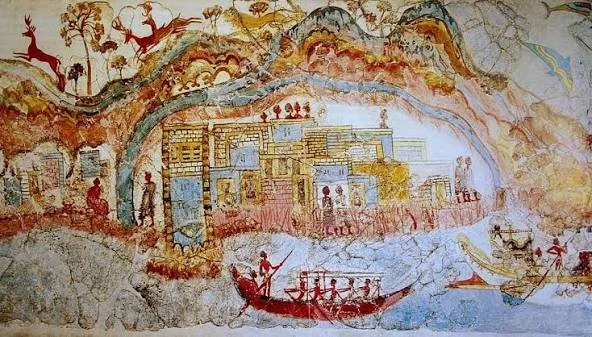
Lesbos, with its villages, olive-growing landscapes, maritime connections, and long cultural history, offers a setting for investigating how local communities understood death and supernatural danger. However, the specific claim that vampire stakes were traditionally carved from Lesbos olive wood requires documentary evidence. It should be treated as a research question rather than an established historical practice.
The Vrykolakas and Greek Vampire Traditions
The Greek vrykolakas belongs to a complex family of beliefs that developed across the Balkans and neighboring regions. The word itself has a complicated linguistic history, and its meaning changed according to the communities and periods in which it was used.
Descriptions of revenants varied considerably. Some traditions associated them with corpses believed to remain unusually intact, while others emphasized unexplained noises, illness, nighttime disturbances, or the fear that a deceased person might return to the household. Such accounts cannot be treated as uniform descriptions of a single creature.
Historical records from southeastern Europe sometimes describe attempts to prevent suspected revenants from disturbing the living. Depending on the region and period, reported practices included prayers, special burial arrangements, the use of stones or other objects, and physical interference with a corpse.
These accounts must be examined carefully. Historical reports often reflect the beliefs of witnesses rather than verified supernatural events, and descriptions recorded by travelers or officials may differ from the customs practiced by local communities.
The study of Greek vampire folklore is therefore an investigation into cultural beliefs, burial practices, and historical fears rather than evidence that the dead literally returned from their graves.
Olive Wood and the Cultural Importance of the Olive Tree
The olive tree has held an important place in Mediterranean life for thousands of years. Its fruit and oil provided food, fuel, and commercial goods, while olive wood was used in various crafts and household objects. Olive cultivation also shaped landscapes, agricultural calendars, and regional economies.
On Greek islands, olive groves can be closely associated with family land, inheritance, and local identity. The tree's longevity gives it a particular symbolic quality: an old olive tree may survive for generations, linking living communities with memories of earlier households and historical events.
These associations make olive wood an evocative material for a folklore article. Yet its cultural importance does not establish that it was specifically used to make vampire stakes on Lesbos. That claim would require evidence from ethnographic accounts, historical documents, material collections, or recorded local testimony.
A researcher could examine whether olive wood appears in documented protective customs elsewhere in Greece and then investigate whether comparable traditions are recorded on Lesbos. Such comparisons can identify possible cultural connections without assuming that a practice from one region was universal.
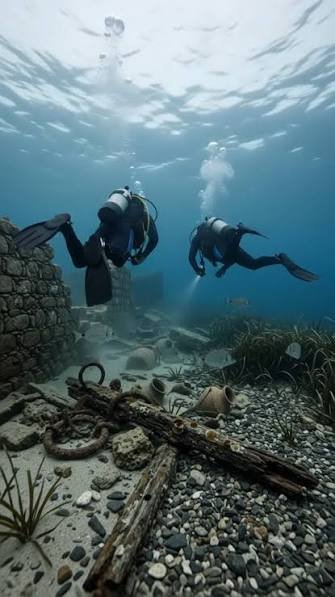
The material itself also presents questions of archaeological identification. Wood generally survives less readily than stone or metal, especially in environments where moisture, oxygen, and soil conditions encourage decay. Even if a wooden object were discovered in a historical burial context, identifying its original purpose would require careful analysis.
Burial Customs and the Archaeology of Fear
Burial practices reveal how communities understood the body, the afterlife, and the relationship between the dead and the living. Archaeologists study grave orientation, objects placed with the deceased, treatment of remains, inscriptions, and the organization of cemeteries to reconstruct aspects of religious and social life.
Unusual burial arrangements can attract attention because they challenge expectations about ordinary funerary practice. However, an unusual grave does not automatically indicate fear of a vampire. The arrangement might reflect local customs, the circumstances of death, religious differences, practical constraints, or later disturbance of the burial.
To interpret a suspected anti-revenant burial, researchers would need to establish the archaeological context and compare the evidence with documented practices from the same region and period. Historical sources can help explain why a community might have treated a body differently, but they must be connected to the archaeological evidence rather than used to impose a supernatural explanation.
On Lesbos, a serious investigation would begin with the island's documented cemeteries, historical burial practices, and regional folklore collections. It could then examine whether any reliable source describes wooden stakes or comparable objects used in suspected vampire cases.
From Folklore to Historical Investigation
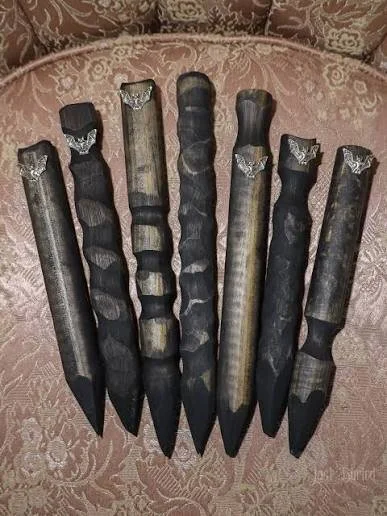
The story of vampire stakes carved from olive wood combines three evocative themes: Greek revenant beliefs, the cultural importance of olive trees, and the fear that the dead might return. These themes provide a strong foundation for a historical feature, but the specific connection must be demonstrated rather than assumed.
A well-supported article could compare Greek vampire traditions with neighboring Balkan beliefs, investigate the history of protective burial practices, and examine how olive wood was used in everyday life. It could also explore why later storytelling often gives supernatural objects distinctive materials, locations, and ritual purposes.
The resulting investigation would be valuable even if no historical evidence for Lesbos olive-wood vampire stakes emerged. The absence of confirmation would itself clarify how modern supernatural narratives combine real regional traditions with details that may be recent inventions.
By separating documented folklore from unverified claims, the article can preserve the atmosphere of the vampire legend while offering readers a deeper understanding of the history of death, memory, and protection in the Greek world.