Where woodland fungi, ancient landscapes, and supernatural storytelling meet.
Circles Hidden in the Grass
Across grasslands, meadows, and woodland clearings, naturally occurring rings of mushrooms can appear almost deliberately arranged. Their circular shapes may stand out sharply against the surrounding vegetation, creating patterns that look unlike the irregular growth normally associated with wild fungi.
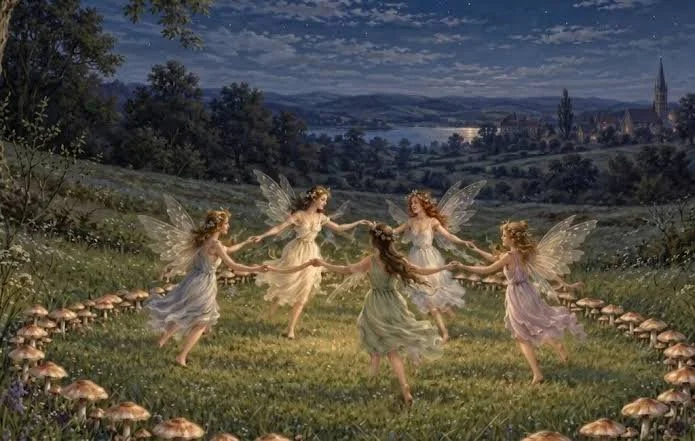
These formations are known as fairy rings. Many develop when a fungus grows outward through the soil, expanding from an original point and influencing the vegetation around it. Under suitable conditions, mushrooms appear near the outer edge of the underground fungal network, creating a visible circle or arc.
The appearance of these rings has inspired folklore in several European cultures. Some traditions associate them with fairies, supernatural dances, enchanted gatherings, or places where ordinary people should not remain after dark. Their precise meanings vary by region, and it would be necessary to consult local Greek folklore sources before attributing a particular fairy-ring legend to the foothills of Mount Olympus.
The landscape around Olympus offers an evocative setting for such an investigation. The mountain's varied environments, forests, meadows, and long-standing cultural importance make it a natural place to explore the relationship between unusual natural formations and human imagination.
The Natural Science Behind Fairy Rings
Fairy rings form through several biological processes, and not every circular pattern has the same origin. In many cases, a fungus grows through soil and decomposes organic material, gradually expanding outward as nutrients become less available in the center. Mushrooms may appear where conditions favor the production of fruiting bodies, although the underground organism can extend far beyond the visible ring.
Some fungi affect plant growth by changing the availability of nutrients or moisture. A ring may therefore appear darker, greener, or more vigorous than the surrounding grass. In other situations, fungal activity can contribute to dry or weakened vegetation.
The visible mushrooms are only the reproductive structures of the fungus. Much of the organism consists of microscopic filaments known as hyphae, which form a network called mycelium. Because this network grows beneath the surface, the full structure is rarely apparent from looking at the meadow alone.
The formation of a ring can take years, and the visible pattern may change with rainfall, temperature, soil composition, and the species involved. These processes create an interesting contrast between the apparently mysterious circle above ground and the biological activity below it.
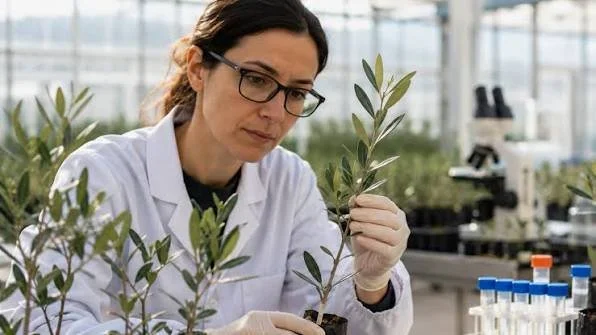
For an article focused on Olympus, field observations could document whether fairy rings occur in particular habitats, what fungal species are present, and how local environmental conditions influence their appearance. Such observations would need appropriate identification by knowledgeable specialists, since appearance alone may not reliably distinguish species.
Why Circles Became Supernatural Signs
Humans have long attached symbolic meanings to circles. A ring can represent enclosure, repetition, boundaries, unity, or a space separated from its surroundings. When a natural formation appears almost geometrically perfect, it may invite interpretations that go beyond its physical cause.
European fairy traditions provide numerous examples of supernatural beings associated with woodland clearings, dances, and circular spaces. In some stories, entering a fairy ring exposes a person to enchantment or causes them to lose track of time. In others, the circle marks a place where supernatural beings gather after dark.
These motifs should not be treated as a single universal belief. Different communities developed different ideas about fairies, spirits, and enchanted places, and the meanings attached to circular formations varied accordingly.
Greek folklore also contains a wide range of supernatural beings and stories connected with mountains, springs, caves, and remote landscapes. However, fairy-ring stories from Britain, Ireland, or continental Europe cannot automatically be attributed to Olympus. A local investigation would need evidence from Greek-language folklore collections, regional publications, or interviews with residents.
Comparative folklore remains useful even when no direct local equivalent can be established. It allows researchers to examine why people in different societies interpreted unusual natural patterns as evidence of supernatural activity.
Olympus as a Cultural Landscape
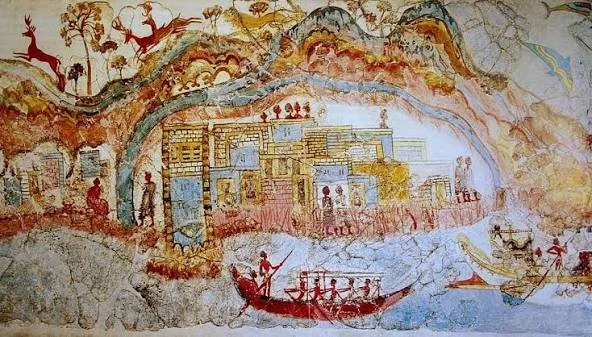
Mount Olympus is best known in classical tradition as the home of the Greek gods. Its prominence in mythology gives the surrounding landscape a powerful cultural identity, but the mountain is also a real ecological environment with changing habitats, weather patterns, and human uses.
Forests and meadows around mountain settlements may be used for grazing, gathering plants, recreation, and other activities. People who spend time in these environments develop detailed knowledge of seasonal changes and local wildlife. That knowledge can coexist with folklore, stories about dangerous places, and inherited explanations for unusual events.
The relationship between landscape and mythology is especially interesting because natural features often become associated with cultural meaning over time. A cave may become connected to a spirit, a spring to healing, or a particular grove to a local story. Such associations may change as generations reinterpret their surroundings.
A study of fairy rings near Olympus could therefore examine both the ecological conditions that create circular fungal growth and the cultural traditions that influence how people interpret the landscape. Researchers could compare historical folklore collections with contemporary accounts, taking care to distinguish old traditions from stories that have developed through tourism or modern popular culture.
Recording the Landscape Before the Story Disappears
Folklore research increasingly recognizes the value of recording local knowledge before it is lost. Older residents may remember stories that were passed down orally but never appeared in published collections. Regional museums, cultural associations, and local historians may also preserve material that is difficult to find in general reference works.
Interviews should document the storyteller's location, the circumstances in which the story was learned, and whether the account was presented as personal experience, family tradition, or entertainment. Such details help researchers understand how a narrative circulated and how confidently it can be associated with a particular community.
Ecological research can complement this work through photographs, habitat descriptions, fungal identification, and repeated observations. If a site is monitored over time, researchers may discover whether the ring persists, expands, or changes with environmental conditions.
The result would be a study that respects both natural science and folklore. The ring itself may have a biological explanation, but the stories people attach to it can still reveal meaningful information about cultural memory, human curiosity, and the ways landscapes become part of local identity.