Wolves, shapeshifting, and the supernatural imagination of Greece's northern mountains.
The Mountain Landscape of Fear
The mountains of northern Greece possess a landscape that easily lends itself to stories of the unexplained. Dense forests, isolated paths, winter fog, and remote settlements create an environment in which familiar sounds can become difficult to interpret. A distant howl, the movement of an animal among trees, or an unfamiliar footprint in snow can inspire both practical concern and imaginative speculation.
Mount Vitsi, in the Florina region of northern Greece, belongs to a wider landscape shaped by mountainous terrain, changing weather, forests, and a long history of human settlement. Its environment offers a useful setting for investigating the relationship between wolves and folklore, although a specific tradition of wolfmen associated with Vitsi requires verification through local sources.
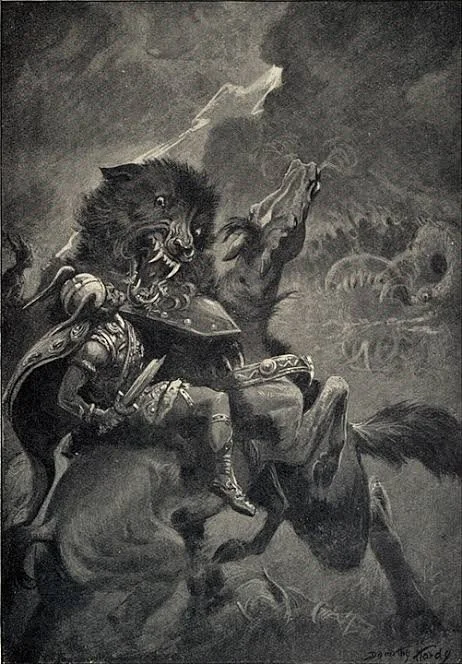
Across Europe, stories of people transforming into wolves have circulated for centuries. These tales have taken different forms, ranging from accounts of deliberate supernatural transformation to stories of curses, unexplained disappearances, and encounters with creatures that appear partly human and partly animal.
Greek folklore has its own rich collection of supernatural beings and transformation motifs. However, European werewolf traditions should not automatically be treated as evidence of a distinct Vitsi wolfman legend. Establishing such a connection requires documented local narratives, historical references, or recorded oral testimony.
Wolves in the History of Rural Greece
Wolves have occupied an important place in the relationship between people and the natural world. In pastoral communities, they could threaten sheep, goats, and other livestock, creating economic losses for families whose livelihoods depended on their animals. Their presence could also influence grazing practices, livestock protection, settlement patterns, and attitudes toward the surrounding wilderness.
These practical concerns helped make wolves powerful figures in storytelling. An animal that moved through the forest at night and could approach a flock without being seen was naturally associated with danger and uncertainty. In areas where wolves were feared, stories could transform ordinary encounters into memorable accounts of cunning, violence, or supernatural intelligence.
The distinction between a real wolf and a legendary wolfman is important. A historical account of livestock being attacked does not demonstrate that people believed a human had transformed into a wolf. Conversely, a supernatural tale may preserve details of rural life even when its central event is not intended as a literal record.
Folklorists investigating mountain traditions can examine how stories describe wolves, shepherds, hunters, forests, and nighttime encounters. Comparing these narratives with local economic history may reveal why particular animals became associated with danger and how environmental conditions shaped the stories people told.
The Werewolf in European Imagination
The werewolf is one of Europe's most recognizable supernatural figures, but its meaning has never been uniform. In some traditions, transformation represents a curse or punishment. In others, it is connected to witchcraft, the violation of religious or social boundaries, or the frightening possibility that a familiar person conceals a dangerous nature.
Ancient accounts of transformation helped establish a long literary history of humans becoming animals. Greek mythology includes stories in which humans undergo transformations as a consequence of divine intervention, while later European traditions developed their own ideas about wolf-shaped creatures and people believed to possess animal characteristics.
These traditions changed as religious institutions, legal systems, and popular storytelling evolved. Medieval and early modern European accounts sometimes connected werewolves with witchcraft or demonic influence. Other stories presented them as tragic figures who struggled against an unwanted transformation.
A useful investigation of Vitsi would examine whether local accounts contain these familiar motifs or develop different ideas. A regional legend might emphasize a cursed shepherd, a dangerous forest, a mysterious stranger, or an animal that repeatedly approaches a village. The details would matter because folklore is not simply a collection of universal stories repeated identically everywhere.
Oral History and the Search for Local Legends
Oral history can help researchers establish whether a particular supernatural tradition genuinely belongs to a specific region. Interviews with residents, examination of regional publications, and consultation of folklore archives can reveal stories that never appeared in widely circulated collections.
Researchers must nevertheless consider when a story was first recorded, who told it, and how it changed over time. A legend repeated in a recent online post may derive from a modern horror story rather than a long-standing local tradition. An account published by a folklorist may preserve an older narrative, but its historical context still requires examination.
Language also matters. Local terms for wolves, spirits, cursed people, or supernatural transformations may carry meanings that are lost when translated into English as “wolfman.” A careful study should preserve the original terminology wherever possible and explain its cultural significance.
The Vitsi region could provide a compelling setting for an investigation into mountain folklore, wolf ecology, and the psychology of fear. The strongest article would begin with documented traditions, compare them with wider European werewolf stories, and distinguish recorded local testimony from later embellishment.
Such an approach allows the mountains to remain mysterious without requiring the invention of secret wolfman packs or unsupported historical incidents.